Iron fortification is more than simply adding iron to a food or beverage. According to reports, iron is the most difficult mineral to add to foods and ensure adequate absorption 3. The average daily dietary iron intake is 10 to 15 mg in humans since only 1 to 2 mg is absorbed through the intestinal system 4. Therefore, the choice of iron source is critical, as different forms of iron vary in their solubility, bioavailability, stability, color impact, and sensory attributes, depending on the specific food matrix. Selecting an appropriate iron source therefore requires consideration of the overall food vehicle, nutritional requirements and formulation performance1.
This is especially important for food manufacturers involved in food fortification. Some of the most used iron forms for fortification purposes in the APAC market include ferric sodium EDTA, ferrous fumarate and ferric pyrophosphate. Each form offers different technical characteristics and can be selected according to the target application and product requirements1.
Ferric Sodium EDTA: High Bioavailability for Flour Fortification
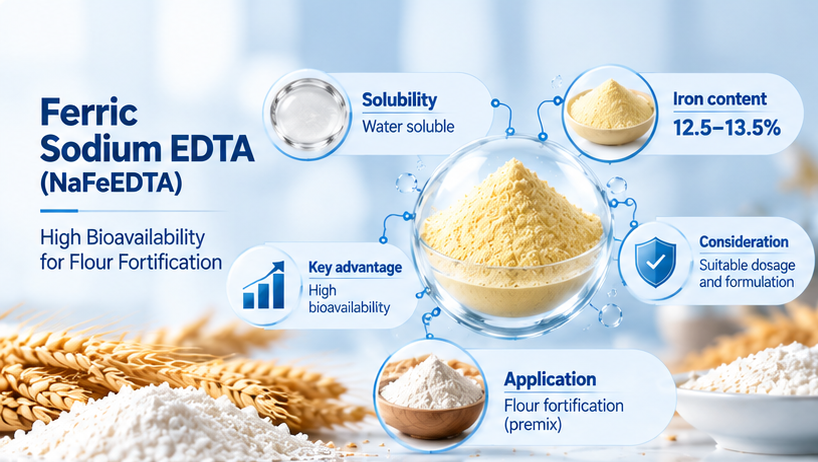
Ferric sodium EDTA, also known as sodium iron EDTA (NaFeEDTA), is a water-soluble iron source containing 12.5–13.5% iron. Its high relative bioavailability makes it a suitable option when efficient iron absorption is an important consideration for formulation.
NaFeEDTA can be particularly useful in food matrices where compounds such as phytate may limit iron absorption. Its water solubility also allows it to be incorporated into suitable fortification systems and premixes1.For flour-based products, NaFeEDTA can support the development of iron-fortified formulations while providing a practical option for achieving the desired nutritional target.
Ferrous Fumarate: High Iron Content for Flour Fortification
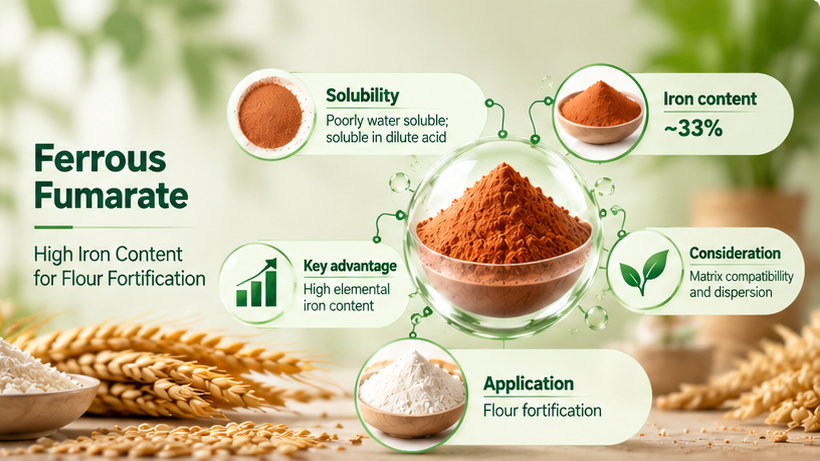
Ferrous fumarate is a poorly water-soluble iron source that is soluble in dilute acid. It contains approximately 33% elemental iron, providing a relatively high iron concentration compared with many other iron compounds.
Despite having lower water solubility than other highly soluble iron sources like NaFeEDTA, ferrous fumarate is reported to show similar mean Fe absorption as ferrous sulfate when used in infant cereal fortification. This is significant because ferrous sulfate is commonly used as a reference standard when it comes to the absorption of iron salts 5. As such, ferrous fumarate offers a balance between nutritional performance and formulation considerations. It is particularly relevant to flour-based applications where iron fortification is required.
Its relatively high iron content also means that smaller quantities of the ingredient can provide a meaningful contribution to the required iron level in a formulation.
Ferric Pyrophosphate: When Colour and Stability Matter
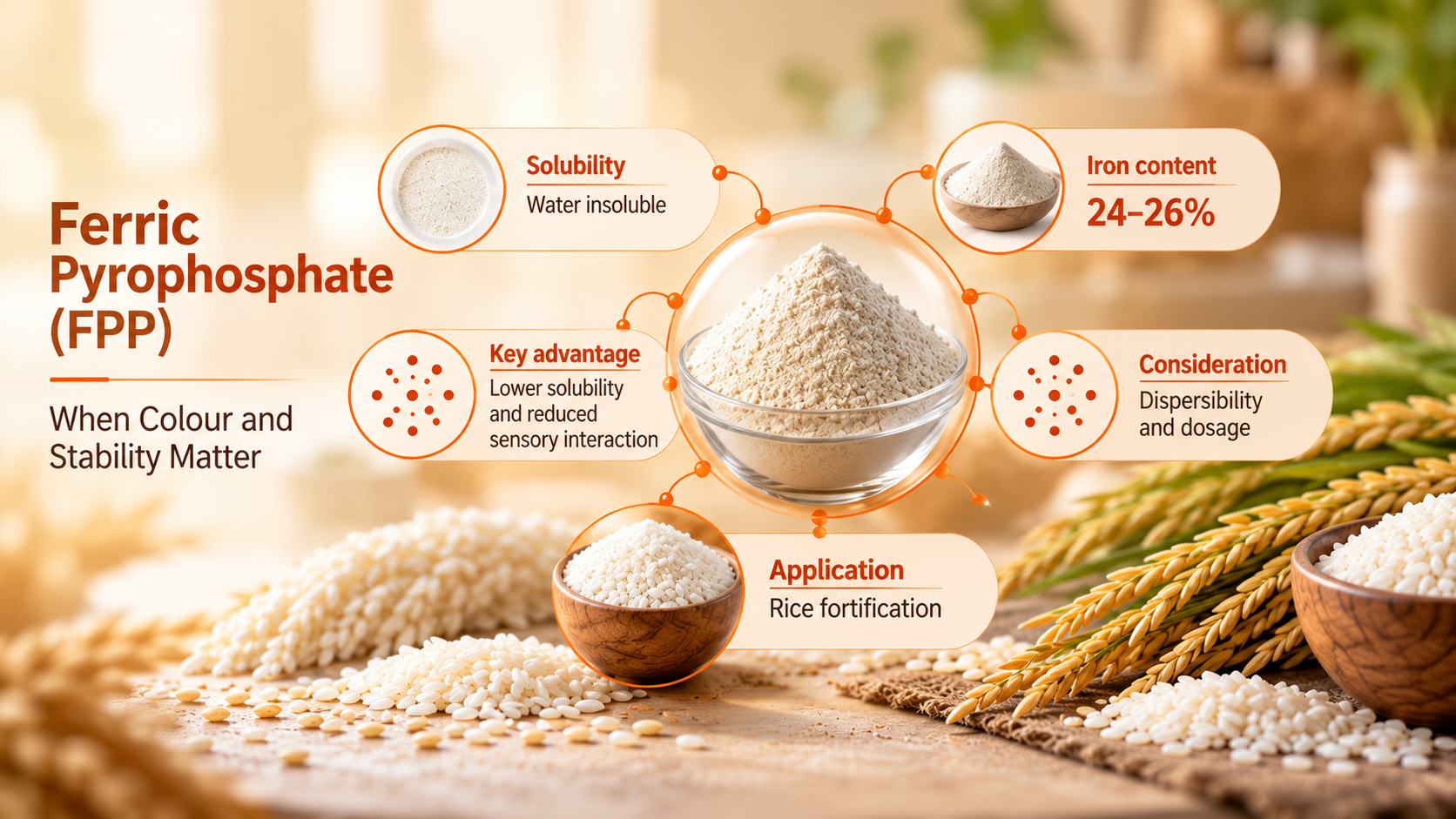
Ferric pyrophosphate (FPP) is a water-insoluble iron source containing 24–26% iron. Its lower solubility can help reduce interactions with other food components that may affect colour and flavour, making it a useful option for selected food matrices 6, making it highly suitable ingredient when color / appearance, flavor, shelf life and overall consumer acceptance is the main objective.
Although its existing relative bioavailability is lower than that of ferrous fumarate, different particle sizes can also be considered depending on the application and required dispersibility.
FPP is suitable for selected food fortification applications, including rice fortification.
Which Iron Source Fits the Application?
There is no single iron source that is automatically best for every product. The appropriate choice depends on the food matrix, nutritional target, processing conditions, sensory requirements and desired product characteristics1.
For example, ferric sodium EDTA offers high bioavailability for suitable cereal-based applications, ferrous fumarate provides a high concentration of elemental iron for flour fortification, while ferric pyrophosphate offers a less-soluble option for applications such as fortified rice1,2.
From Ingredient Selection to Fortification Solutions
For manufacturers, successful iron fortification requires more than simply selecting an iron compound. Ingredient form, food matrix, processing conditions and final product quality all need to be considered together to achieve the right balance between nutritional performance and product quality.
For customers exploring iron fortification, DPO International connects formulation needs with suitable fortification solutions through Hexagon Nutrition’s micronutrient expertise and premix capabilities, supporting applications according to the target product and formulation requirements.
The right iron source is therefore not necessarily the one with the highest iron content, but the one that provides the best balance between nutritional performance, formulation compatibility, sensory quality and application requirements.