Food colouring is widely used in food formulation to create or enhance the desired appearance of food products. Colour additives are one category of food additives, which are used for technological and functional purposes in food production.
Although food additives are widely used, some individuals may experience hypersensitivity or other adverse reactions to certain additives, including some colour additives.
This raises an important question for food manufacturers: Can food colouring cause allergic reactions?
The answer is yes, although reactions to food additives and colourants are considered uncommon.
When Does Food Colouring Trigger an Allergic Response?
A food allergy occurs when the immune system reacts to a food component. One important mechanism is the IgE-mediated pathway, in which sensitization leads to the production of allergen-specific IgE antibodies.2,3
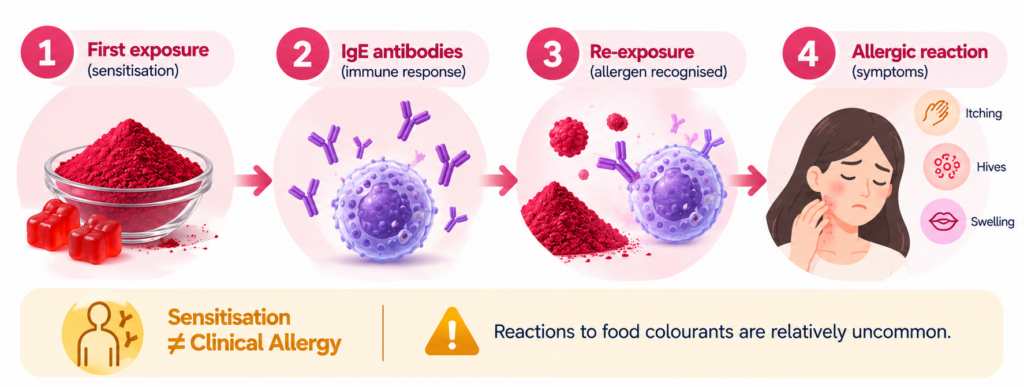
Importantly, sensitization does not always lead to symptoms. A person may develop IgE antibodies without experiencing an allergic reaction. However, on subsequent exposure, the immune system may recognize the substance and trigger allergic symptoms.2,3
Where Does Food Colouring Fit in Food Formulation?
Food colouring refers to colour additives used to impart, restore or enhance colour in food products. Colourings and dyes are among the recognized categories of food additives. Food colourants may originate from natural sources or be produced synthetically.2
From a formulation perspective, the choice of colourant depends on the intended food application, target shade and formulation requirements.
However, the source of a colourant can also be relevant when considering allergen and labelling considerations.
Can Food Colouring Really Trigger an Allergic Reaction?
Yes, but such reactions are uncommon.
Food additive-related reactions can occur through different mechanisms, and not every adverse reaction to a colour additive represents a conventional IgE-mediated food allergy. Some individuals may experience hypersensitivity or other adverse reactions to certain colour additives.2,3 For example, the FDA notes that some individuals may experience itching and hives associated with certain colour additives. 1
These examples demonstrate why food manufacturers should consider the specific colourant and its source and ingredient specification rather than treating all food colours as having the same allergenic profile.
Is “Natural” Always Allergy-Friendly?
One common assumption is that natural food colouring is automatically safer from an allergen perspective. However, natural origin does not automatically mean non-allergenic. Certain naturally derived colourants have been associated with documented allergic reactions. One of the clearest examples is carmine, a naturally derived colourant associated with cochineal.2
The FDA specifically identifies colour additives made from cochineal extract and carmine as allergenic substances that must be declared on food and cosmetic labels in the United States.1 However, labelling requirements may differ across markets. For food manufacturers, it is important to check the applicable regulatory and labelling requirements in each target market when using colourants such as carmine.
This also highlights the importance of evaluating the specific colour source and composition of a colourant, rather than relying solely on the term “natural.”
Carmine (E120): A Documented Case of Food Colour Allergy
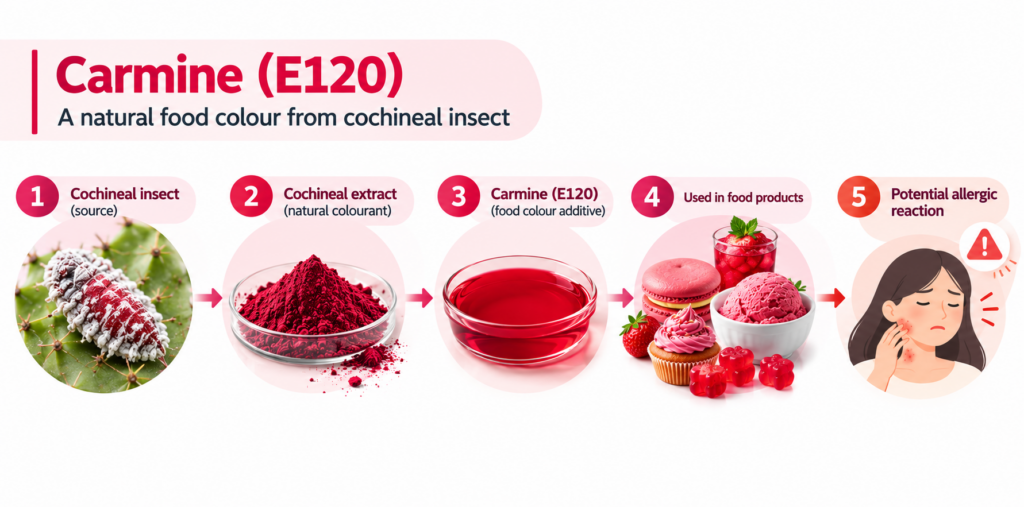
One of the best-documented examples of an allergenic food colour is carmine, associated with cochineal and E120. Cochineal extract is derived from the cochineal insect and is used as a colour additive. Carmine has been associated with allergic reactions in susceptible individuals, including rare cases of anaphylaxis.2,3
These findings make carmine an important example when discussing potential allergic reactions to naturally derived food colouring.
 What Should Food Manufacturers Consider?
For food manufacturers, the key lesson is not that all food colours are allergenic.
Instead, the specific source and composition of a colourant should be considered when selecting colours for a formulation.
This is particularly relevant when developing products where ingredient sources, allergen considerations and labelling requirements need to be assessed.
Manufacturers may need to consider factors such as below:
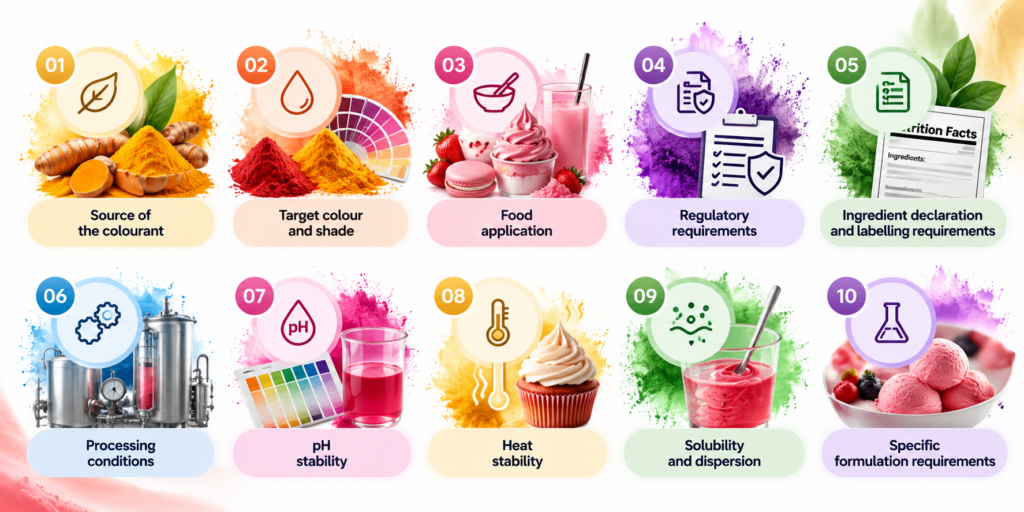
Therefore, understanding the source and specification of a colourant is an important part of ingredient selection and formulation.
Choosing Natural Colours: Why the Source Matters
Natural colourants can be obtained from a variety of naturally derived sources, as shown below image.4
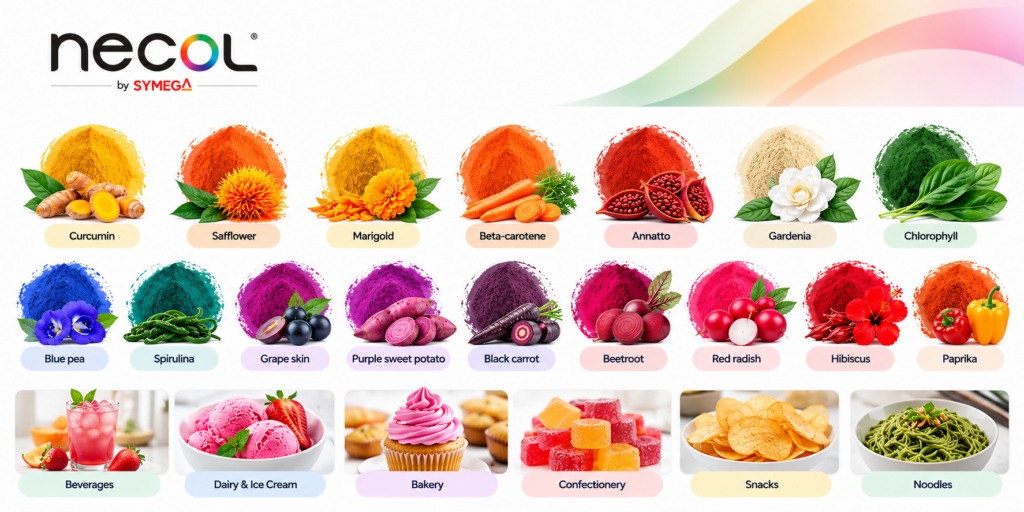
For manufacturers, exploring natural colour options, the NECOL™ portfolio includes sources such as beetroot, black carrot and hibiscus for certain red and pink shades. The availability of different colour sources gives manufacturers options when selecting a colour according to the desired shade, ingredient characteristics and intended application.4
This is particularly relevant when considering allergen-related requirements, as different colour sources may have different ingredient characteristics and should therefore be evaluated individually. Rather than assuming that all natural colours have the same allergenic considerations, manufacturers should assess the specific colour source, ingredient specification and intended application when selecting a natural colour.
The Key Takeaway for Food Manufacturers
For food manufacturers, the key consideration is therefore not simply whether a colour is “natural” or “synthetic,” but the specific colour source, ingredient characteristics and requirements of the intended formulation. This is particularly important when considering allergen-related requirements, as different colour sources may have different characteristics and should therefore be evaluated individually.
Food colouring reactions are rare but real, highlighting the importance of understanding the source and characteristics of the colour used in formulation.
Through Symega’s NECOL™ natural colour solutions and DPO International’s technical support, manufacturers can explore colour options and identify solutions that align with their product, application and formulation requirements.