What Is the Gut-Brain Axis?
The gut-brain axis refers to the two-way communication network connecting the gastrointestinal tract and the brain. In simple terms, the gut and brain continuously send and receive signals that influence various bodily functions.
For example, when you experience stress, you may notice digestive changes such as stomach discomfort, reduced appetite or changes in bowel habits. Similarly, signals originating from the gut can communicate with the brain and influence processes associated with its function.
This communication involves four main pathways:
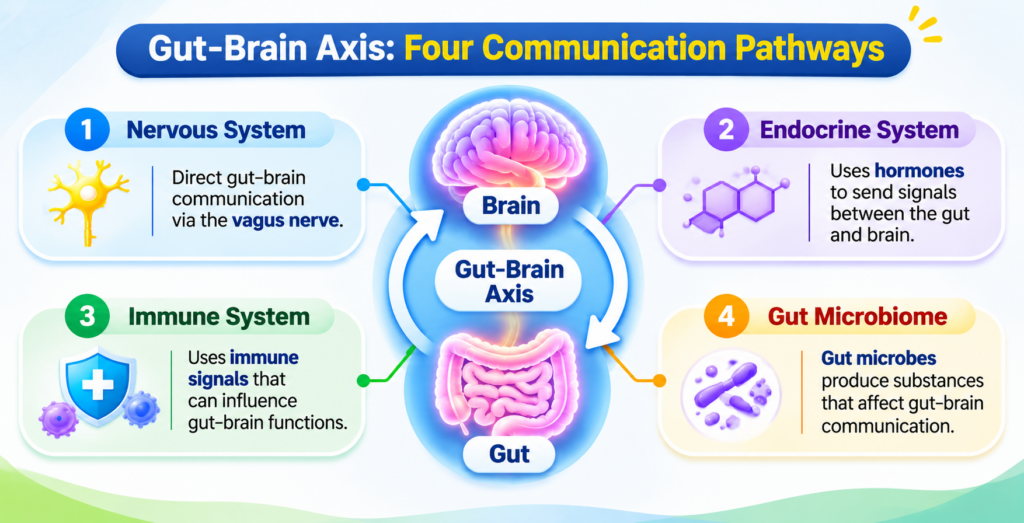
Together, these pathways demonstrate that the gut-brain axis is more than just a connection between two organs. It is an integrated communication network that contributes to maintaining the body’s overall physiological balance.1,3
How Does the Gut Microbiome Influence the Gut-Brain Axis?
The human gut is home to trillions of microorganisms, collectively known as the gut microbiome. These microorganisms, particularly bacteria, contribute to digestion, nutrient metabolism and immune function.
However, their role may extend beyond the digestive system. Through their metabolic activities, gut microorganisms produce or influence various substances involved in gut-brain communication. 1,3
Three important examples include: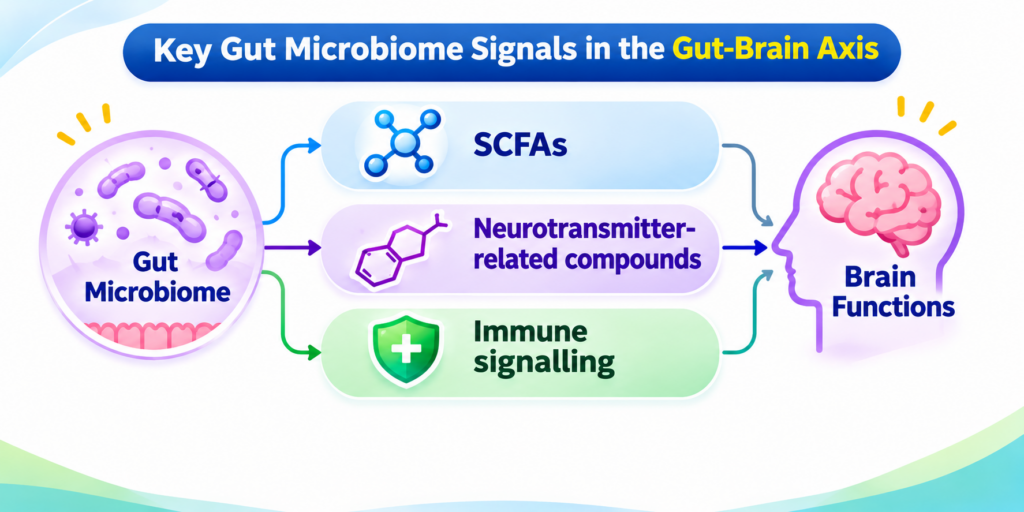
1.Short-Chain Fatty Acids (SCFAs)
Produced when gut bacteria ferment dietary fiber, SCFAs support intestinal health and influence immune and metabolic signaling.
2.Neurotransmitter-Related Compounds
Gut microbes can produce or influence compounds associated with neurotransmitter pathways, including serotonin and GABA. These pathways are involved in processes such as mood regulation, sleep and nervous system activity.
It is important to note that serotonin produced in the gut does not simply travel directly into the brain. Instead, gut-derived signals may influence brain-related processes through other communication pathways.
3.Immune Signalling
Gut microbes interact with the immune system and may influence inflammatory signals that are being investigated for their potential effects on brain function.
Although researchers are still exploring the exact mechanisms, these findings help explain why the gut microbiome has become an important area of research in understanding the gut-brain axis.
How Can the Gut-Brain Axis Influence Mood, Stress and Memory?
The gut-brain axis is a two-way communication network linking the gut and brain through several pathways, including the nervous system, hormones, immune signalling and compounds produced by gut microorganisms. Through these pathways, signals from the gut may influence aspects of brain function and overall well-being.
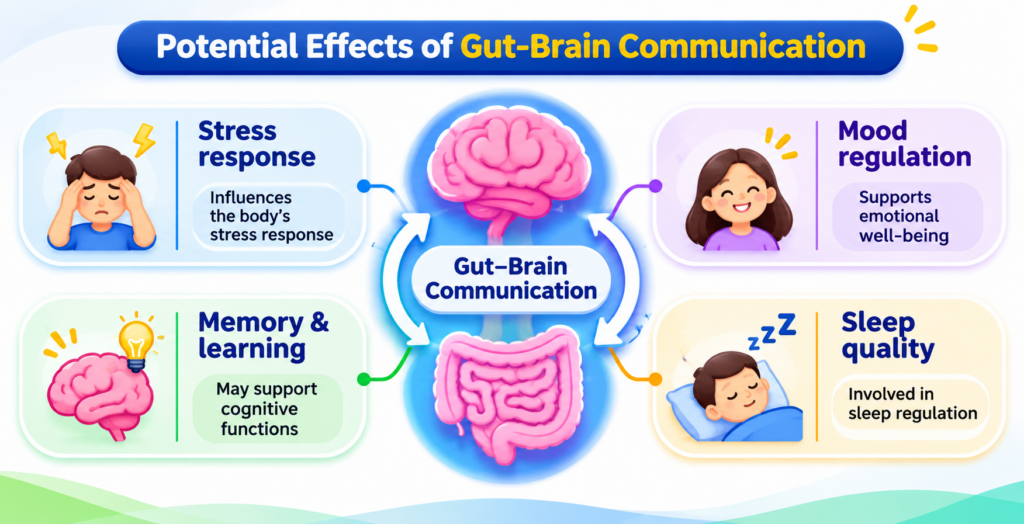
Research suggests that gut-brain communication may be associated with several aspects of well-being:
- Stress response: Communication between the gut and brain may be involved in the body’s response to stress, including interactions with stress-related hormonal pathways.
- Mood regulation: Gut microorganisms and their metabolites may influence signalling pathways associated with emotional well-being.
- Memory and learning: Research is exploring how gut-brain communication may be associated with cognitive functions such as memory and learning.
- Sleep quality: Gut-brain signalling may also relate to sleep regulation, although the mechanisms and potential effects are still being investigated.
These relationships have encouraged researchers to investigate whether supporting the gut microbiome through probiotics could also contribute to aspects of cognitive and mental well-being. 1,3
However, probiotic benefits are strained specifically. Not all probiotics have the same characteristics or demonstrate the same effects, making research on individual strains particularly important.
Can Probiotics Support the Gut-Brain Axis?
As research into the gut-brain axis continues to grow, certain probiotic strains are being explored for their potential effects beyond digestive health, including cognitive well-being.
These microorganisms are sometimes referred to as psychobiotics, a term used for probiotics being studied for their potential mental health-related benefits through interactions with the gut-brain axis.3
One such example is Lactiplantibacillus plantarum HEAL9 (LpHEAL9™), a specific probiotic strain that has been studied for its potential role in supporting cognitive function.2
Meet LpHEAL9™: A Probiotic Strain Studied for Cognitive Health
Not all probiotics offer the same benefits. Each strain has unique characteristics and needs to be evaluated through scientific research.
One example is LpHEAL9™ (Lactiplantibacillus plantarum HEAL9), a probiotic strain studied for its potential role in cognitive health and the gut-brain connection.
A 2023 randomized, double-blind, placebo-controlled clinical study, investigated the effects of daily LpHEAL9™ supplementation on cognitive performance in moderately stressed adults aged 21–52 years. A total of 132 participants were randomized, with 129 completing the 12-week trial. Participants received either LpHEAL9™ (10 billion CFU daily) or a placebo.2
Compared with placebo, the LpHEAL9™ group demonstrated significantly greater improvement in two specific cognitive outcomes: word recall accuracy and one measure of visual associative learning, assessed through a paired-associate learning test.2

These findings provide encouraging insights into the potential role of LpHEAL9™ in cognitive health. However, further research is needed to confirm these findings and better understand its potential role in the gut-brain connection.2
Why Is the Gut-Brain Axis an Interesting Opportunity for Food Manufacturers?
As consumers become more aware of the connection between digestive health and overall well-being, interest in functional ingredients is extending beyond traditional digestive health applications.
The gut-brain axis presents an opportunity for food and beverage manufacturers to explore innovative products that combine probiotic functionality with emerging wellness interests, including cognitive health and mental well-being.
Probiotic ingredients such as LpHEAL9™ may be considered for product development in various formats, including:4

However, developing successful probiotic products involves more than selecting a suitable strain. Our team has also developed a Digestive Wellness Shot featuring Probi® LP299V®, demonstrating how probiotic ingredients can be incorporated into functional beverage applications. Click here to explore the recipe.
Manufacturers should also consider factors such as strain stability, maintaining viable cell counts throughout shelf life, processing conditions, storage requirements and compatibility with the overall formulation.
By combining scientific research with appropriate formulation strategies, manufacturers can explore new product opportunities that respond to growing consumer interest in gut-brain health and functional wellness.
Explore Gut-Brain Health Opportunities with DPO International
The growing understanding of the gut-brain axis highlights the potential of probiotics beyond digestive health, opening new possibilities for functional food, beverage and supplement innovation. As scientific research continues to explore the connection between gut health and cognitive well-being, manufacturers have an opportunity to respond to this evolving consumer interest with scientifically studied ingredients.
Through a partnership with Symrise, DPO International brings Probi® LpHEAL9™ to manufacturers interested in exploring this emerging category. By connecting manufacturers with this clinically studied probiotic strain, DPO aims to help turn scientific developments into new product opportunities.
Looking to explore gut-brain health in your next product innovation? Partner with DPO International to discover Probi® LpHEAL9™ and explore its potential for your next functional product.