Plant-based milk has evolved far beyond being simply a dairy alternative. Today, it has become a staple across cafés, restaurants, hotels, and other foodservice establishments, supporting everything from specialty coffee and tea to smoothies, desserts, and culinary creations.
As the market continues to expand, manufacturers are expected to deliver products that not only meet consumer preferences but also perform consistently in demanding foodservice environments.
Developing successful plant-based milk is no longer just about selecting the right plant source. It requires careful formulation, ingredient selection, and technical expertise to create products that offer the taste, texture, and functionality foodservice operators expect.
So, what defines high-performing plant-based milk for foodservice industry? Read on to find out.
What Defines High-Performing Plant-Based Milk?

While every foodservice concept has different menu requirements, high-performing plant-based milk typically shares several key characteristics.
Creamy Texture and Mouthfeel
A rich, creamy texture plays a significant role in creating an enjoyable drinking experience. Whether served in coffee, tea, or smoothies, consumers expect plant-based milk to deliver a smooth mouthfeel that closely matches the indulgence of dairy.
Balanced Flavour Profile
The flavour of plant-based milk should complement, rather than overpower, the finished beverage. A clean and well-balanced flavour profile allows baristas and foodservice operators to create beverages where coffee, tea, chocolate, or other ingredients remain the hero.
Consistent Performance Across Applications
Foodservice operators often use the same plant-based milk across multiple applications, including hot beverages, cold drinks, desserts, and cooking. Manufacturers therefore need to develop products that maintain consistent quality and sensory performance regardless of how they are used.
Choosing the Right Plant-Based Milk for Different Applications
Different plant sources offer unique flavour profiles, textures, and functional characteristics, making ingredient selection an important part of product development.
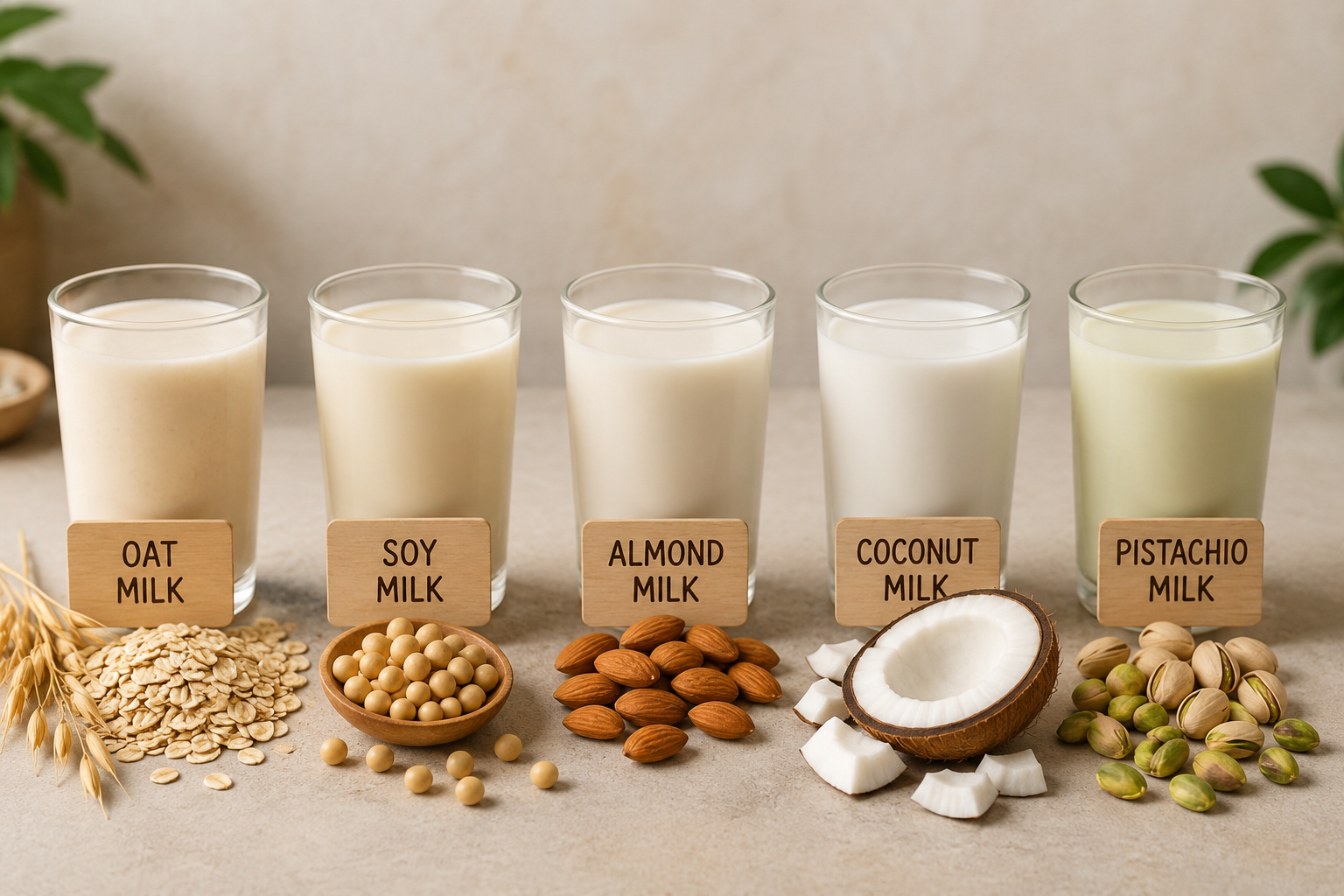
Depending on the intended application, manufacturers may explore a variety of plant-based milk options, including:
- Oat Milk – Popular for coffee, lattes, smoothies, and bakery applications due to its naturally creamy texture.
- Soy Milk – A versatile option suitable for beverages, desserts, and culinary applications.
- Almond Milk – Often used in coffee, smoothies, and desserts for its light texture and subtle nutty flavour.
- Coconut Milk – Commonly used in beverages, desserts, and Asian-inspired menu applications.
- Pistachio Milk – An emerging premium option that offers distinctive flavour and opportunities for menu differentiation.
Selecting the right plant-based milk is only the beginning. Achieving the desired eating and drinking experience depends on how each formulation is optimised to deliver consistent quality and functionality.
Ingredient Solutions Supporting Plant-Based Milk Development
Developing commercial plant-based milk requires ingredient solutions that support product performance throughout manufacturing while delivering the quality expected by foodservice operators.
Product Development Focus | Ingredient Solution |
Creamy Texture & Emulsion Stability | Emulsifiers help improve creaminess, mouthfeel, and emulsion stability, contributing to a smooth and consistent drinking experience. |
Stable Suspension & Consistent Texture | Hydrocolloids help improve viscosity, minimise sedimentation, and maintain product consistency throughout shelf life. |
Balanced Flavour Profile | Flavour Masking helps minimise undesirable plant-based off-notes, delivering a cleaner and more neutral flavour profile suitable for coffee, tea, and other beverage applications. |
Together, these ingredient solutions help manufacturers create plant-based milk that delivers consistent sensory quality, reliable product performance, and greater versatility across foodservice applications.
Supporting the Next Generation of Plant-Based Milk Innovation
As foodservice continues to evolve, manufacturers have greater opportunities to differentiate their plant-based milk through superior formulation, technical performance, and application versatility. Developing products that consistently deliver excellent texture, balanced flavour, and reliable functionality will be key to meeting the growing expectations of both foodservice operators and consumers.
At DPO International, we work closely with our global ingredient partners to provide ingredient solutions, product application expertise, and market insights that support the development of high-performing plant-based milk. From formulation to commercialisation, we help manufacturers create products tailored to today’s evolving foodservice market.
Contact us to discover how DPO International can support your next plant-based milk innovation.