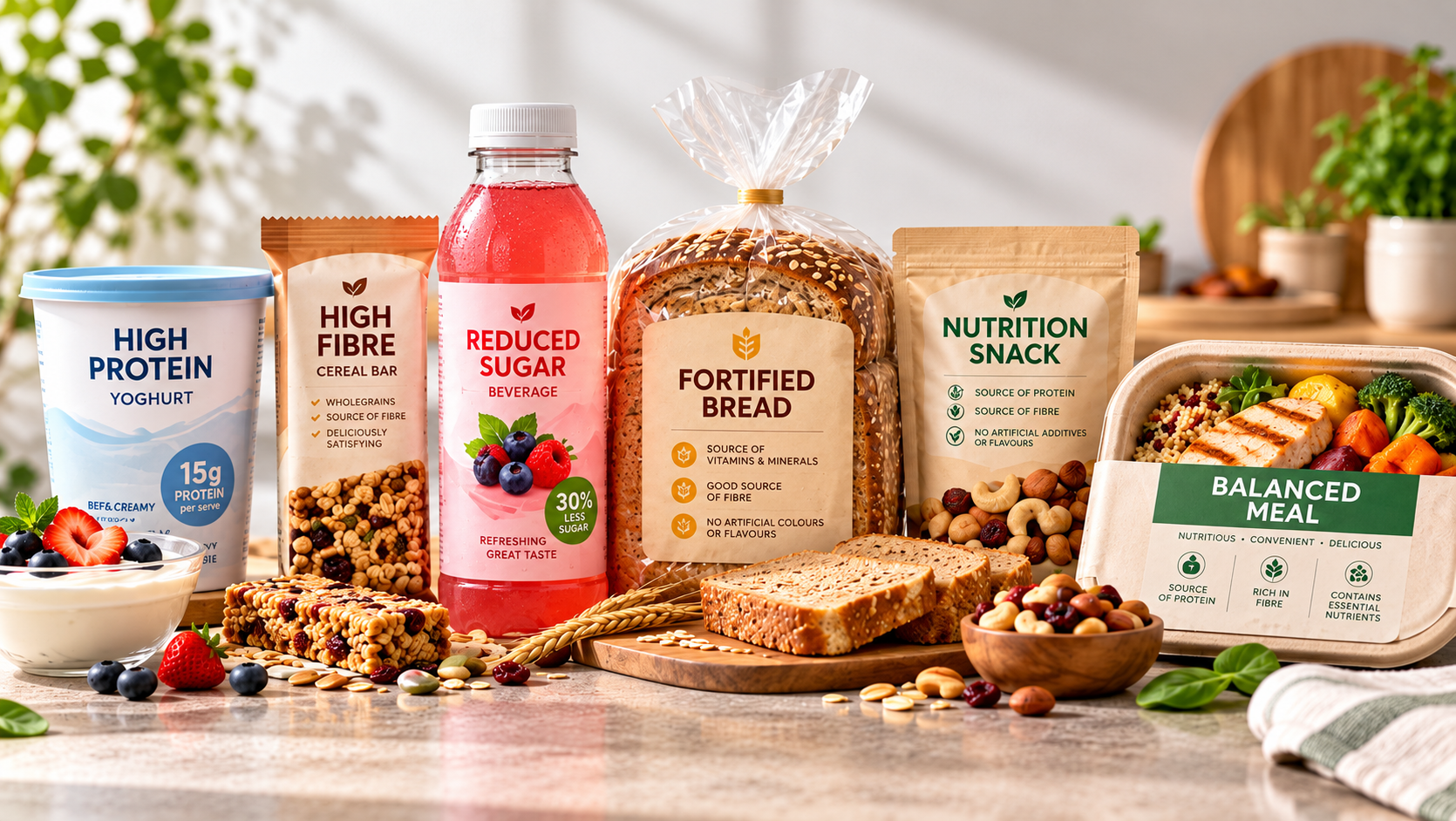
Consumer interest in nutritional value is creating new opportunities for food manufacturers to innovate familiar food products. In the bakery category, growing interest in protein is encouraging manufacturers to explore ways to enhance the nutritional profile of everyday favourites.
From bread to cookies and other sweet bakery products, protein enrichment offers a way to add nutritional value to familiar products while retaining the formats consumers already enjoy.
However, developing high-protein bakery products involves more than increasing protein content. Protein ingredients can influence dough handling, texture, flavour and overall product quality, making ingredient selection an important consideration during formulation.
So, how can manufacturers develop high-protein bakery products while balancing nutritional goals with the taste, texture and quality consumers expect? Let’s explore the market opportunity, key formulation challenges and ingredient solutions that can support product development.
The Growing Opportunity in High-Protein Bakery Products

Protein continues to influence food and beverage innovation, with protein identified as a leading trend in 2026.¹ The trend is also evident across Asia, where three in five consumers report incorporating more protein into their routines.²
For manufacturers, this creates opportunities to explore protein enrichment across familiar bakery products. Bakery products cater to different consumption occasions, from bread enjoyed with meals to cakes and pastries consumed during afternoon and evening breaks.³
These different occasions also create opportunities to explore convenient individual portions and products designed for sharing. Manufacturers can investigate how protein enrichment could add nutritional value to familiar bakery products while retaining the qualities consumers expect.
Plant-protein ingredients offer one approach to developing high-protein bakery products. However, increasing protein content requires careful ingredient selection and formulation to maintain the desired texture, flavour and overall product quality.
What Should Manufacturers Consider When Developing High-Protein Bakery Products?
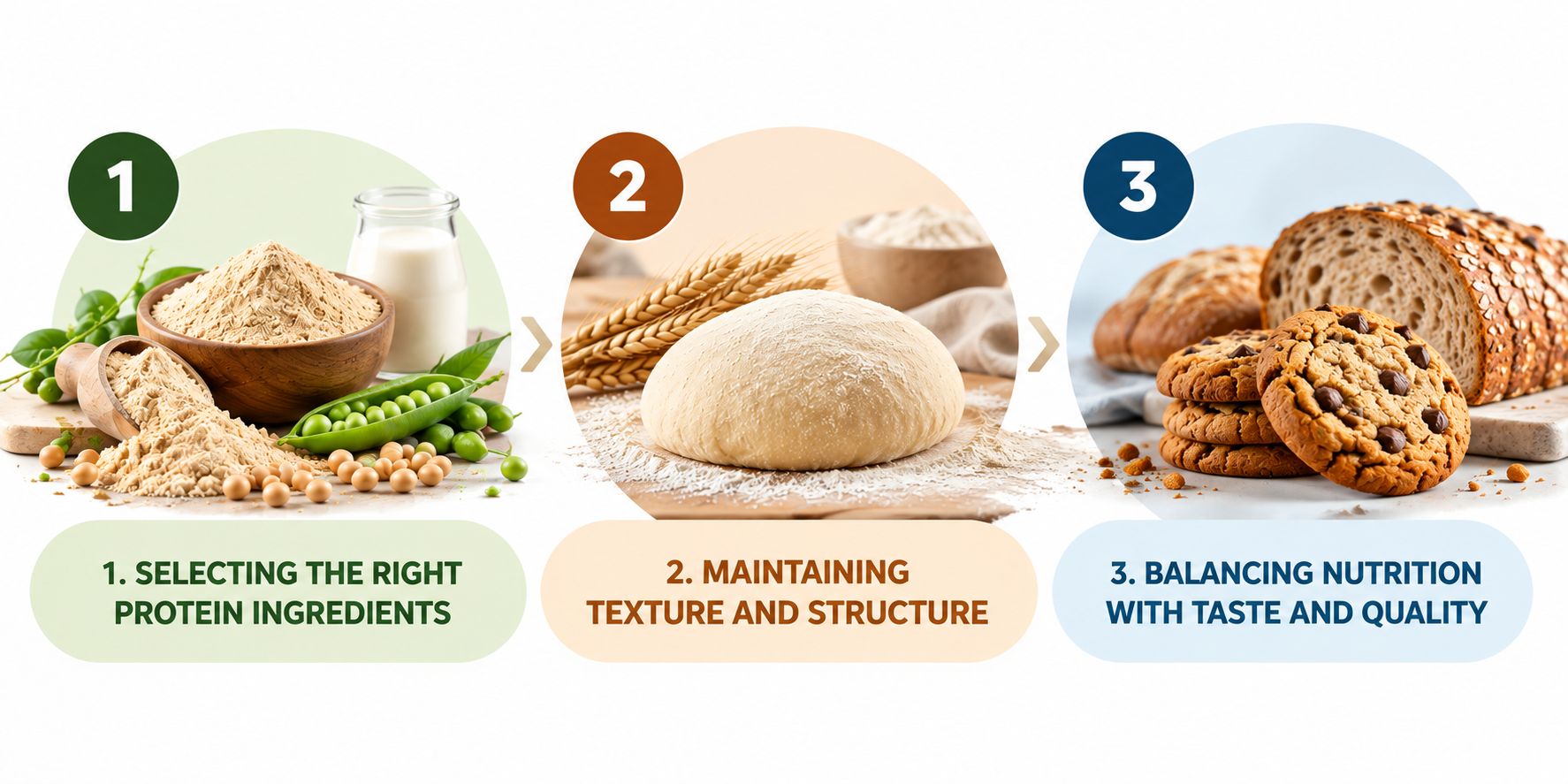 Increasing protein content brings formulation challenges that vary depending on the ingredients selected, the recipe and the desired product characteristics. When developing high-protein bakery products, manufacturers need to consider how protein ingredients affect dough handling, spread, texture and flavour. Three key areas deserve particular attention:
Selecting the Right Protein Ingredients
Protein ingredients differ in nutritional content and functional properties, such as water absorption and dispersibility. Manufacturers should select ingredients that meet protein targets while supporting the needs of the intended application.
Maintaining Texture and Structure
Adding protein can affect dough consistency, spread and finished-product texture. Formulation trials help manufacturers assess ingredient interactions and processing conditions to achieve the desired product quality.
Balancing Nutrition with Taste and Product Quality
Higher protein content should not come at the expense of flavour, colour or mouthfeel. Careful ingredient selection and application testing help balance nutritional goals with the expected eating experience.
Three Ingredients to Explore for High-Protein Bakery Applications
Selecting suitable ingredients is an important part of developing high-protein bakery products. DPO International works with ingredient partners, including BENEO, Benexia and Glanbia to support manufacturers exploring plant-protein solutions for bakery applications.
The following table highlights the nutritional profiles and technical benefits of three ingredients that can be explored for high-protein bakery applications.
BENEO BeneoPro FB P60 HT2 | •High plant-based protein content • Contains essential amino acids • Naturally low in fat • Suitable for vegan, vegetarian and dairy-free products | Water-binding capacity: Helps retain water within the formulation, supporting moisture management. Air-cell stabilisation: Helps stabilise air cells, supporting product rise without egg whites. Emulsification properties: Helps combine ingredients such as water and fat within the formulation. Texture and structure: Helps support the desired structure and texture of the finished product. Neutral taste: Its relatively neutral taste compared with other legume proteins may help maintain the intended flavour profile. |
BENEXIA® Xia Powder – 125 W LM | • Provides chia-derived protein and fibre • Contains all essential amino acids • Gluten-free and vegan • Low in saturated fat and contains no cholesterol | Viscosity control: Helps manage the thickness and consistency of the formulation. Dough extensibility: Supports dough stretching and handling during processing. Dispersibility: Helps the ingredient distribute throughout the mixture. Flavour and colour: Its flavour and colour characteristics are relevant when developing bakery products with the desired sensory qualities. |
Glanbia OvenPro® 200 | • Supports protein fortification • Clean-label and natural positioning | Reduced lumping: Helps minimise lump formation during ingredient incorporation. Texture and flavour: Helps deliver desirable texture and flavour in the finished product. |
Our team has also developed a high-protein cookie concept using BENEO, Benexia and Glanbia ingredients, demonstrating how these plant-protein solutions can be explored in bakery applications. Click here to learn more about the recipe.
Preparing High-Protein Bakery Products for Market
Developing a suitable formulation is an important step, but manufacturers must also consider the requirements involved in bringing a product to market. These can vary across countries, particularly when expanding into new markets.
Area | What It Involves |
Scientific & Regulatory Affairs | Reviewing local food regulations, ingredient requirements, labelling rules and nutritional claim criteria to determine what is permitted in each target market. |
Supply Chain Management | Assessing ingredient availability, sourcing requirements, storage and distribution to support a consistent supply of ingredients. |
Marketing Support | Understanding local market needs and identifying how to communicate the product’s nutritional attributes and value to the intended audience. |
Considering these areas early can help manufacturers plan product development with the requirements of their intended markets in mind.
Turning High-Protein Bakery Concepts into Market Opportunities
Developing high-protein bakery products requires careful ingredient selection and formulation to balance nutritional goals with the taste, texture and quality consumers expect.
With DPO International’s end-to-end solutions, we support food manufacturers in exploring suitable ingredients, addressing formulation needs and navigating the requirements of bringing products to market.
Looking to develop your next high-protein bakery product? Contact DPO International to discover how we can support your product development journey.