The cereal category is evolving. Today’s consumers are no longer evaluating cereal products solely based on taste, crunch, or convenience. Nowadays, purchasing decisions are increasingly influenced by nutritional value, functional benefits, ingredient quality, and overall wellness positioning. This shift represents a significant opportunity for cereal manufacturers seeking to differentiate their products in an increasingly competitive market.
For food manufacturers, success now depends on creating cereals that deliver both sensory enjoyment and meaningful nutrition. However, achieving this balance requires more than simply adding nutrients to an existing formulation. It demands careful ingredient selection, technical formulation expertise, and recipe development capabilities that align with emerging market trends.
Why Nutrient Density Is Becoming a Priority in Cereal Innovation
Consumer expectations around breakfast cereals have changed dramatically over the past decade. While taste and texture remain essential, consumers increasingly expect products to contribute positively to their nutritional goals.
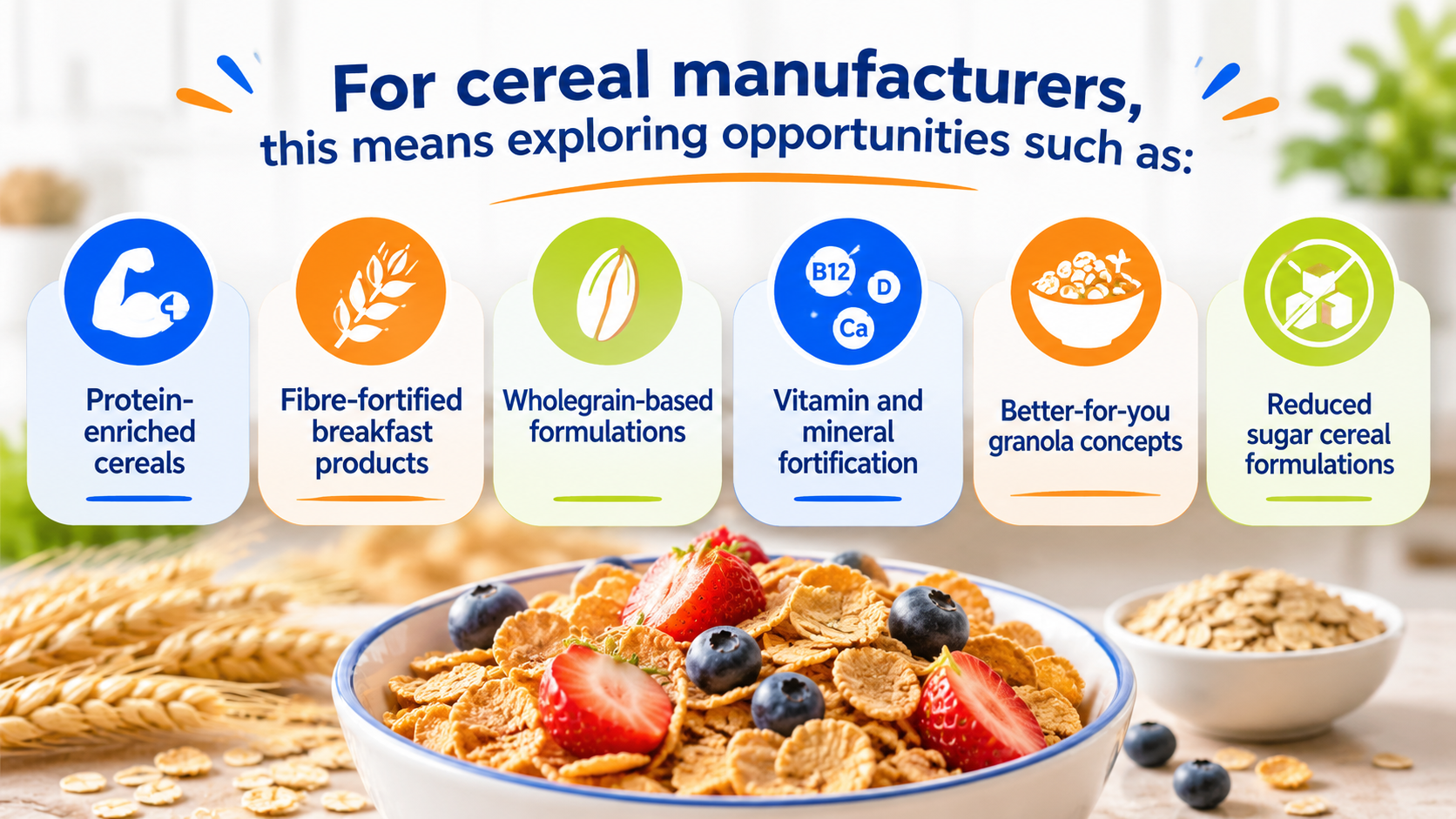
This evolution aligns closely with the emerging concept of Nutrient Density Design, identified by industry trend forecasters as an important future direction for food innovation. The principle is straightforward: consumers want foods that deliver more nutritional value per serving while maintaining convenience and enjoyment.
The challenge is not understanding these opportunities. The challenge is executing them successfully.
Balancing Nutrition Without Compromising Taste
Consumers may seek healthier products, but they remain unwilling to sacrifice enjoyment.
Adding protein, fiber, vitamins, minerals, botanicals, or other functional ingredients can influence:
- Mouthfeel
- Texture
- Crunch retention
- Flavor profile
- Color appearance
- Processing performance
As nutrient levels increase, maintaining consumer-acceptable sensory attributes often becomes more challenging.
Achieving the Right Nutritional Positioning
Every formulation decision contributes to how a product is ultimately positioned in the market.
These days, brands are positioning their cereal products around:
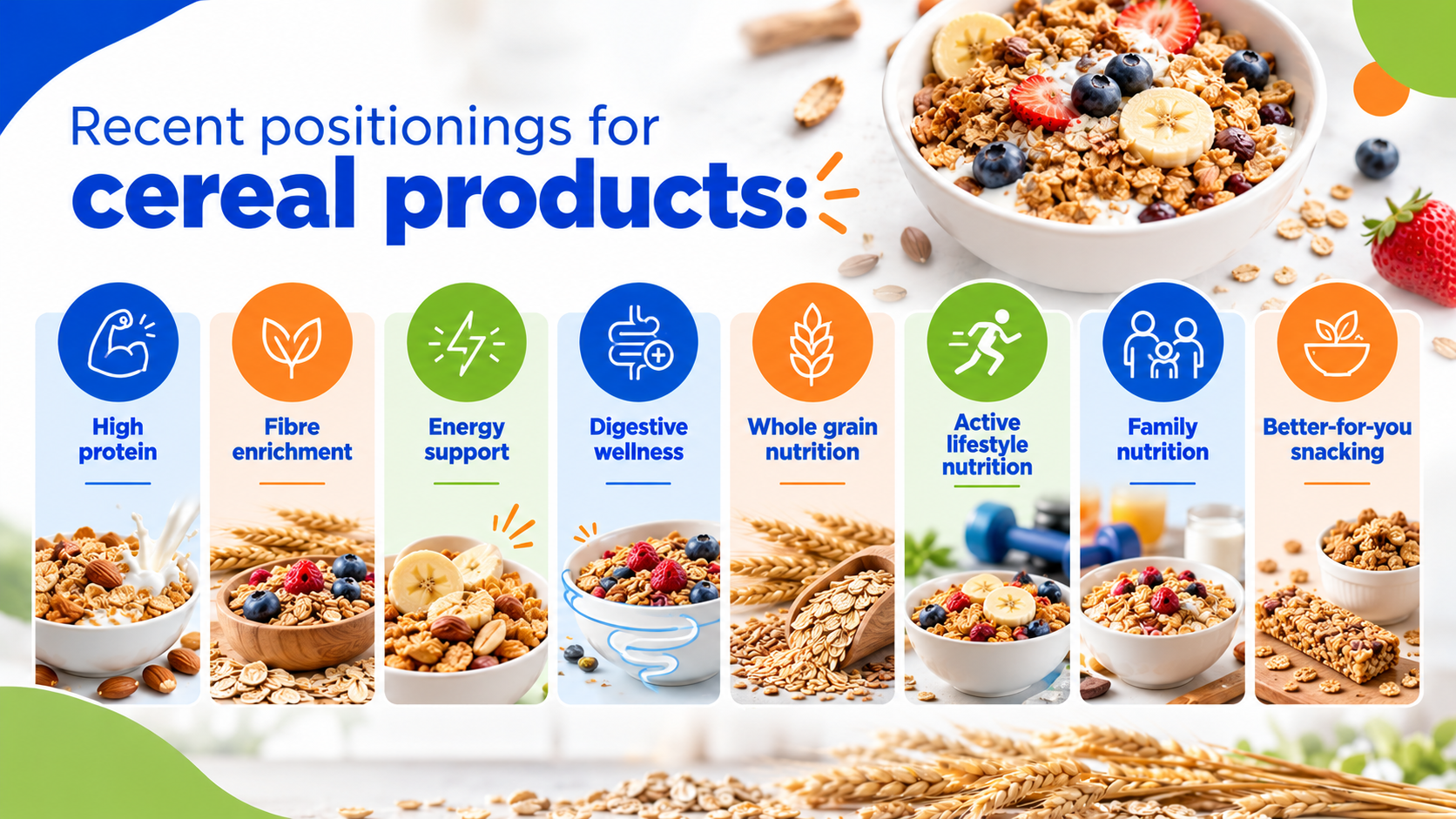
The ingredient system selected must support both product performance and marketing objectives.
Managing Manufacturing Realities
Beyond consumer expectations, manufacturers must consider:
- Ingredient compatibility
- Processing stability
- Production scalability
- Shelf-life performance
- Cost optimization
- Regional regulatory considerations
Successfully combining all these factors requires technical expertise across multiple disciplines.
From Granola to Ready-to-Eat Cereals: Every Ingredient Choice Matters
Whether developing granola clusters, breakfast flakes, extruded cereals, muesli products, or ready-to-eat cereal concepts, ingredient selection plays a crucial role in determining product success.
The right ingredients can support:
Enhanced Nutritional Value
Strategic ingredient selection allows manufacturers to elevate the nutritional profile of cereal products through protein, dietary fibre, vitamins, minerals, wholegrains, fruits, and other functional components.
Stronger Market Differentiation
As cereal shelves become increasingly crowded, innovative formulations help brands stand out through meaningful nutritional benefits and consumer-relevant claims.
Trend-Driven Product Innovation
Manufacturers who proactively align with nutritional and wellness trends can create products that resonate with changing consumer preferences.
Why Ingredients Alone Are Not Enough
Many suppliers can provide functional ingredients.
Far fewer can help manufacturers transform those ingredients into commercially viable cereal products.
This distinction is increasingly important because formulation success often depends on how ingredients work together within a complete recipe system rather than on the individual ingredients themselves.
As highlighted in the teaser content, the challenge lies in bringing nutrition, texture, flavour, and functionality together effectively.
This is where application expertise creates value.
How DPO International Supports Cereal Manufacturers
DPO International’s approach extends beyond ingredient supply. The company also supports manufacturers through application and recipe development services designed to simplify product development and accelerate innovation.
Application Development Support
Product developers frequently face formulation challenges that cannot be solved through ingredient selection alone.
Application development support helps manufacturers:
- Evaluate ingredient functionality
- Optimize formulations
- Improve sensory performance
- Address processing considerations
- Explore new product concepts
Recipe Creation Services
DPO International provides recipe development support tailored to emerging nutritional trends and market-relevant positioning opportunities across regional markets.
This allows manufacturers to develop concepts that are:
- Nutritionally relevant
- Consumer-focused
- Technically feasible
- Market-ready
- Trend-aligned
Support for Functional Nutrition Innovation
Functional nutrition remains one of the strongest drivers of food innovation.
By combining ingredient expertise with recipe development capabilities, DPO International helps manufacturers create products that better address evolving consumer expectations around health, wellness, and nutrient density.
Building the Next Generation of Nutrient-Dense Cereal Products
The future of cereal innovation will likely belong to products that successfully combine:
- Great taste
- Appealing texture
- Functional benefits
- Nutritional value
- Market relevance
As consumer expectations continue to rise, manufacturers will increasingly need partners who can contribute both ingredients and technical application expertise.
Developing a nutrient-dense cereal is no longer simply a formulation exercise. It is a strategic process involving ingredient selection, nutritional positioning, recipe creation, and commercialization planning.
That journey becomes significantly easier with the right development partner.
Conclusion
The cereal industry is entering a new era where nutrient density, functional nutrition, and consumer-relevant innovation are becoming key drivers of success. While selecting the right ingredients remains critical, manufacturers also need technical expertise to transform those ingredients into finished products that deliver on both nutritional value and eating experience.
DPO International supports cereal manufacturers with more than ingredient solutions. Through application development and recipe creation services, the company helps brands develop nutrient-focused cereal concepts that are nutritious, technically feasible, and market-ready.
Looking to develop your next nutrient-dense cereal innovation? Partner with DPO International to turn functional nutrition concepts into commercially successful products.