
Why Regulatory Readiness Matters
For yogurt and dairy drink manufacturers, regulatory considerations should not necessarily be treated as a final checkpoint. Bringing them into the product development process can help manufacturers identify potential issues before the product reaches the final commercialization stage.
Dairy products can involve multiple ingredients, product claims, label requirements and supporting documents. Depending on the product and target market, manufacturers may need to review how ingredients are declared, what information appears on the label and which documents are required.
The consideration becomes even more important when the product is intended for another country.
Different markets can have different requirements.
A label prepared for one market may therefore need to be reviewed before it is used in another country. For manufacturers, regulatory readiness should be considered alongside formulation, packaging and commercial planning.
What Should Manufacturers Review?
Before launching a dairy product, manufacturers can consider five key areas:
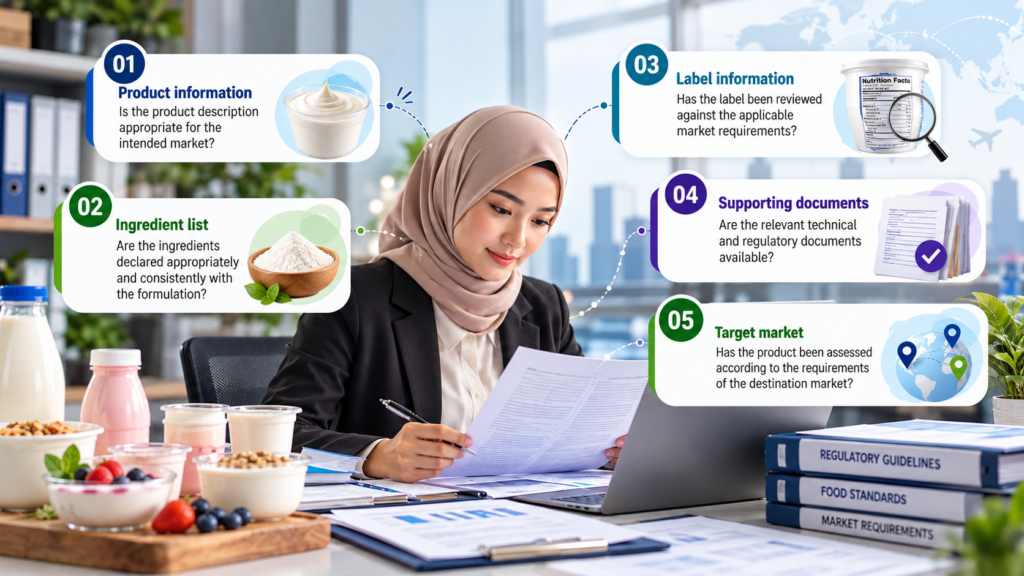
The review does not have to be treated as a separate activity from product development. Looking at these areas together can help manufacturers identify potential gaps between the product formulation, product information and target-market requirements.
This is particularly useful when a product is being adapted for a new market, where existing labels or documentation may need further review.
Local Market or Destination Market?
One of the most important considerations for manufacturers is where the product will be sold.
A yogurt or dairy drink developed for the local market may later become an export opportunity. When this happens, manufacturers should not assume that the existing label and documentation can simply be transferred to the new market. Instead, the product information may need to be reviewed against the requirements applicable to the destination market.
This is particularly relevant for manufacturers managing multiple markets, distributors or imported dairy products.
A more structured review can help manufacturers understand what needs to be checked, which documents are relevant and whether product information is aligned with the intended market.
How Our Regulatory Team Can Support
At DPO International, our Regulatory Team supports manufacturers by bringing regulatory considerations into the product development process.
Rather than looking at regulatory information in isolation, our approach connects the product, formulation, label and target-market requirements to help manufacturers prepare their products for commercialization.
Our regulatory support can include:
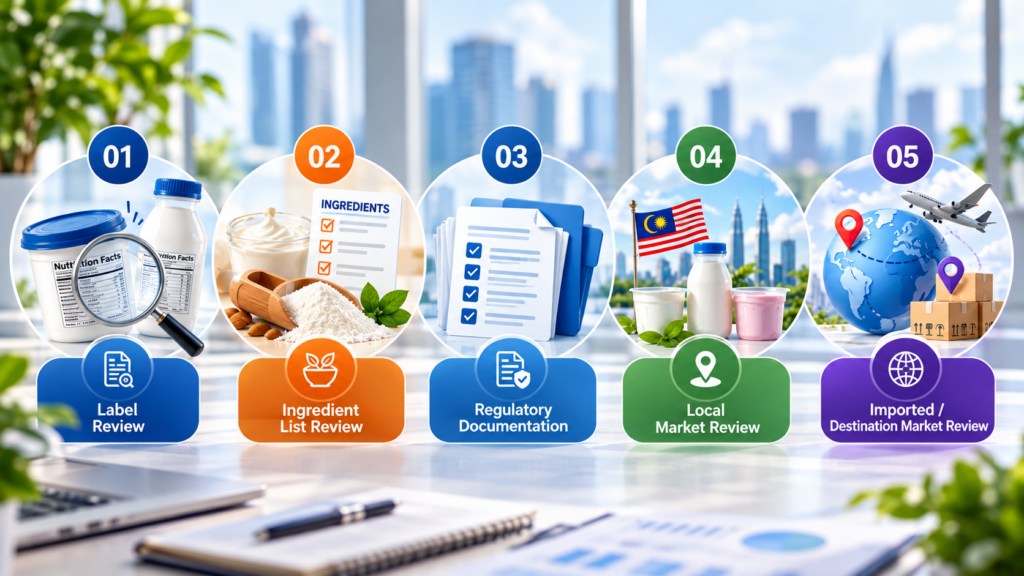
This allows the manufacturer to look at regulatory considerations as part of the wider product journey rather than as an isolated final check.
From Formulation to Regulatory Readiness
Regulatory preparation can be connected to the wider development process:
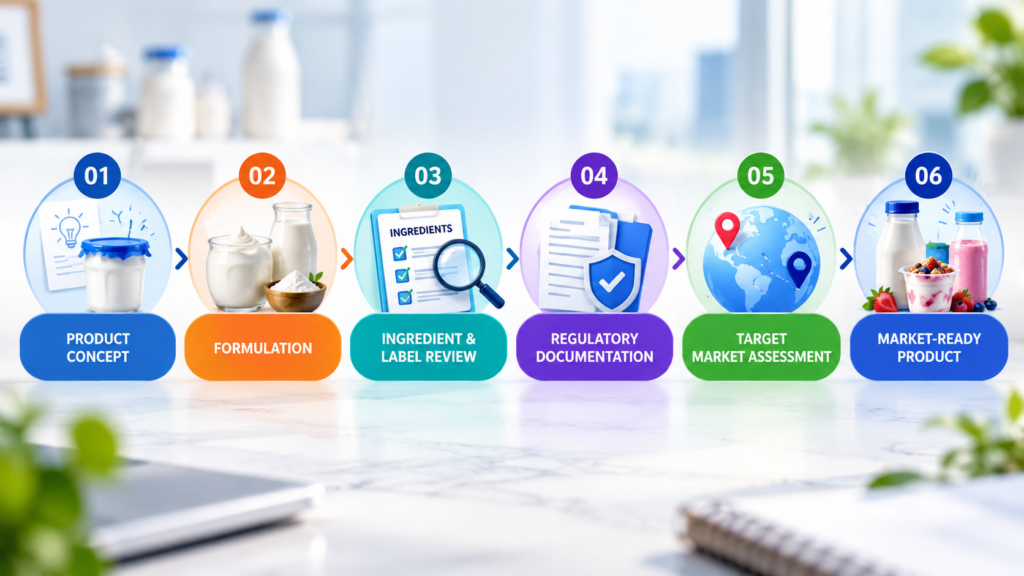
This creates a more connected approach between technical development and regulatory preparation.
For manufacturers, the benefit is not simply having a reviewed label. It has a clearer understanding of the regulatory considerations that sit around the finished product.
Why This Matters for Manufacturers
Regulatory work is often viewed as a final checkpoint. Bringing it into the development journey can help manufacturers identify potential gaps earlier.
For dairy products, this can support:
- More informed product development
- Better alignment between formulation and label information
- Greater clarity on required documentation
- More structured preparation for different markets
- A smoother transition from product development to commercialization
The goal is not to add unnecessary complexity to product development. It is to make sure that the technical product and the information supporting it move in the same direction.
From Dairy Product Concept to Market-Ready Product
For yogurt and dairy drink manufacturers, successful commercialization involves more than developing a product consumers will enjoy. It also requires the right information, documentation and regulatory considerations to support that product in its intended market.
At DPO International, our regulatory capability supports manufacturers in navigating these considerations as part of the wider product development journey. By connecting regulatory understanding with food industry knowledge and other DPO capabilities, we help manufacturers move from product development towards commercialization.