Sugar has long been central to confectionery, bringing sweetness and contributing to the taste, texture and overall enjoyment of sweets and treats. However, changing consumer expectations are encouraging manufacturers to explore sugar alternatives that better align with today’s nutritional preferences. As more consumers pay attention to their sugar intake, calorie content and the nutritional value of everyday foods, demand for reduced-sugar and sugar-free confectionery is creating new opportunities for product development.
For confectionery manufacturers, the challenge lies in finding the right balance: developing products that respond to these changing preferences while retaining the flavours and qualities consumers know and enjoy.
Read on to discover the key challenges of sugar replacement in confectionery and the ingredient solutions that can help manufacturers address them.
Why Are Consumers Looking to Reduce Their Sugar Intake?
The shift towards more mindful eating is also reaching traditionally indulgent categories, including confectionery. Sweets and desserts are increasingly part of consumers’ efforts to manage their sugar consumption. A recent research study found that 67% of Thai consumers plan to reduce sugar in sweets and desserts, highlighting the growing relevance of sugar reduction in this category. 4
This reflects an evolving confectionery landscape, where balancing indulgence with changing nutritional preferences is becoming increasingly important.
What Makes Sugar Alternatives Challenging in Confectionery?
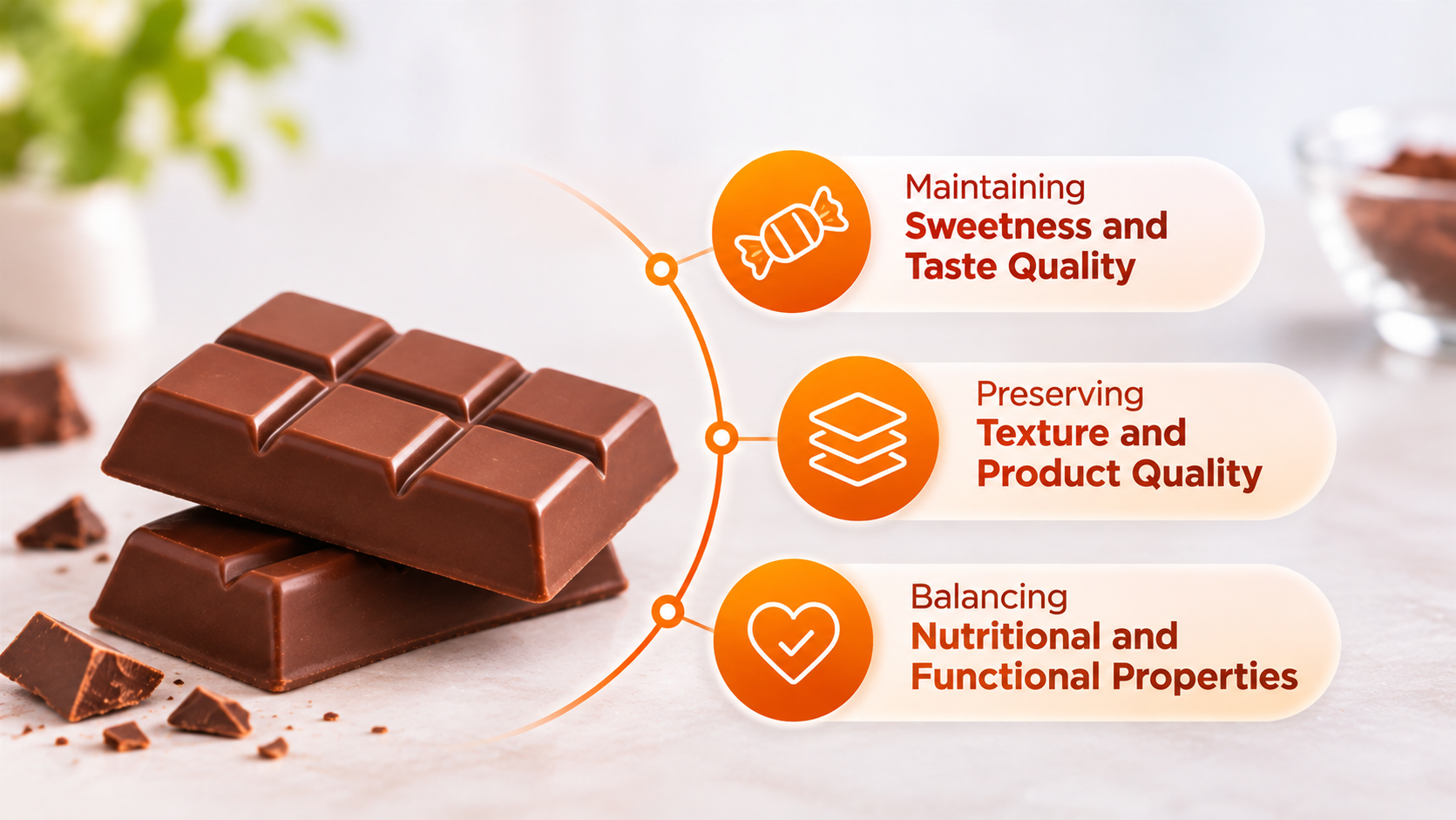
Reducing sugar in confectionery involves more than removing sweetness. Manufacturers must also consider its effects on the finished product. Here are three key challenges to consider:
Maintaining Sweetness and Taste Quality
Sweetness is a defining part of confectionery, but replacing sugar with alternative sweeteners can affect the overall sensory experience. Different sweeteners may produce varying sensory and flavour characteristics, with some presenting challenges such as bitterness, aftertaste and unpleasant flavours.1 Finding the right combination of ingredients is therefore important to achieve a balanced taste profile when reformulating confectionery.
Preserving Texture and Product Quality
Sugar contributes more than sweetness; it also provides bulk and plays an important role in the physical structure of confectionery.2 Replacing it without accounting for these functions can affect the finished product’s texture and overall eating experience. This is particularly important in chocolate, where reducing sugar can alter its characteristic texture and mouthfeel.
Balancing Nutritional and Functional Properties
Depending on the ingredients used, sugar-reduction strategies can offer different nutritional characteristics, such as reduced calorie content or added fibre. However, replacing sugar can also affect functional properties, including sweetness, bulk, texture and product stability. 3
Ingredient Solutions for Confectionery Formulation
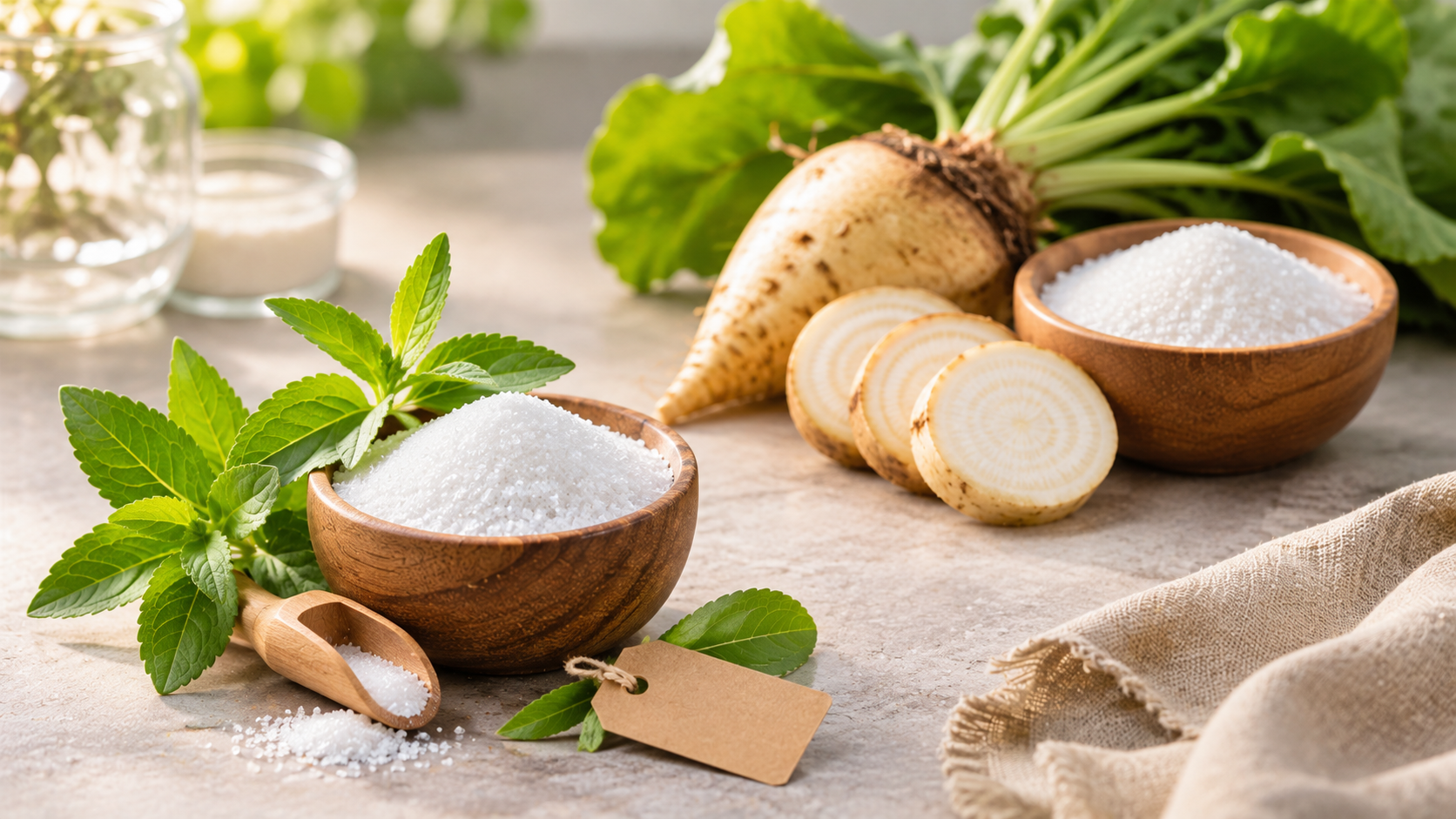
DPO International works with ingredient partners such as Almendra and BENEO to support manufacturers in developing confectionery products with different formulation needs. In reduced-sugar formulations, BENEO Isomalt ST-M can provide bulk and texture while Almendra Steviarome 2050 helps enhance perceived sweetness, complementing Isomalt’s milder sweetness profile. For manufacturers exploring alternative carbohydrate options, BENEO Palatinose offers a different approach with its low glycaemic and insulinaemic properties.
The table below highlights the nutritional and technical benefits of each ingredient.
Ingredient | Ingredient Type / Role | Nutritional Benefits | Technical Benefits |
Almendra Steviarome 2050 | Natural flavour with modifying properties | • Zero-calorie | • Clean label • pH and heat stable • Enhances perceived sweetness and modifies flavour characteristics |
BENEO Isomalt ST-M | Bulk sweetener | • Reduces calories (half the calories of sugar) • Tooth-friendly • Low GI • Low digestible carbohydrates | • Takes over the texturising role of sugar as a bulk sweetener • Approximately half as sweet as sugar • Sucrose-like natural sweetness without aftertaste • Masks the bitter aftertaste of some intense sweeteners • Enhances fine and subtle flavours with pleasant sweetness • Naturally derived from sugar beet • Low hygroscopicity • High process stability |
BENEO Palatinose PST-PF | Functional carbohydrate | • Low glycaemic • Low insulinaemic | • No lumping problem • Stable under acidic conditions |
Your Next Confectionery Innovation Starts Here
Ready to rethink sweetness in confectionery? Discover how the right ingredient combination can turn a simple treat into something special.
Looking to reformulate your confectionery products? Connect with DPO International for ingredient solutions, formulation support and regulatory expertise to help bring your product ideas to life.