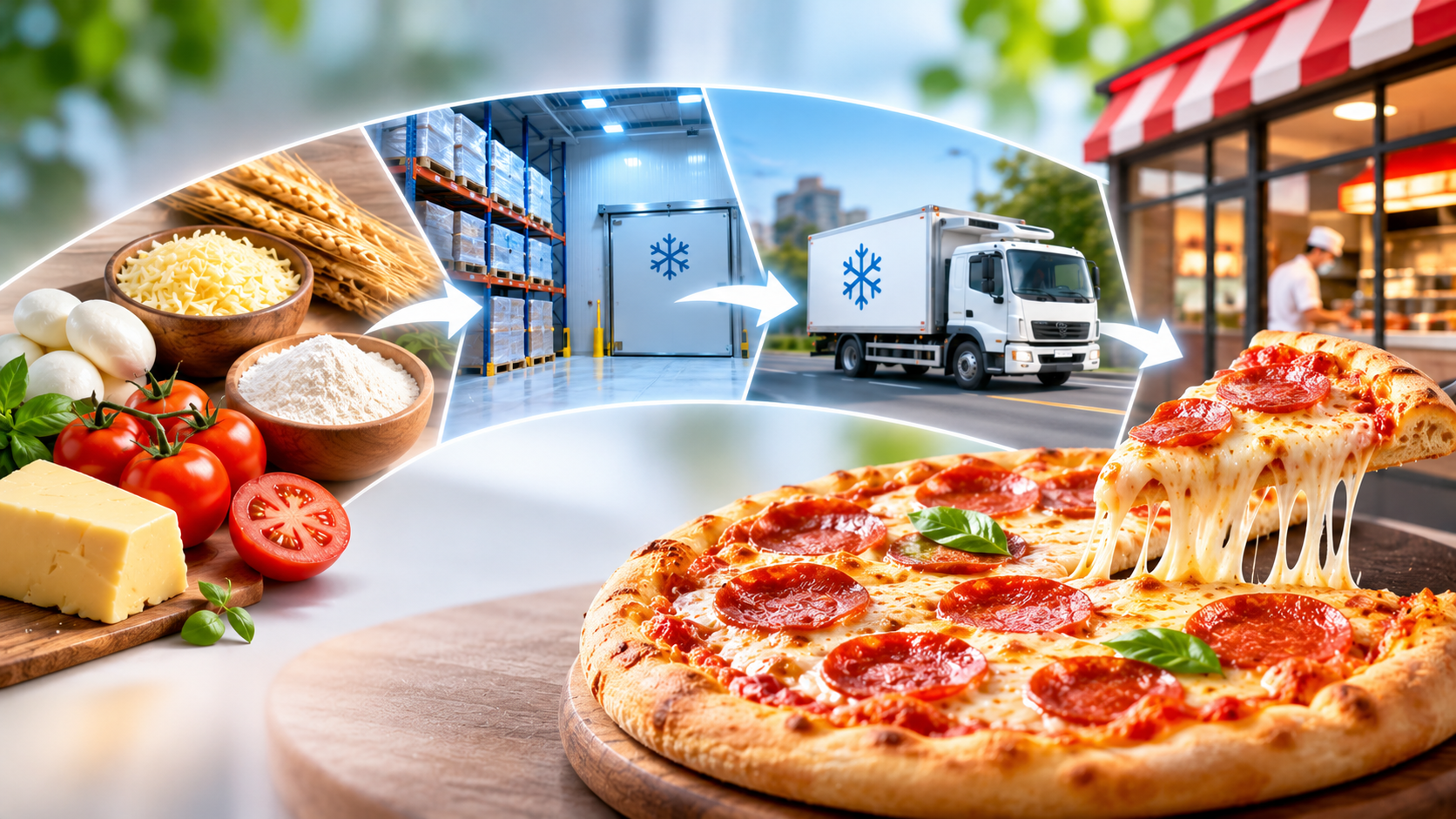
Ingredient shortages. Demand fluctuations. Multi-outlet inventory complexity.
For growing pizza chains and quick-service restaurant (QSR) operators, these challenges are more than just operational headaches. They can directly impact customer satisfaction, profitability, and long-term expansion plans. As a pizza chain scales across multiple locations, the need for a robust supply chain management strategy becomes increasingly critical.
Many QSR operators invest heavily in menu innovation, marketing, and customer experience. However, sustainable growth often depends on something less visible but equally important: a reliable and highly integrated supply chain.
This is where end-to-end supply chain management becomes a competitive advantage.
Why Supply Chain Management Matters for Pizza Chains
The success of a pizza chain depends on delivering consistent quality, availability, and service across every outlet. Whether it is mozzarella cheese, pizza sauce, flour, toppings, or specialty ingredients, every component needs to arrive at the right place, at the right time, and in the right condition.
Without an effective supply chain management system, businesses may face:
- Product shortages and stockouts
- Excess inventory and food wastage
- Rising logistics costs
- Inconsistent product quality
- Delayed restaurant openings
- Difficulty scaling across regions
As restaurant networks expand, supply chain complexity increases exponentially. A single disruption can affect dozens or even hundreds of outlets simultaneously.
Common Supply Chain Challenges Faced by QSR and Pizza Brands
Ingredient Shortages
Global sourcing volatility, seasonal supply variations, and geopolitical disruptions can create ingredient shortages unexpectedly.
For pizza chains, shortages of critical ingredients such as cheese, tomato products, specialty meats, or imported toppings can disrupt operations and negatively affect customer experience.
Businesses need strategic sourcing solutions that provide access to diversified supplier networks and contingency plans.
Demand Fluctuations
Consumer demand is rarely static.
Promotional campaigns, school holidays, sporting events, festive seasons, and changing consumer preferences can create sudden spikes or drops in demand.
Without proper forecasting and inventory planning, businesses risk either running out of stock or carrying excess inventory.
Multi-Outlet Inventory Complexity
As brands add more locations, inventory management becomes increasingly difficult.
Restaurant operators must balance stock levels across multiple outlets while maintaining product freshness and minimizing waste.
Centralized supply chain management helps improve inventory visibility and supports more efficient replenishment decisions.
What Is End-to-End Supply Chain Management?
End-to-end supply chain management refers to the coordination and optimization of every stage of the supply chain process, from sourcing raw materials to delivering products to final destinations.
For foodservice businesses, this typically includes:
- Strategic sourcing
- Procurement management
- Quality assurance
- Warehousing and storage
- Inventory management
- Distribution and transportation
- Supply chain visibility and reporting
Instead of managing multiple vendors and logistics partners separately, businesses can benefit from a single integrated solution.
Warehousing: Ensuring Inventory Availability and Food Quality
Warehousing plays a critical role in foodservice supply chain management.
A well-managed warehousing network ensures products remain available when needed while preserving quality and safety standards.
Key warehousing capabilities include:
Ambient Storage
Suitable for dry ingredients and packaged food products.
Chilled Storage
Maintains product freshness for temperature-sensitive ingredients.
Frozen Storage
Critical for preserving frozen ingredients and extending shelf life.
Inventory Control
Helps optimize stock levels and reduce wastage.
Effective warehousing enables pizza chains to maintain operational consistency while improving inventory efficiency across multiple locations.
Distribution: Delivering the Right Products at the Right Time
Even the best sourcing strategy can fail without reliable distribution.
Distribution management ensures ingredients reach restaurant outlets accurately and on schedule.
For growing pizza chains, efficient distribution provides:
- Faster replenishment cycles
- Improved delivery accuracy
- Better route optimization
- Reduced transportation costs
- Enhanced outlet support
A strong distribution network helps ensure every restaurant location receives consistent product availability, regardless of scale.
The Benefits of an Integrated Supply Chain Partner
Many QSR operators work with separate providers for sourcing, warehousing, and logistics. While this approach can work initially, it often creates inefficiencies as businesses expand.
An integrated supply chain partner offers several advantages:
Greater Visibility
Businesses gain a clearer view of inventory, supplier performance, and logistics operations.
Improved Efficiency
Consolidated processes reduce duplication and streamline decision-making.
Better Cost Control
Integrated operations can help optimize procurement, storage, and transportation expenses.
Business Scalability
Supply chain infrastructure can support expansion into new regions and markets.
Reduced Operational Risk
Diversified sourcing and coordinated logistics improve supply chain resilience.
Why Pizza Chains Need a Steady, Versatile, and Highly Integrated Supply Chain System
Restaurant growth requires more than great food.
As competition intensifies and customer expectations rise, supply chain performance becomes a strategic differentiator.
A steady supply chain ensures continuity.
A versatile supply chain adapts to market changes.
A highly integrated supply chain connects sourcing, warehousing, and distribution into a seamless ecosystem.
Together, these capabilities create a foundation for sustainable growth.
DPO International’s End-to-End Supply Chain Management Solutions
At DPO International, businesses gain access to comprehensive supply chain management solutions designed specifically for the foodservice industry. The company’s end-to-end approach supports growing restaurant brands through three critical pillars: Strategic Sourcing, Warehousing, and Distribution.
By integrating these functions within a single ecosystem, DPO International helps foodservice businesses improve operational efficiency, strengthen supply continuity, and support long-term growth objectives.
Whether a business operates a single restaurant or a rapidly expanding QSR network, having the right supply chain partner can make the difference between managing growth and accelerating it.
Supply chain management helps pizza chains maintain consistent ingredient availability, product quality, and service levels across all outlets. A reliable supply chain reduces stockouts, minimizes food waste, controls logistics costs, and supports business expansion.
Common challenges include ingredient shortages, demand fluctuations, and managing inventory across multiple locations. As restaurant networks grow, supply chain complexity increases, making strategic sourcing, forecasting, and inventory visibility increasingly important.
Pizza chains can reduce supply disruption risks by working with diversified supplier networks, implementing contingency sourcing plans, and partnering with supply chain providers that offer strategic sourcing capabilities and alternative supply options.
End-to-end supply chain management coordinates every stage of the supply chain, from sourcing and procurement to warehousing, inventory management, distribution, and logistics reporting. This integrated approach improves efficiency and supply chain visibility.
Effective warehousing ensures ingredients remain available while maintaining food quality and safety. Facilities with ambient, chilled, and frozen storage capabilities help restaurants optimize inventory, preserve freshness, and reduce wastage
Distribution ensures ingredients and products reach restaurant outlets accurately and on schedule. Efficient distribution supports faster replenishment, improved delivery accuracy, lower transportation costs, and better support for multi-outlet operations.
An integrated supply chain partner can provide greater visibility, improved operational efficiency, better cost control, scalability for expansion, and stronger supply chain resilience through coordinated sourcing, warehousing, and logistics management.
A steady and highly integrated supply chain enables restaurant brands to adapt to market changes, maintain supply continuity, and scale into new regions more efficiently. Strong supply chain infrastructure becomes a foundation for sustainable long-term growth.