
Introduction
If you are managing blood sugar levels, you’ve probably seen magnesium mentioned alongside diabetes, insulin resistance, and metabolic health. That’s because magnesium plays an important role in how the body uses insulin and processes glucose. Researchers have found that people with diabetes are more likely to have low magnesium levels, leading to growing interest in whether magnesium may help support healthy blood sugar management. As researchers continue to investigate the role of nutrition in metabolic health, magnesium has emerged as one of the most studied minerals due to its involvement in blood glucose regulation, insulin signaling, and energy production.[1]
Magnesium is required for more than 300 enzyme systems in the body and plays an essential role in protein synthesis, muscle and nerve function, blood pressure regulation, and blood glucose control.[1] Because of these functions, scientists have explored the relationship between magnesium deficiency and blood sugar management, particularly in people with type 1 diabetes and type 2 diabetes.[2]
This article reviews the scientific evidence linking magnesium and blood sugar, explains how magnesium affects insulin sensitivity, discusses magnesium-rich foods and fortification, and highlights considerations for food and beverage manufacturers developing nutrition-focused products.
What is Magnesium and What are the Health Benefits?
Magnesium is an essential mineral that is present in a wide variety of our foods. Research has linked adequate magnesium intake with several physiological functions, including [1]:
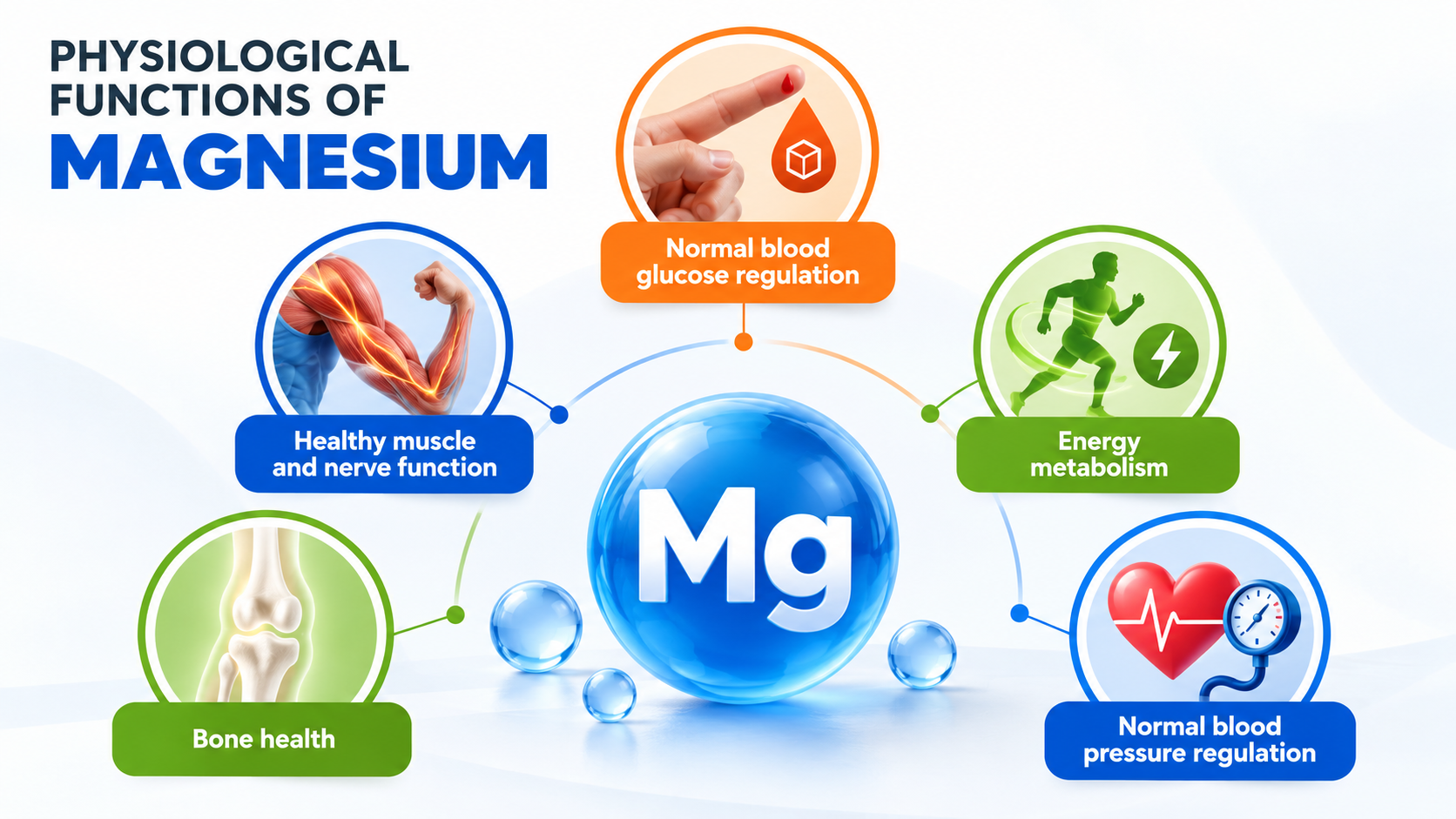
While magnesium plays an important biological role, it should not be viewed as a treatment or cure for diabetes. Rather, maintaining sufficient magnesium status may support normal metabolic processes associated with glucose control.[1][2]
Magnesium, Blood Sugar and Insulin Sensitivity: What Is the Connection?
To understand the link between magnesium and blood sugar, it helps to start with insulin. Insulin acts like a key, helping glucose move from the bloodstream into cells where it can be used for energy. Magnesium supports several enzyme reactions involved in insulin signaling and glucose metabolism, making it an important nutrient for normal metabolic function.[2][3]
This is why researchers have explored the relationship between magnesium and insulin sensitivity, which refers to how effectively the body’s cells respond to insulin. Reduced insulin sensitivity, often called insulin resistance, is a hallmark of type 2 diabetes.
Scientific studies suggest that magnesium plays a role in insulin action and glucose transport mechanisms.[2][3] Studies have shown that oral magnesium supplementation improved several markers of insulin sensitivity in people with diabetes or those at elevated risk of developing the condition.[3] Researchers also reported reductions in fasting blood glucose and improvements in certain measures of glucose metabolism among these populations.[3]
The relationship between magnesium and type 2 diabetes has also been extensively studied.
A 2025 meta-analysis of 23 clinical trials found that magnesium supplementation improved magnesium status and reduced fasting blood glucose levels in people with type 2 diabetes. The effect on HbA1c, a marker of long-term blood sugar control, was more modest. [5]
However, these findings should be interpreted carefully. While magnesium supplementation may support healthy glucose metabolism, current evidence does not show that magnesium alone can prevent, treat, cure, or reverse diabetes.[2][3]
Magnesium Deficiency and Blood Sugar
Magnesium deficiency and blood sugar regulation appear to have a bidirectional relationship. Low magnesium levels have been observed more frequently in people with diabetes, while elevated blood glucose may increase urinary magnesium losses.[4][5] Potential consequences associated with inadequate magnesium status may include:
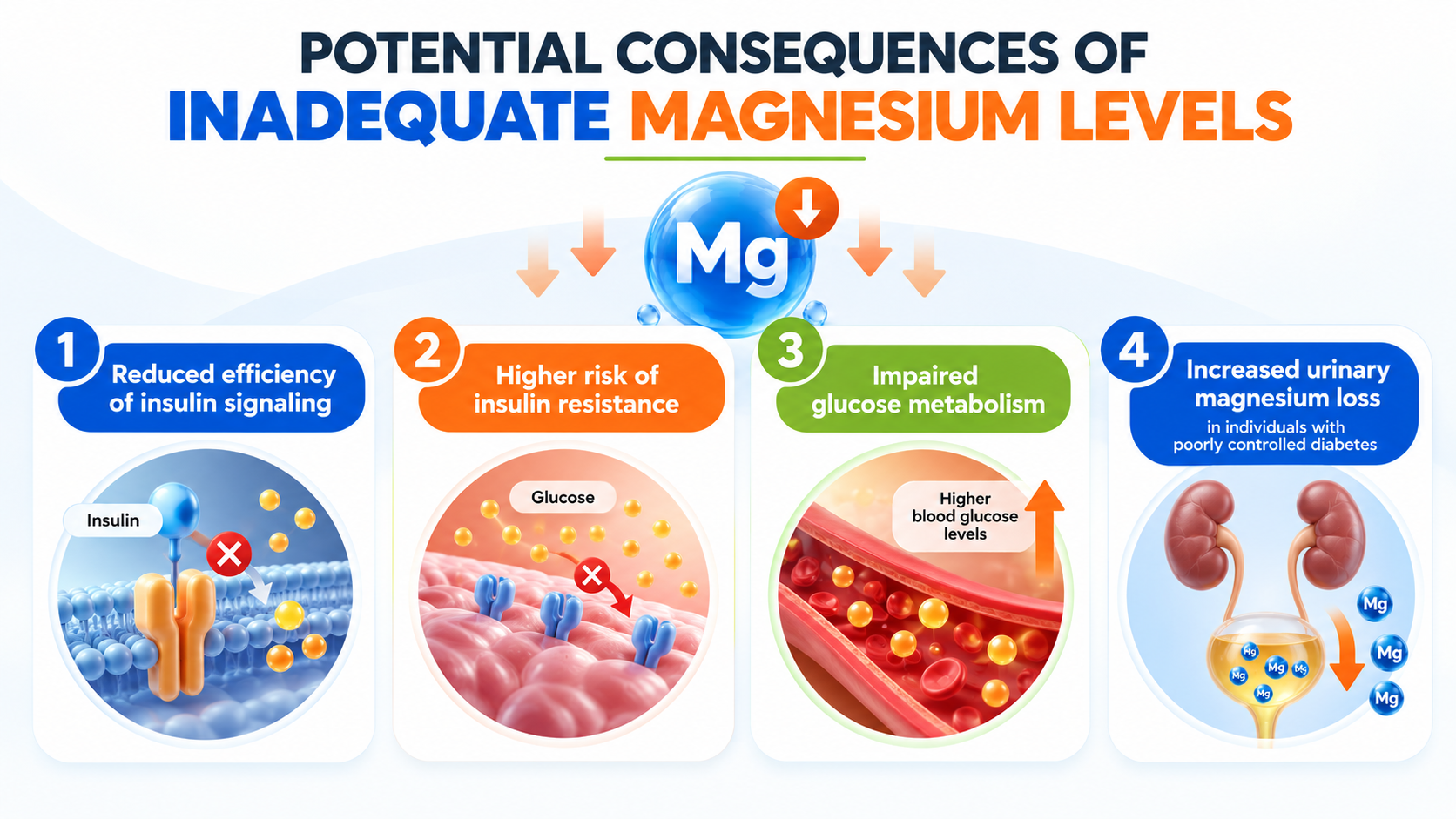
It is important to note that association doesn’t necessarily prove causation. Researchers continue to investigate whether correcting magnesium deficiency directly improves long-term metabolic outcomes.[2][4]
Why would magnesium deficiency matter to the average consumer?
An estimate of 2.4 billion people globally, or roughly 31% of the global population, fail to meet the recommended magnesium intake levels. [8] Consumers are often encouraged to meet their magnesium needs through foods naturally rich in magnesium. However, factors such as fast-paced lifestyles, limited access to whole foods, and declining soil mineral content make achieving adequate magnesium intake increasingly challenging. As a result, many consumers are seeking out more convenient ways to increase their magnesium intake.
At the same time, market interest in metabolic health has expanded beyond pharmaceutical interventions. Consumers are increasingly exploring dietary approaches that may naturally support healthy blood sugar levels, including:
- Higher-fiber diets
- Protein-focused nutrition
- Low glycemic foods
- Essential minerals such as magnesium
This trend reflects growing awareness that overall nutrition, lifestyle, and nutrient adequacy all contribute to long-term metabolic health.[1][4]
What Do Consumers Want from Magnesium Products?
Opportunities for Food and Beverage Product Development
Consumer interest in magnesium has expanded beyond general wellness. Today’s shoppers are increasingly seeking products that support blood sugar management, metabolic health, energy production, and healthy aging. Interest in functional nutrition has also increased demand for products containing nutrients associated with insulin sensitivity, glucose metabolism, and overall wellness.
Food and beverage manufacturers are increasingly exploring:
- Functional beverages
- Nutritional formulas
- Fortified cereals
- Better-for-you snacks
Consumers are particularly attracted to solutions that combine scientific credibility, convenience, and great taste. As a result, products delivering meaningful levels of magnesium alongside complementary nutrients such as fiber, protein, and other essential minerals may be well positioned in the growing metabolic health category.
In this environment, ingredient quality, regulatory compliance, stability, and formulation expertise are critical.
Conclusion
Consumers are increasingly seeking nutrient-dense products that align with their goals for blood sugar management, metabolic health, and overall wellbeing. As interest in blood sugar management and metabolic health continues to grow, manufacturers have an opportunity to deliver products that combine nutritional relevance with scientific credibility.
The challenge is transforming a promising concept into a market-ready product. Success depends on ingredient quality, formulation expertise, product stability, and access to trusted suppliers.
At DPO International, we help bridge that gap. Through our partnership with Hexagon Nutrition Ltd and its vitamins and minerals portfolio, combined with our expertise in ingredient solutions and application development, we support food and beverage manufacturers in creating products that are not only nutritionally meaningful, but also commercially successful.
Because great products start with great ingredients, but successful products require the right partner behind them.