How Can Beta-Glucan Help Lower Cholesterol?
Not all cholesterol is the same. LDL cholesterol, often referred to as “bad” cholesterol, is one of the key blood cholesterol measures associated with cardiovascular health.
Barley beta-glucan has been extensively studied for its effect on LDL cholesterol. A systematic review and meta-analysis of 14 randomized controlled trials involving 615 participants found that barley beta-glucan significantly reduced LDL cholesterol and non-HDL cholesterol compared with control diets1.
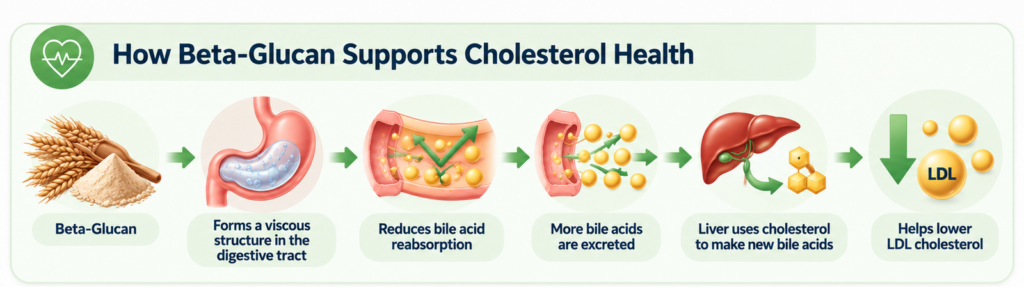
The effect is linked to beta-glucan’s soluble and viscous properties. When it mixes with fluid in the digestive tract, beta-glucan forms a thicker, gel-like structure that can affect the movement and reabsorption of bile acids in the intestine. When more bile acids are excreted, the liver uses cholesterol to produce new bile acids, which can contribute to greater removal of LDL cholesterol from the blood2.
What About Blood Sugar?
Beta-glucan has also been studied for its effect on blood glucose after a meal. Its gel-forming properties can slow the digestion and absorption of carbohydrates, allowing glucose to enter the bloodstream more gradually. As a result, beta-glucans from oats or barley can help reduce the rise in blood glucose after eating.3.
This effect is recognized through an authorized health claim in the European Union. The claim applies when beta-glucans from oats or barley are consumed as part of a meal, with the food providing at least 4 g of beta-glucans for each 30 g of available carbohydrates in a quantified portion. Importantly, 4 g should not be described as a general recommended daily intake. It is the specific amount required under the EU conditions of use for this health claim3.

One Fiber, Two Nutritional Opportunities
Beta-glucan therefore offers manufacturers an opportunity to address two areas of growing consumer interest: cholesterol and post-meal blood glucose response.
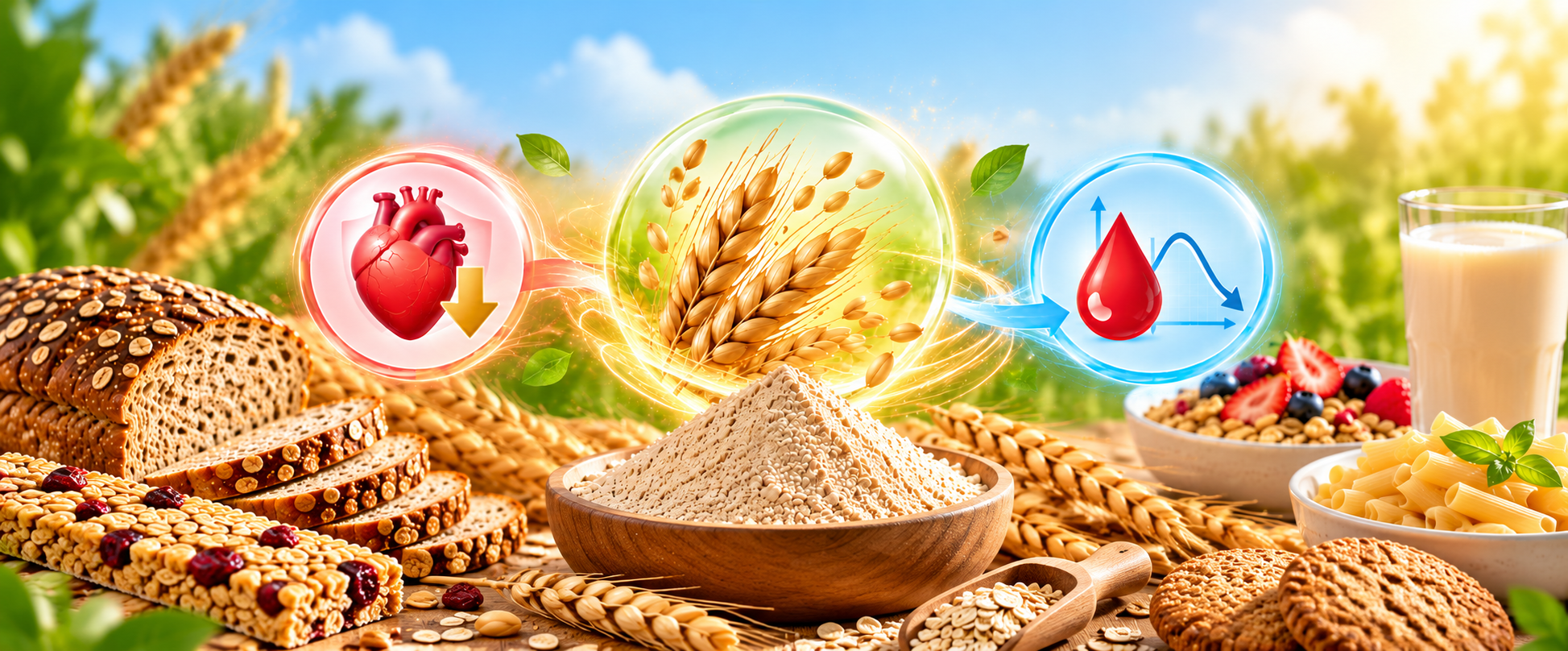
For cholesterol, beta-glucan’s viscosity can influence bile acid movement and reabsorption, supporting the body’s use of cholesterol to produce new bile acids. For blood glucose, the same viscous properties can slow the digestion and absorption of carbohydrates, helping glucose enter the bloodstream more gradually.
These effects make beta-glucan particularly interesting for products designed around everyday nutrition, rather than products positioned only as specialized health foods.
What Is Orafti® β-Fit?
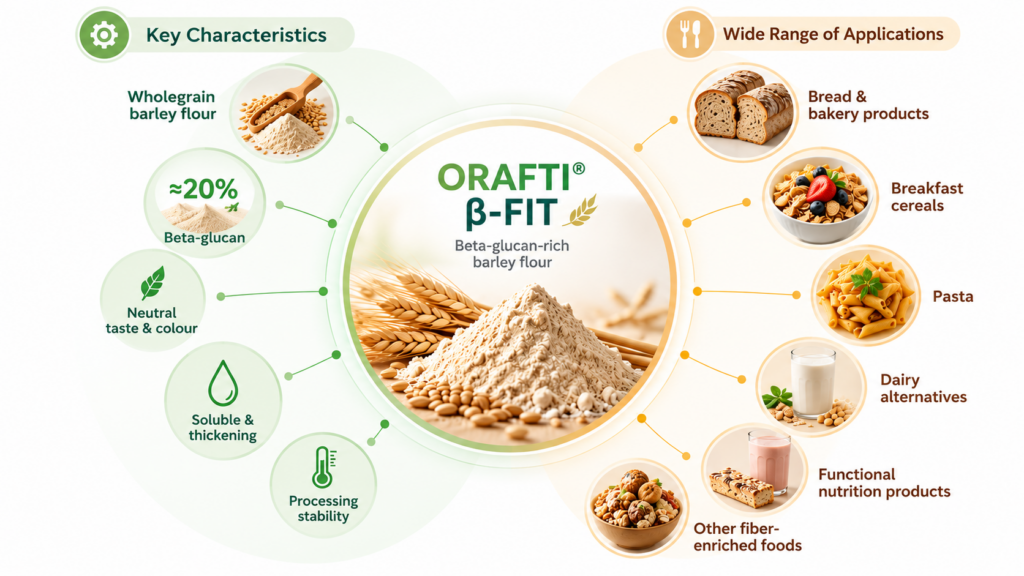
Orafti® β-Fit is a wholegrain barley flour produced through milling and dry enrichment, providing approximately 20% beta-glucan. It can be used as beta-glucan-rich barley flour in food formulations4.
From Nutritional Benefit to Product Development
Adding beta-glucan to a product is not simply about reaching a target fiber level. Manufacturers also need to consider how the ingredient performs within the complete formulation.
Factors such as beta-glucan concentration, serving size, viscosity, taste, texture and processing conditions can influence the final product. The available carbohydrate content of the food is also important when developing products intended to meet the specific EU condition for the authorized post-meal blood glucose claim.
This makes ingredient selection and formulation support important parts of the product development process.
For example, beta-glucan can be incorporated into familiar food formats such as bread, cereal, pasta and bakery products, allowing manufacturers to add nutritional value while maintaining the eating experience consumers already expect.
The Bigger Opportunity: Everyday Better Nutrition
Consumers are increasingly looking for foods that offer added nutritional value without requiring major changes to their everyday eating habits.
This creates opportunities for manufacturers to incorporate functional ingredients into familiar food formats, from bakery and cereals to pasta and dairy alternatives.
Beta-glucan fits this opportunity by combining a recognizable fiber source with established research around cholesterol and post-meal blood glucose response.
For manufacturers, the opportunity is not simply to add more fiber, but to develop products that deliver meaningful nutritional benefits while maintaining the taste, texture and convenience consumers expect.
Why DPO International?
Developing a functional ingredient into a successful food product requires more than ingredient selection. Manufacturers also need to consider formulation requirements, processing conditions, product positioning and the intended nutritional benefits.
With ingredients such as Orafti® β-Fit from BENEO, DPO International can support manufacturers exploring beta-glucan applications across bakery, cereals, pasta, dairy alternatives and functional nutrition.
From ingredient selection and technical evaluation to formulation and application support, DPO International helps manufacturers translate nutritional concepts into practical food solutions that meet both formulation requirements and consumer expectations.
Want to explore the wider potential of beta-glucan in Asia?
Read our Beta-Glucan in Asia article for further insights into regulatory considerations and market opportunities across the region.