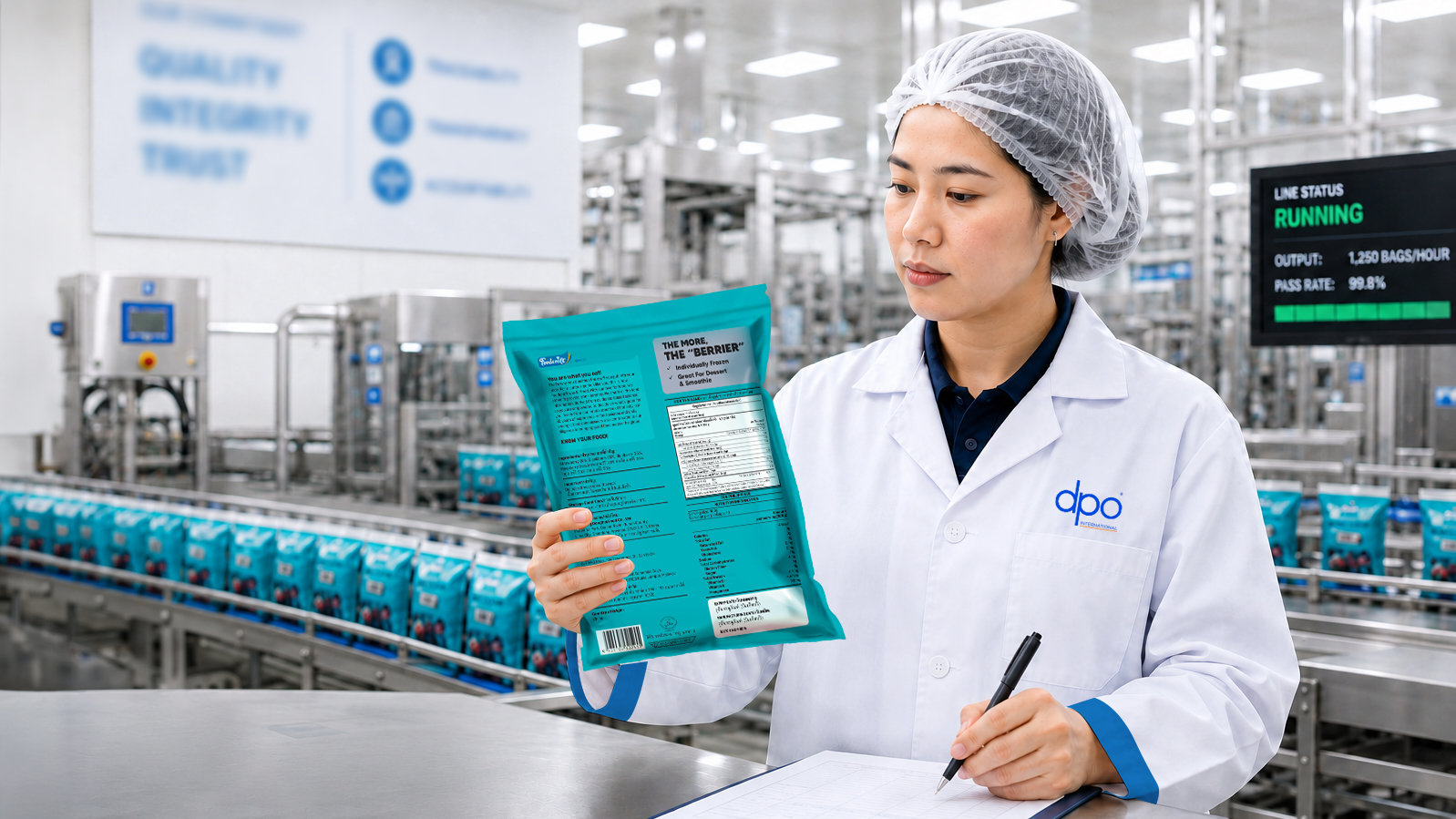
Consumers today expect more than safe food—they expect products to be authentic, transparent, and true to their claims. Whether it is ingredient sourcing, country-of-origin claims, product composition, or halal status, trust has become an increasingly important factor influencing purchasing decisions.
Recent reports in Malaysia highlighting concerns around food adulteration and food fraud have sparked broader discussions around food authenticity, transparency, and consumer confidence across the food industry. While these concerns may appear isolated, they reflect broader challenges facing food manufacturers throughout Southeast Asia.
As food supply chains become more complex and consumer expectations continue to evolve, manufacturers are under growing pressure to demonstrate product integrity and provide greater assurance around the authenticity of their products.
This raises an important question for manufacturers: how can businesses strengthen trust and demonstrate product integrity in an increasingly demanding marketplace?
Why Food Authenticity Matters Beyond Compliance
Food authenticity is often associated with product quality and regulatory compliance. However, its importance extends beyond meeting requirements.
For food manufacturers, food authenticity can influence:
- Consumer trust
- Brand reputation
- Retailer confidence
- Export opportunities
- Halal credibility
When food authenticity is compromised, the impact can extend far beyond regulatory concerns.
In today’s competitive market, trust can take years to build but only moments to lose. A single authenticity-related issue can raise questions about product integrity and affect how consumers perceive a brand.
This is why food authenticity is increasingly being viewed as a business priority rather than simply a quality or compliance issue.
What Happens When Food Authenticity Is Compromised?
Food authenticity can be undermined through food fraud, adulteration, mislabelling, and ingredient substitution. These practices involve products being altered, substituted, or represented in ways that do not accurately reflect what is claimed on the label.
Common examples include:
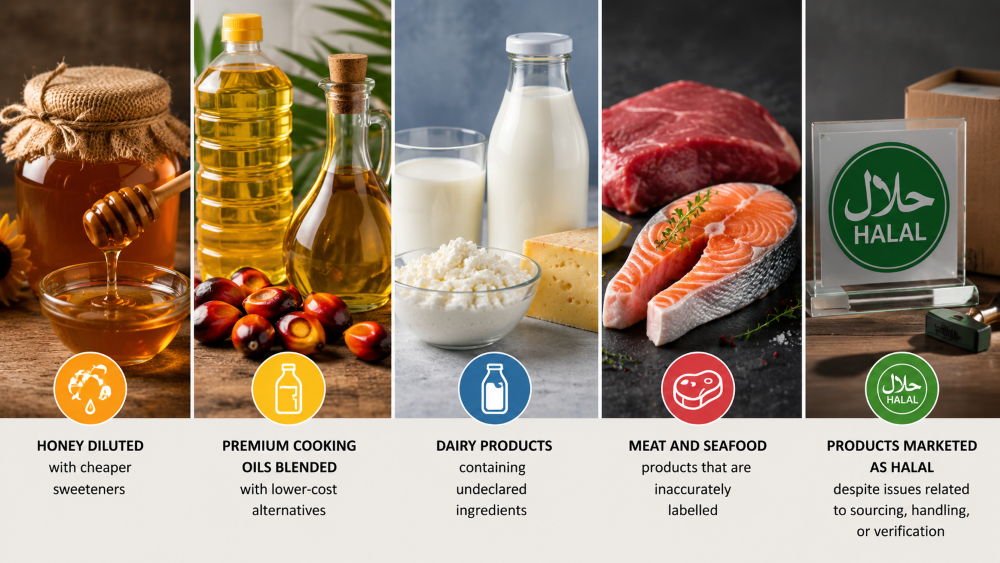
These practices may not always pose an immediate food safety risk, but they can create uncertainty around product quality, authenticity, and trustworthiness.
How Can Manufacturers Strengthen Food Authenticity?
Addressing food authenticity requires more than identifying risks—it also requires proactive measures to strengthen verification, accountability, and transparency throughout the supply chain.
Some key areas manufacturers can focus on include:
Key Focus Area | Why It Matters |
Supplier Verification | Working with trusted suppliers and reviewing supporting documentation can help reduce the risk of misrepresentation and strengthen confidence in product claims. |
Documentation Practices | Maintaining accurate records supports ingredient origins, product claims, and regulatory requirements while improving accountability throughout the supply chain. |
Transparency | Providing clear information about sourcing and production practices can help build trust among consumers, retailers, and business partners. |
Traceability | The ability to track ingredients and products throughout the supply chain supports verification efforts and provides greater assurance around product integrity. |
As manufacturers look to strengthen confidence in product claims, traceability is becoming an increasingly important tool for verification and accountability.
How Halal Traceability Supports Food Authenticity
In Southeast Asia, one area where traceability is receiving growing attention is halal assurance. For many consumers, confidence in a product depends not only on halal certification, but also on the assurance that halal requirements are maintained throughout the supply chain.
As demand for halal products continues to grow across the region, manufacturers are increasingly expected to provide greater visibility into ingredient sourcing, handling practices, and supplier verification.
What Is Halal Traceability?
Halal traceability refers to the ability to track and verify halal ingredients, processes, and handling practices throughout the supply chain—from source to finished product.
For manufacturers, stronger halal traceability can help:
- Support halal integrity throughout the supply chain
- Improve supplier verification and accountability
- Reduce the risk of cross-contamination
- Strengthening transparency around product claims
- Build confidence among halal-conscious consumers
Beyond supporting compliance requirements, halal traceability is becoming an increasingly important tool for strengthening food authenticity and consumer trust.
What This Means for Manufacturers

As food authenticity continues to gain attention across the food industry, manufacturers are facing increasing expectations around product integrity, transparency, and verification. Meeting these expectations often requires a combination of regulatory understanding, market knowledge, and local expertise.
Bringing food products to market also involves navigating evolving regulatory requirements, changing consumer preferences, and market-specific considerations.
At DPO International, we support brands entering and growing across Southeast Asia through regulatory support, product application support, market insights, and local market expertise. These capabilities help manufacturers navigate market-specific requirements and opportunities with greater confidence.
As the food industry continues to evolve, manufacturers that take a proactive approach to authenticity, transparency, and verification may be better positioned to respond to changing market expectations and strengthen their competitive position.