


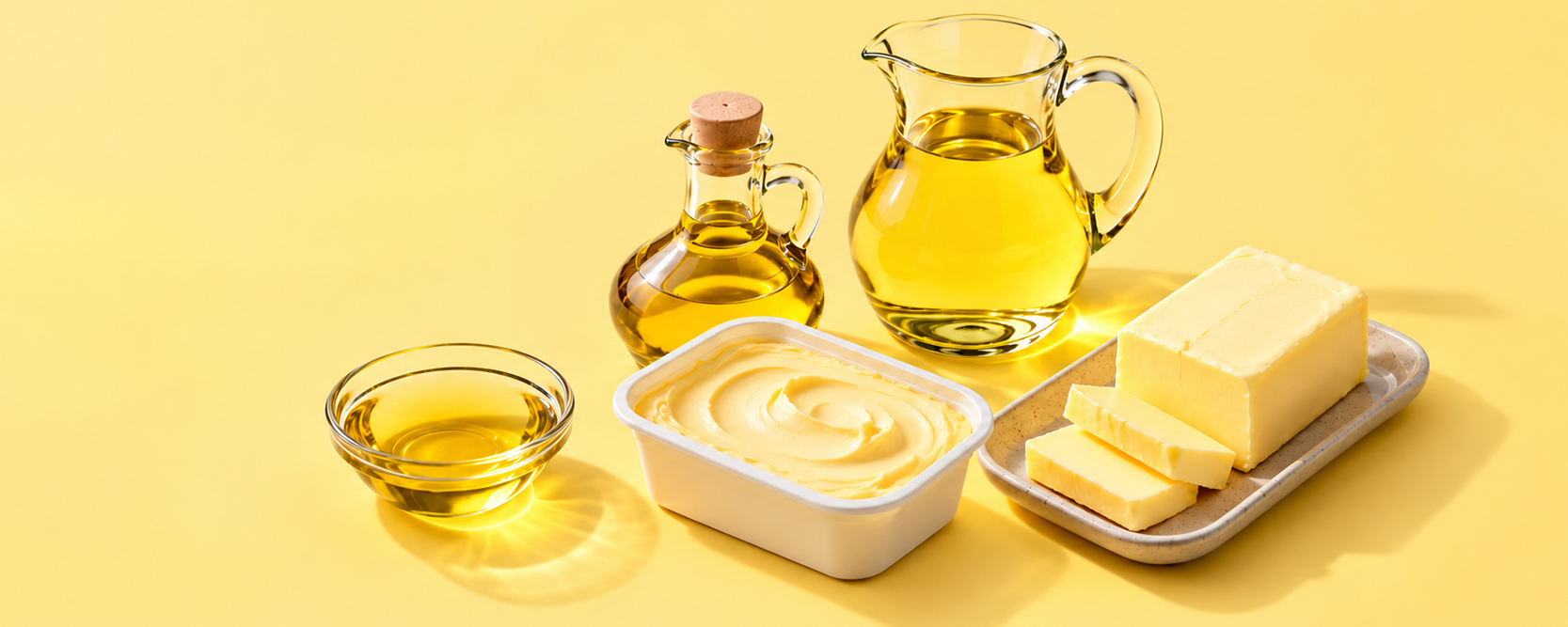
Oils and fats are evolving from conventional formulation ingredients into more functional components of food and beverage innovation. They help give food its texture, creaminess and distinctive eating experience, while certain types also offer nutritional benefits. As F&B innovation advances, manufacturers are exploring new ways to use fats to improve product quality, meet specific nutritional needs and develop alternative formulations. At the same time, climate pressures, resource constraints and supply-chain uncertainty are encouraging industry to explore new sources of fats. From improving texture to rethinking how fats are produced and sourced, these developments are shaping the future of food formulation.
What are the key oils and fats trends shaping F&B applications in 2026? Explore four key trends and discover how they are influencing product development and formulation.
Key Trend 1: Designing Fat Blends for Targeted Texture and Sensory Performance
Manufacturers are now moving away from relying on a single fat source and increasingly fine-tuning combinations of oils and fats to achieve specific texture and sensory targets. The type, ratio and composition of fats can influence properties such as hardness, creaminess, melting behaviour, oil retention, stretch and mouthfeel, allowing fat systems to be tailored to the requirements of different food applications. This approach gives formulators greater flexibility to balance product functionality with evolving nutritional and formulation requirements.1
Plant-based cheese provides a clear example of this approach. Research found that a blend of 25% coconut oil and 75% sunflower oil achieved functionality comparable to or better than formulations using coconut oil alone, particularly in areas such as meltability, oil retention and stretch. ² These findings highlight how carefully designed fat blends can help manufacturers achieve the desired eating experience while modifying the overall fat composition of a product.
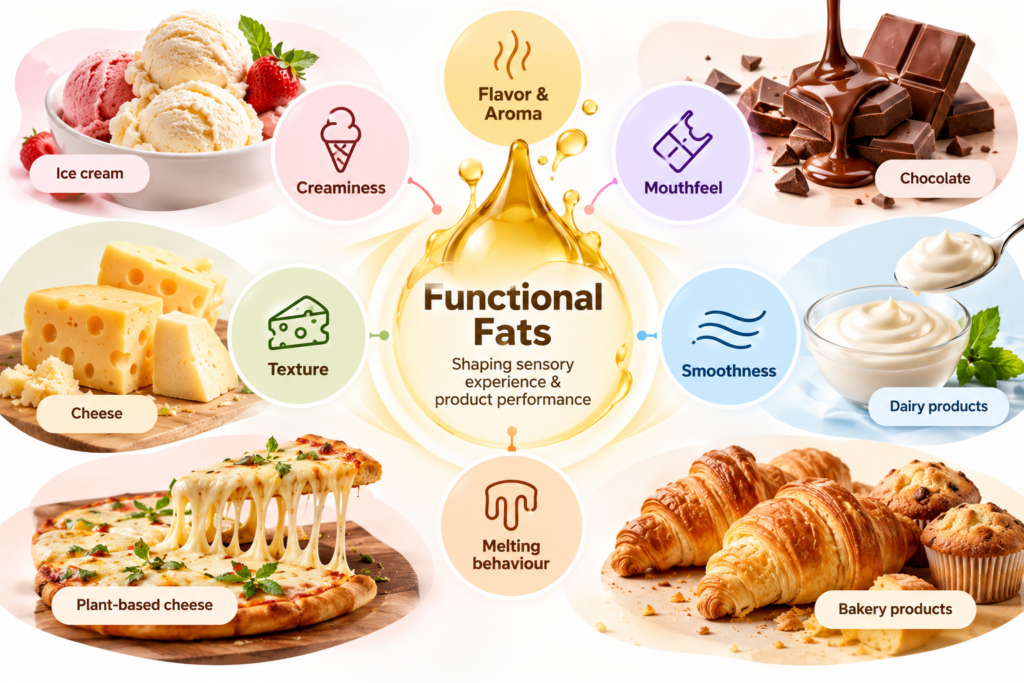
Key Trend 2: Functional Fats for Targeted Nutrition
Beyond providing energy, certain oils and fats offer specific nutritional functions. Functional lipids such as omega-3 and omega-6 fatty acids conjugated linoleic acid (CLA), medium-chain triglycerides (MCTs) and phytosterols are gaining attention for their potential roles in areas such as lipid metabolism, energy balance and cardiovascular health. This allows manufacturers to consider not only the nutritional value of fats, but also how different lipid sources may support the intended nutritional goals of a food or beverage product. ³
These ingredients can be used in different ways across F&B applications. Omega-3-rich oils, including

