



GLP-1 therapies are changing how consumers think about food, nutrition and eating habits. As appetite and food intake decrease, consumers are paying attention to foods that deliver meaningful nutrition, support muscle health, promote digestive wellbeing and fit changing lifestyles. Across Asia and other markets, this is creating new opportunities for food and beverage manufacturers to develop products that align with the evolving needs of GLP-1 users. From protein and fibre to nutrient-dense portions and convenient formats, innovation is moving beyond weight management to broader nutritional support.
Let’s dive into four GLP-1 food and beverage trends shaping the next wave of product innovation in 2026.
Key Trend 1: Maximising Nutrition in Smaller Portions
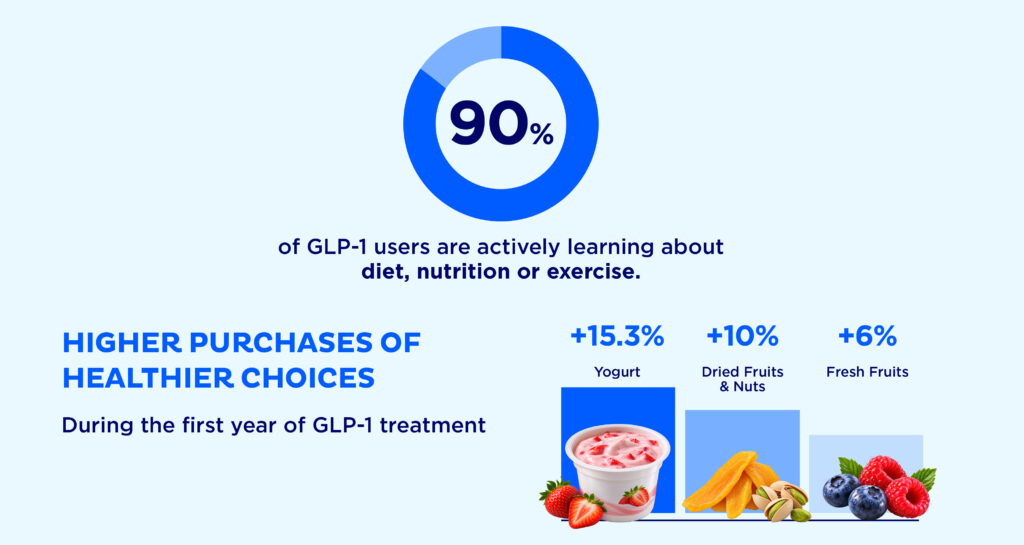
As GLP-1 therapies suppress appetite and increase feelings of satiety, users may consume less food, making the nutritional value of each eating occasion more important. With greater attention to diet and lifestyle, 90% of surveyed GLP-1 users reported taking steps to learn about diet, nutrition or exercise. The focus is therefore moving beyond calorie reduction towards making smaller eating occasions more nutritionally meaningful, helping consumers maintain adequate nourishment despite a lower overall food intake. During the first year of GLP-1 treatment, this shift in food choices was reflected in purchasing behaviour, with yogurt purchases increasing by 15.3%, dried fruit and nuts by 10%, and fresh fruit by 6%.¹˒²
Eating less naturally places greater emphasis on the quality of each eating occasion, making it essential that every portion delivers a satisfying sensory experience. Texture plays a critical role in enhancing enjoyment of smaller portions, helping consumers feel more satisfied while supporting adequate nutrient intake. In fact, 39% of current GLP-1 users reported that texture had become more important since starting treatment, citing its role in making food feel more satisfying and enjoyable.²
For food and beverage manufacturers, this creates an opportunity to develop nutrient-dense products in convenient portions that deliver both meaningful nutrition and a satisfying sensory experience, rather than simply reducing serving sizes.2
Key Trend 2: Protein-Powered Nutrition
Maintaining muscle mass

