
Plant-based bakery innovation is creating new opportunities for manufacturers to rethink familiar baked goods. Beyond replacing eggs and dairy, alternative ingredients can bring additional nutritional value to bakery formulations through plant-based protein, dietary fibre and other beneficial components.
However, incorporating these ingredients is only part of the challenge. Manufacturers also need to understand how they interact within a formulation to achieve the desired taste, texture, structure and overall product quality.
Muffins offer an interesting application to explore. Their popularity has grown in recent years, with convenience and single-serving formats contributing to their appeal. 1
So, how can manufacturers develop plant-based bakery products that offer additional nutritional value while maintaining the qualities consumers expect from familiar baked goods? To explore this, we take a closer look at MuffinGoodness, our plant-based chocolate muffin concept, and the ingredients that bring it together.
What Are the Challenges of Developing Plant-Based Bakery Products?
Developing plant-based bakery products involves more than replacing eggs and dairy. These ingredients contribute to various properties in conventional bakery formulations, including moisture, aeration and structure. Manufacturers must therefore consider how alternative ingredients can fulfil these functions while delivering the desired nutritional profile and finished-product quality.
Some key challenges include:
- Maintaining Nutritional Value
Removing or replacing conventional ingredients can change a product’s nutritional profile. Manufacturers may also want to go further by incorporating plant-based protein, dietary fibre and other nutritional components without compromising product appeal.
- Achieving the Right Texture and Moisture
Plant proteins and fibres have different water-binding and absorption properties. Depending on the formulation, these can influence moisture retention, softness and the overall eating experience.
- Building Structure and Aeration
Eggs play an important role in providing structure and supporting aeration in conventional bakery products. Without them, achieving sufficient volume, a soft crumb and the desired product rise requires alternative functional ingredients.
- Maintaining Batter Stability and Product Quality
Introducing different plant-based ingredients can change how a batter behaves during mixing and baking. Manufacturers need to manage ingredient interactions to achieve consistent batter performance and finished-product quality.
Introducing Our MuffinGoodness Product Concept
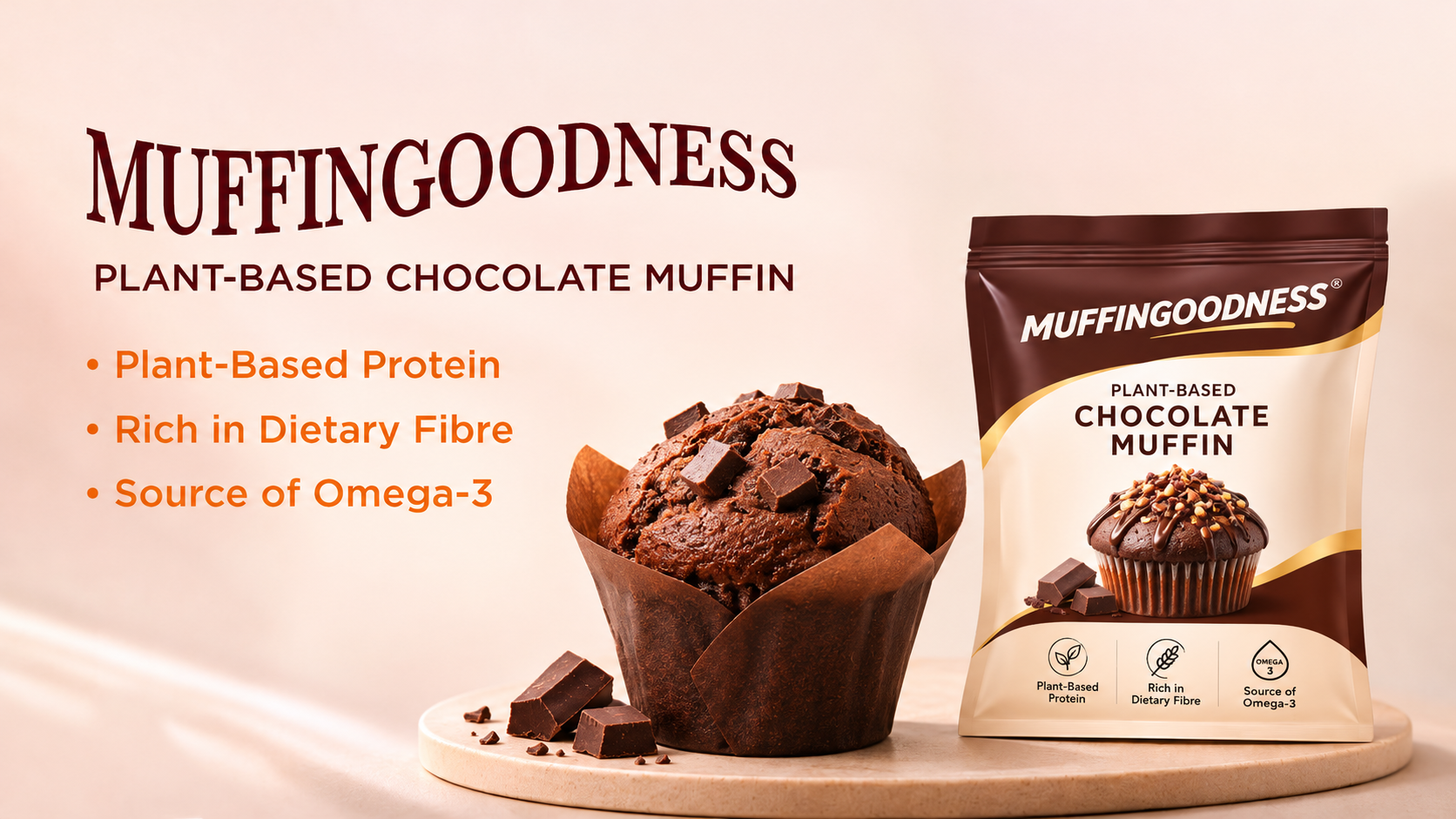
What if your favourite chocolate muffin came with a little extra goodness?
Meet MuffinGoodness, our plant-based chocolate muffin concept that brings together rich chocolate indulgence and plant-powered nutrition.
No eggs, no dairy – just a familiar chocolate favourite with a plant-powered twist. Featuring chia fibre and faba bean protein, this concept brings dietary fibre, plant-based protein and a source of omega-3 into a familiar bakery favourite.
With its rich cocoa profile and chocolate chips, MuffinGoodness demonstrates how a familiar bakery favourite can be reimagined with plant-based ingredients and additional nutritional contributions
Which Ingredients Bring Our Plant-Based Chocolate Muffins Together?
Behind the MuffinGoodness concept is a combination of ingredients selected for their complementary nutritional and functional properties. Each contributes differently to the formulation, from adding plant-based nutrition to supporting batter performance and finished-product quality.
Ingredient | Nutritional Benefits | Technical Benefits |
Benexia Xia Powder 435 LM | • 56% dietary fibre | • Supports water absorption and moisture management |
BeneoPro FB P60 HT2 | • High plant-based protein content | • Supports air-cell stabilisation and rising without egg whites |
Palsgaard Emulpals 117 | — | • Supports emulsification and fast aeration |
Palsgaard DMG 5611 | — | • Improves batter stability, softness and mouthfeel |
Together, these ingredients show how nutritional and functional components can complement one another in plant-based bakery formulations. By combining protein and fibre contributions with functionalities that support aeration, moisture management and crumb quality, manufacturers can explore different ways to develop plant-based bakery products.
Where Else Can These Ingredients Be Explored in Bakery Applications?
The possibilities extend beyond chocolate muffins. Depending on formulation requirements and application trials, plant-based proteins, fibres and emulsifiers can also be explored in other bakery concepts, including brownies, cupcakes, egg-free cakes and quick breads.
Each application presents different formulation requirements, creating opportunities for manufacturers to explore ingredient combinations that support their desired nutritional profile, texture and product performance.
Looking to develop your next plant-based bakery concept? Connect with our Industry team to explore ingredient solutions and formulation possibilities for your product development needs.
Click the button below to get MuffinGoodness Product Concept Recipe!