
Dietary fibre is often discussed in terms of how much people consume. Increasing intake remains important, but quantity is only part of the picture. Different types of dietary fibre have different properties and can play different roles in the body, from supporting bowel regularity to contributing to cholesterol management and nourishing the gut microbiota.
For food manufacturers, understanding these differences creates opportunities to move beyond simply adding more fibre to a product.
Choosing fibres according to their properties, nutritional role and intended application can help create foods that deliver a more purposeful nutritional profile while maintaining the qualities consumers expect.
Why Dietary Fibre Matters for Everyday Health
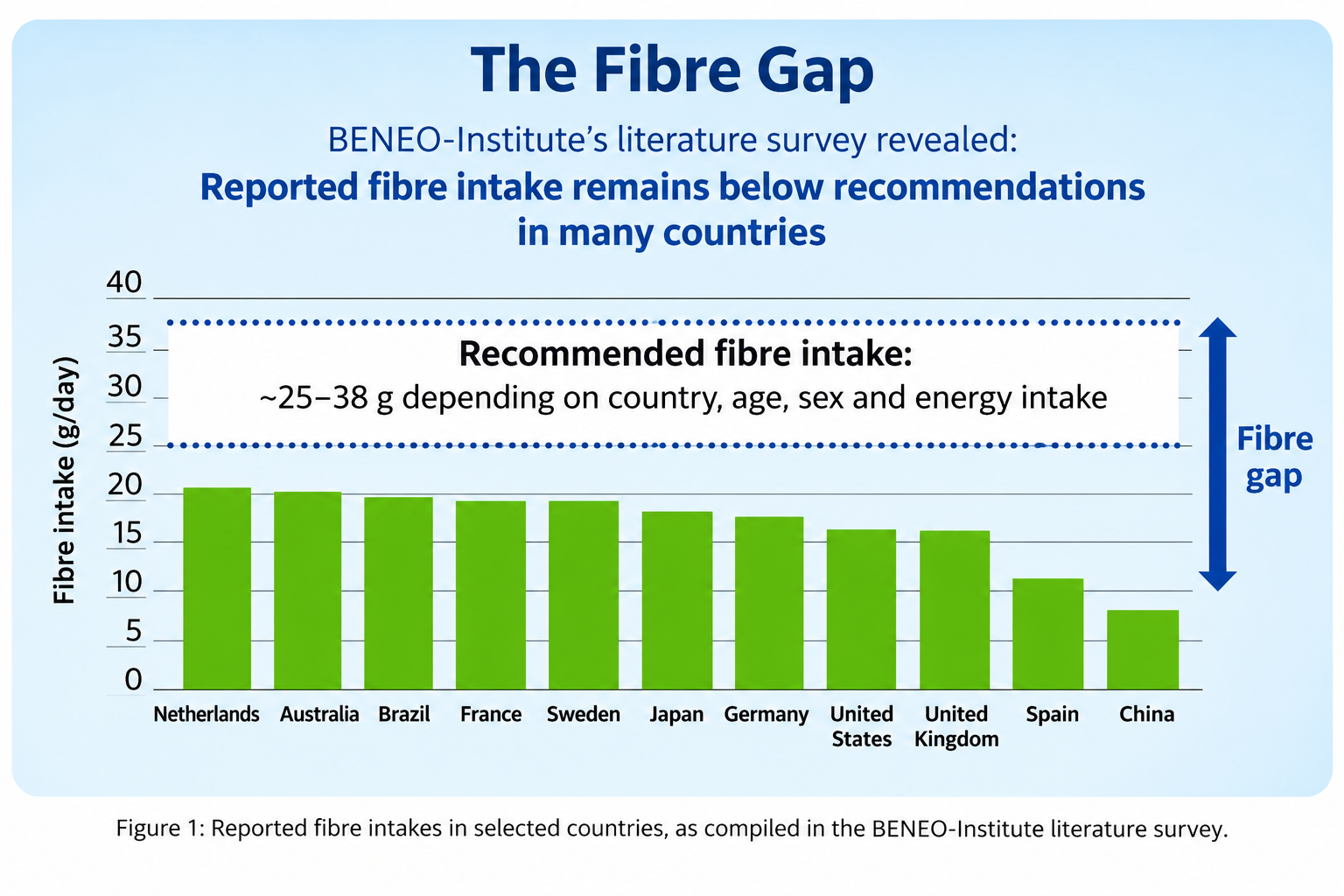 Dietary fibre is found naturally in plant-based foods such as whole grains, pulses, fruits, vegetables, nuts and seeds. It can also be added to formulated foods to help increase fibre intake. Despite its importance, reported intakes in many countries remain below recommended levels.
Adult recommendations commonly range from around 25 to 38 grams per day, depending on factors such as country, age, sex and energy intake. A major review by Reynolds and colleagues found that higher fibre intake was associated with a lower risk of several non-communicable diseases, including coronary heart disease and type 2 diabetes. 1 The review also reported benefits in clinical trials for measures such as body weight, blood pressure and total cholesterol.
Fibre is therefore relevant not only to digestive health, but also to wider aspects of long-term health. However, the benefits depend partly on the type of fibre being consumed.
Understanding Different Types of Dietary Fibre
Dietary fibre covers a wide variety of non-digestible carbohydrates. They differ in their properties, particularly solubility, viscosity and fermentability, which influence how they behave in the body and the physiological functions and health benefits they can support.
These differences help explain why dietary fibres are not interchangeable. Some fibres support bowel regularity, while others contribute to metabolic health or nourish beneficial gut bacteria.
There are several examples of how different fibre types can contribute to specific nutritional benefits:
Insoluble, poorly fermentable fibres: Fibres such as cellulose can help support bowel regularity by increasing faecal bulk.
Resistant starch: When it replaces available starch, resistant starch can help reduce glucose availability.
Soluble, viscous fibres: Cereal beta-glucans are associated with cholesterol reduction and support for blood glucose management, subject to the relevant intake levels and regulatory conditions.
Prebiotic fibres: Inulin and oligofructose can be selectively utilised by beneficial gut microorganisms, helping to support the gut microbiota.
These examples demonstrate why fibre selection matters. Rather than focusing solely on increasing fibre content, manufacturers should consider the properties of different fibres and the nutritional benefits they can bring to a finished product.
Dietary Fibre in Food Innovation: Beyond Fibre Enrichment
Fibre-rich foods and recipes are a good starting point for increasing dietary fibre intake. Fibre enrichment also offers an opportunity to bring more fibre into foods that consumers already enjoy.
While any fibre can contribute to increasing dietary fibre intake, some fibre ingredients can offer additional nutritional benefits.
Fibre Enrichment Opportunity | Additional Benefits |
Sugar Replacement & Calorie Reduction | Some fibres can combine fibre enrichment with sugar replacement and calorie reduction, helping to improve the overall nutrient profile of foods. |
Wholegrain Nutrition | Wholegrain flours offer a natural blend of cereal fibres alongside other valuable nutrients. |
Established Health Benefits | Certain fibres can help address specific nutritional goals, such as supporting bowel regularity with inulin and cholesterol management with beta-glucans. Related health claims depend on local regulations and conditions of use.2,3 |
Not all fibres act in the same way, and different fibres offer different health benefits.
Exploring Dietary Fibre Solutions with BENEO
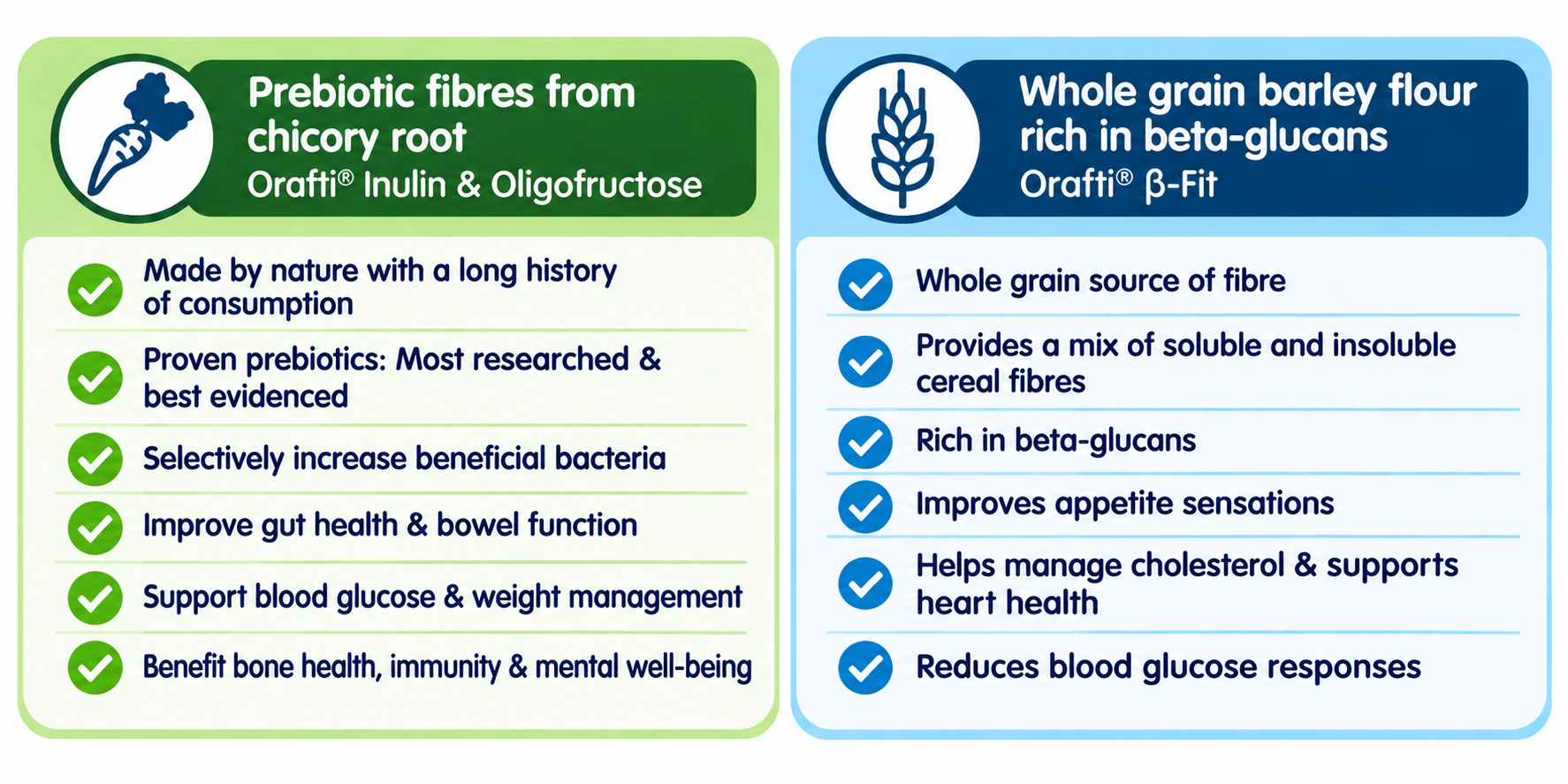
At DPO International, we work with industry partners such as BENEO to distribute specialised ingredient solutions to food manufacturers across the region. Through our partnership with BENEO, we offer selected fibre ingredients, including chicory root fibres and wholegrain barley flour, to support manufacturers in developing fibre-enriched products for different food applications.
- Orafti® Inulin: Chicory Root Fibre with Prebiotic Properties
Orafti® Inulin is derived from chicory root and is a dietary fibre with established prebiotic properties. It can be used in food formulations where manufacturers are looking to increase fibre content and develop products with a prebiotic proposition.
The scientific definition of a prebiotic is more specific than fermentability alone: a prebiotic must be selectively utilised by host microorganisms and confer a health benefit.4
- Orafti® β-Fit: Wholegrain Barley Flour Rich in Beta-Glucans
Orafti® β-Fit is a wholegrain barley flour that naturally combines soluble and insoluble cereal fibres and is rich in beta-glucans. These beta-glucans can help lower cholesterol and reduce blood glucose responses, while supporting heart health when the relevant intake conditions are met.
As a wholegrain ingredient, Orafti® β-Fit brings together the established metabolic benefits associated with barley beta-glucans and the nutritional value of wholegrain. This makes it an example of how fibre diversity can be found within a single natural ingredient, combining wholegrain goodness with specific nutritional benefits.
What Dietary Fibre Diversity Means for Food Manufacturers
A thoughtful fibre strategy involves more than simply increasing fibre content. Manufacturers should consider several factors when selecting the right ingredients:
- Identify the intended benefit. Determine whether the goal is to increase fibre intake, support a prebiotic proposition or achieve a specific nutritional benefit.
- Match fibre to the application. Consider its solubility, viscosity, fermentability and performance in the formulation.
- Maintain sensory quality. Evaluate taste, texture, mouthfeel and stability to ensure fibre enrichment does not compromise the finished product.
- Consider regulatory requirements. Ensure ingredient use and any related nutrition or health claims comply with local regulations.
As a regional distributor of BENEO ingredients across Southeast Asia, DPO International connects food manufacturers with specialised fibre solutions.
With support from our Application and Recipes team, we help you explore ingredient functionality and application possibilities for your next product innovation.
Looking for the right fibre solution? Get in touch with us today!
This article is adapted from “Why Fibre Diversity Matters”, by BENEO.