hHealth and wellness are moving beyond the supplement aisle. Consumers are increasingly integrating functional nutrition into their everyday routines, from supplements and nutritional powders to functional beverages, dairy products, meal replacements and snacks. Yet functional foods and dietary supplements serve different needs.
Functional foods can make everyday wellness easier to integrate into existing routines, while dietary supplements remain relevant when more targeted benefits, precision and dosage are required. For manufacturers, this creates opportunities to deliver health benefits through more formats than ever before.
For dietary supplement manufacturers, the opportunity lies not only in selecting functional ingredients, but in translating specific health needs into the right application and bringing complementary ingredients together through effective formulation.
This raises an important question: How do you turn functional ingredients into a dietary supplement that delivers the intended benefit while remaining practical, stable and enjoyable to consume?
From Health Benefit to the Right Application
Today’s consumers are looking beyond broad “healthy” or “better-for-you” positioning. They increasingly seek products that address more specific wellness needs, creating opportunities across digestive health, active nutrition, healthy ageing, beauty-from-within, energy and daily wellness.
At the same time, functional ingredients traditionally associated with supplements are increasingly being explored in familiar food and beverage formats, including functional beverages, nutritional powders, dairy products, RTDs, meal replacements and functional snacks.
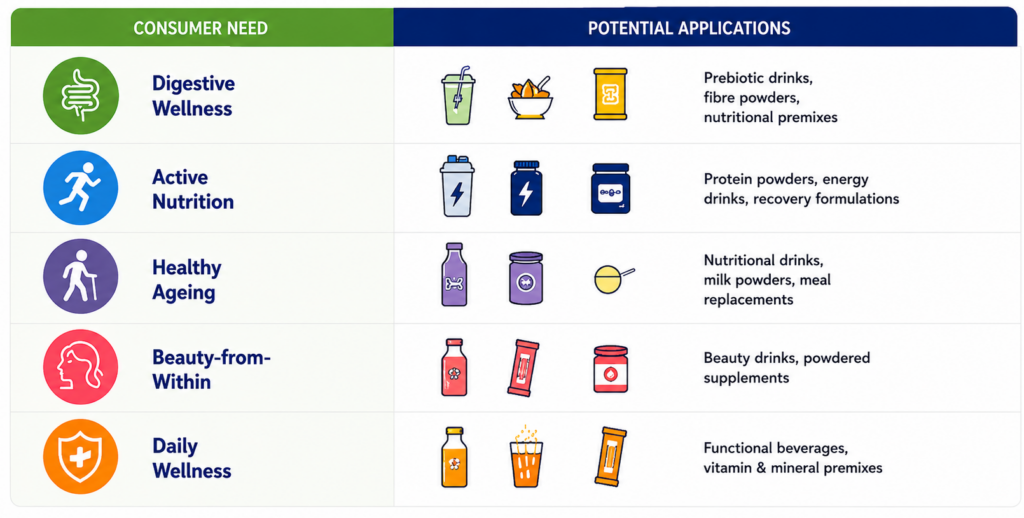
The opportunity is no longer simply adding functionality. It is delivering the right benefit through the right application.
From Single Ingredients to Smarter Formulations
Formulation is moving beyond the single-ingredient approach. Instead of focusing on one ingredient or benefit, manufacturers can explore complementary ingredient combinations to address broader consumer needs.
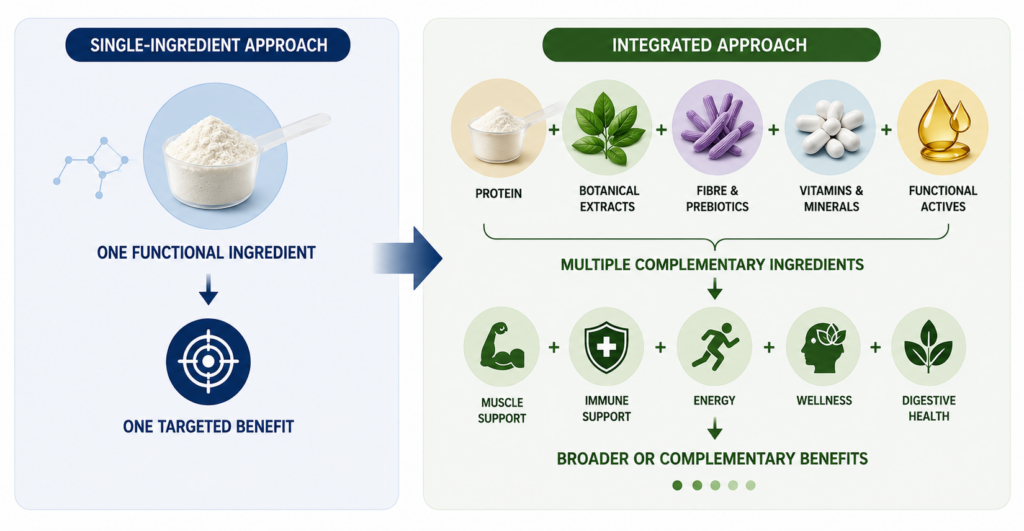
This creates greater opportunities for differentiated products, but it can also increase formulation complexity. As more ingredients are introduced, manufacturers need to understand how they interact within the complete recipe.
Functional Ingredients Bring Formulation Challenges
A strong health proposition still needs to work on the final product. When functional ingredients are incorporated into foods, beverages or supplement formulations, manufacturers need to balance effective dosage with realistic serving sizes, taste, solubility and stability.
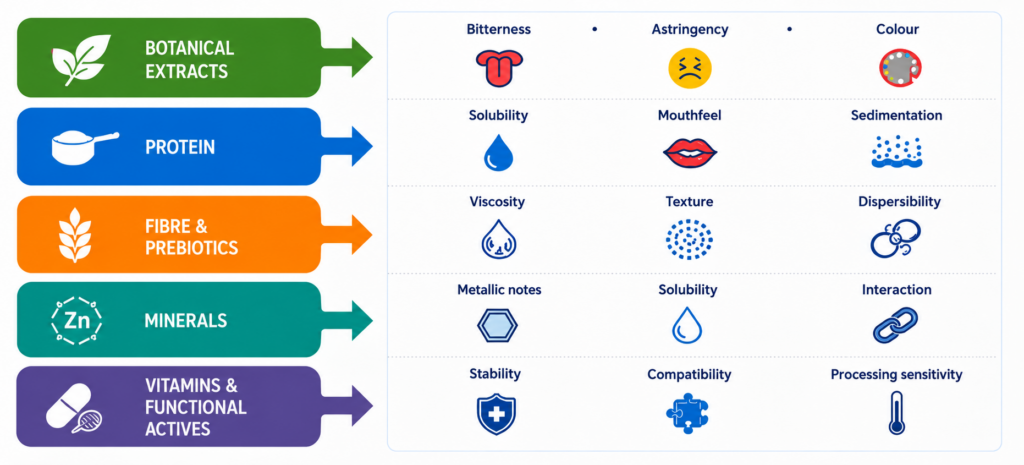
As more functional ingredients are combined, manufacturers need to consider how the complete formulation performs as a system.
The Formulation Balancing Act
Successful dietary supplement formulation requires several factors to work together.
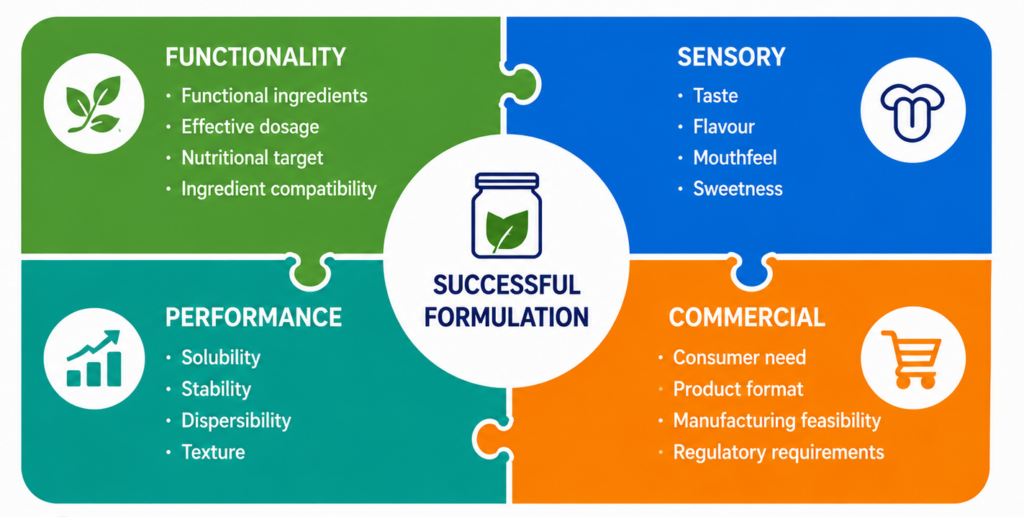
A formulation may contain scientifically supported functional ingredients. But if the required dosage cannot fit realistically into the serving size or the resulting product has poor taste, solubility or stability, it may struggle to translate into a successful consumer product. Good formulation therefore connects scientific functionality with practical application.
Application Expertise Turns Ingredients Into Recipes
This is where application and recipe development becomes critical.
Rather than asking only: “Which functional ingredients should we use?”
Manufacturers increasingly need to ask: “How do we make these ingredients work together in the right application?”
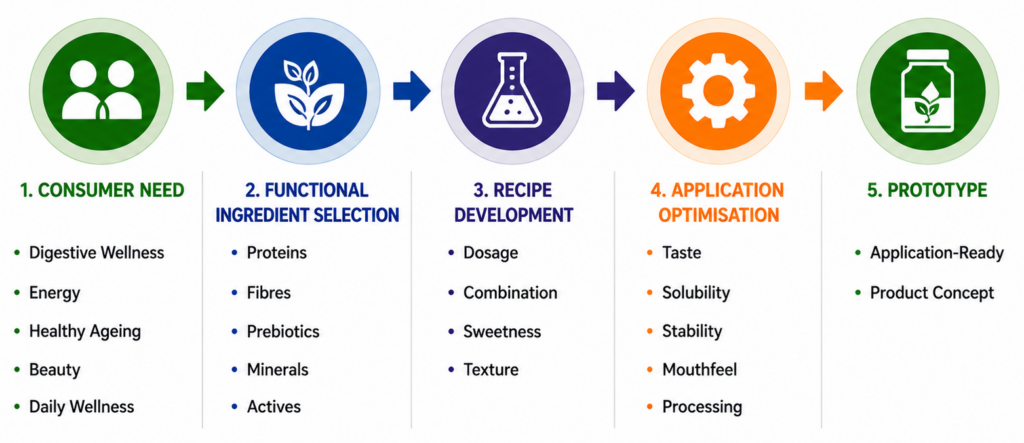
This integrated approach helps manufacturers evaluate functionality and product performance together rather than treating them as separate development stages.
Turning a Concept Into a Practical Recipe
Consider a multi-functional supplement formulation.
Depending on the intended positioning, the formulation may combine proteins, fibers, vitamins, minerals, botanical extracts or other functional ingredients to support targeted consumer needs.
But moving from concept to application raises practical questions.
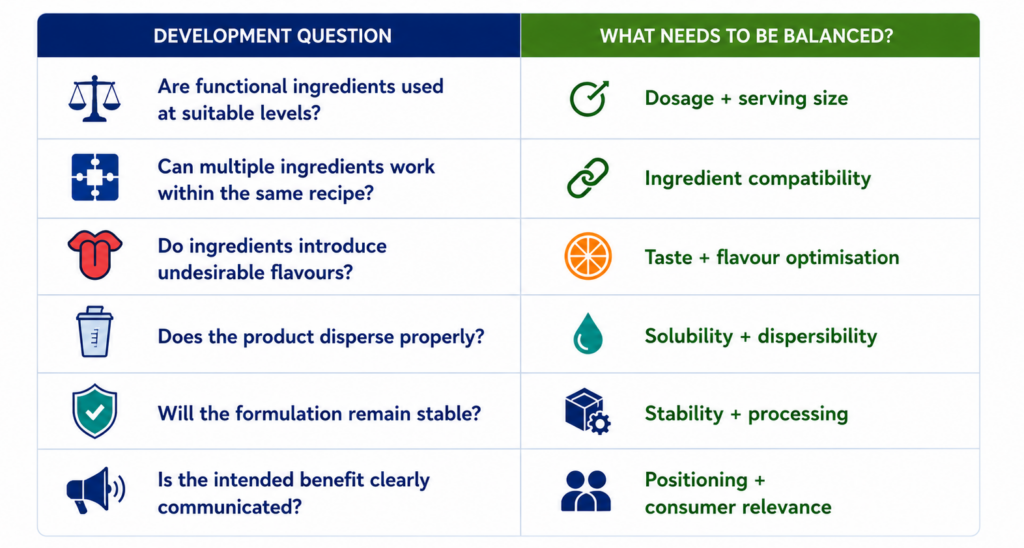
Whether the product targets digestive wellness, active nutrition, healthy ageing, beauty-from-within, energy or daily wellness, the challenge remains the same: translating functional ingredients into a formulation that delivers both the intended benefit and a positive product experience.
Clear Benefits Matter as Much as Functionality
As dietary supplements become more sophisticated, consumers are also becoming more selective. Broad claims such as “healthy” may not be enough. Consumers increasingly want clarity around what a product supports whether that is gut health, protein intake, hydration, mood, metabolic support, strength or longevity.
For manufacturers, product development therefore needs to connect three elements:
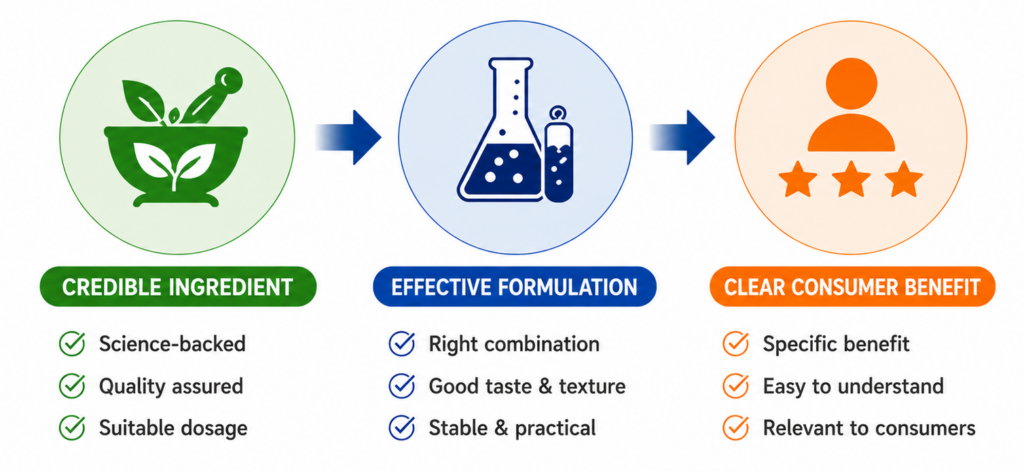 The strongest functional products are not necessarily those with the longest ingredient lists. They are the ones where the ingredients, formulation, application and consumer proposition work together.
How DPO International Supports Functional Product Development
At DPO International, we go beyond ingredient sourcing.
Our technical and application expertise helps manufacturers translate functional ingredients into practical recipes and product concepts.
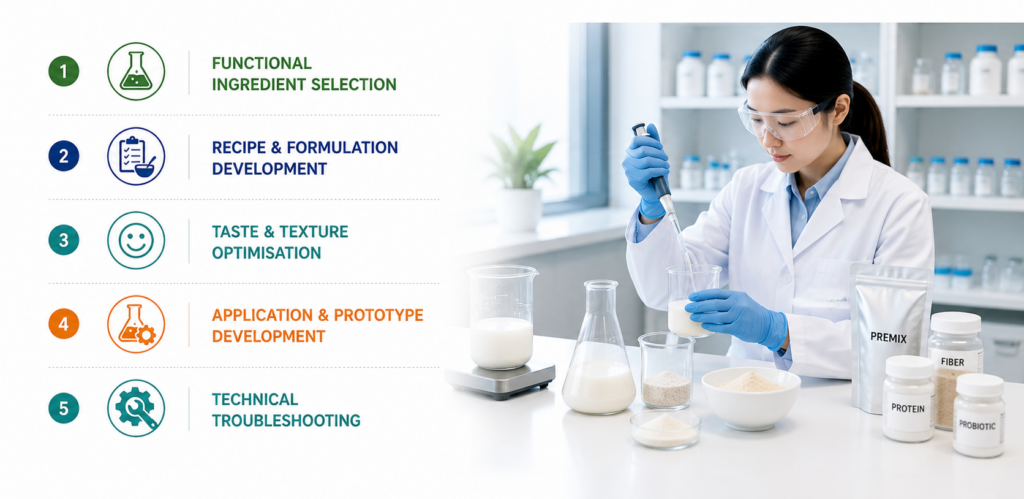
From Functional Concept to Market-Ready Innovation
As functional nutrition continues to evolve, manufacturers are expected to deliver products that combine credible health benefits, effective formulation, consumer-friendly formats and a positive sensory experience. Achieving this requires more than selecting functional ingredients, it calls for an integrated approach that considers dosage, ingredient compatibility, taste, stability, application and market relevance throughout product development.
At DPO International, we support manufacturers across Southeast Asia with functional ingredient solutions, formulation and recipe development, application expertise, regulatory guidance and market intelligence to help transform functional concepts into commercially relevant products. By taking a more holistic approach to product development, manufacturers can create differentiated solutions, accelerate innovation and respond more effectively to evolving health and wellness needs.