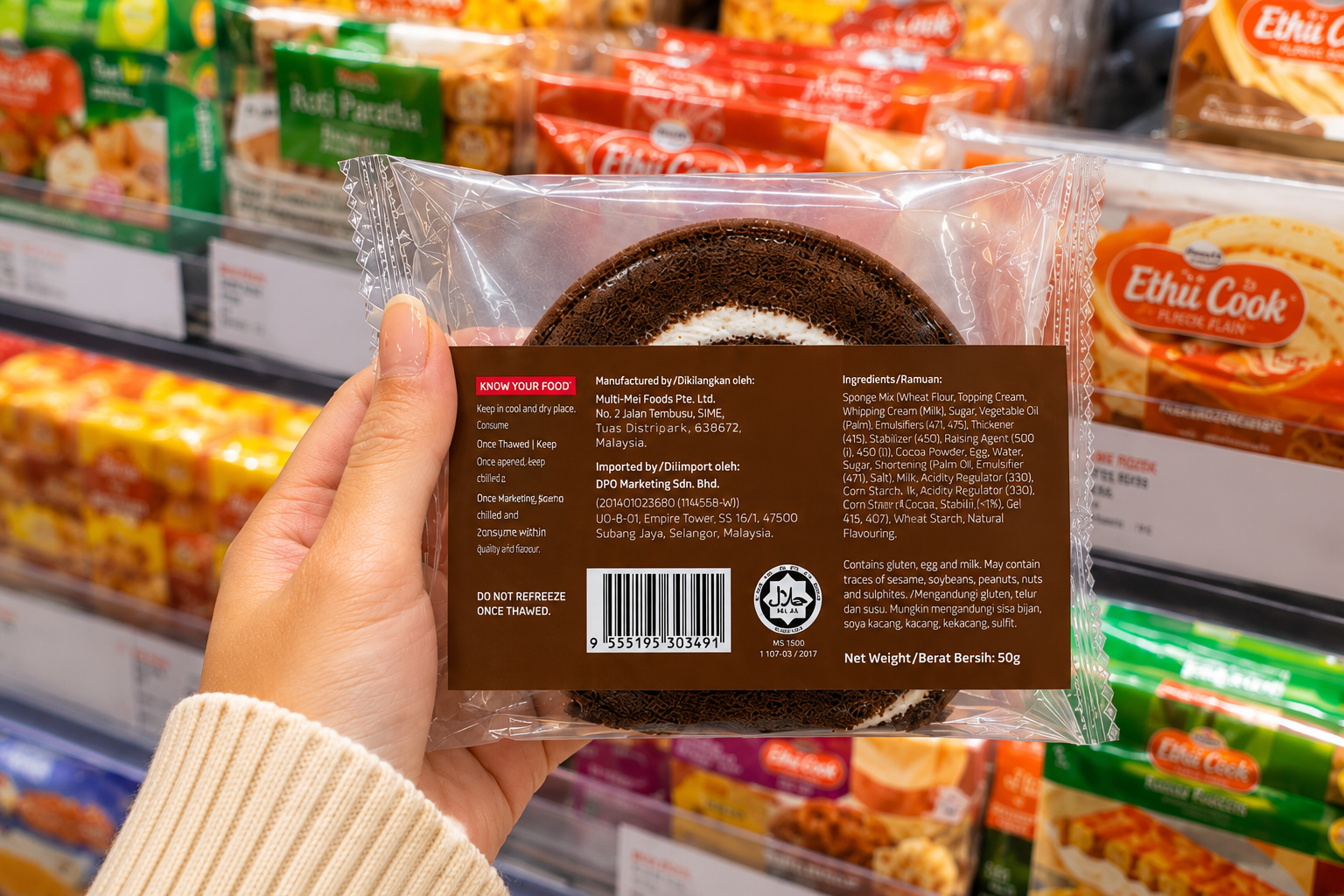
Halal traceability is becoming increasingly important for food manufacturers supplying Muslim-majority markets, particularly in Southeast Asia. While halal certification remains a fundamental requirement, maintaining halal integrity extends far beyond obtaining certification alone. As food supply chains become more global and complex, manufacturers are expected to demonstrate greater transparency, maintain comprehensive documentation, and ensure every ingredient can be traced throughout the production journey.
For businesses operating in food industry, halal traceability is no longer simply a regulatory requirement. It has become an essential part of building consumer confidence, protecting brand reputation, and supporting long-term business growth.
A recent enforcement case in Malaysia involving imported food products found with fake halal certificates has further highlighted the importance of supply chain transparency. It serves as a timely reminder that maintaining halal integrity depends not only on certification, but also on effective traceability systems, reliable supplier verification, and accurate documentation across every stage of the supply chain.
What Is Halal Traceability?
Halal traceability refers to the ability to track, verify, and document ingredients and food products throughout the entire supply chain—from raw material sourcing and manufacturing to storage, transportation, and distribution.
Rather than focusing solely on the final halal logo displayed on product packaging, halal traceability provides visibility into every step that contributes to maintaining halal integrity. It enables manufacturers to understand where ingredients originate, who supplied them, how they were handled, and whether appropriate documentation has been maintained throughout the production process.
For manufacturers, this level of transparency supports better decision-making while helping to strengthen confidence among regulators, business partners, and consumers alike.
Key Business Benefits of Halal Traceability
Competitive Advantage | Business Impact |
Build Consumer Trust | Today’s consumers expect more than a halal logo—they also want greater transparency in how food is sourced, manufactured, and managed. A robust halal traceability system helps manufacturers demonstrate accountability and reinforce confidence in their products from source to shelf. |
Improve Supply Chain Visibility | As ingredients are sourced from multiple suppliers across different countries, maintaining visibility throughout the supply chain becomes increasingly important. Effective traceability helps manufacturers verify ingredient origins, manage supplier information, and respond more efficiently to quality or compliance concerns. |
Strengthen Regulatory Readiness | Food manufacturers are expected to maintain accurate documentation that supports ingredient verification, product specifications, and regulatory compliance. Strong traceability systems simplify audits, support certification processes, and help businesses meet evolving market requirements. |
Protect Brand Reputation | A single supply chain issue can quickly affect consumer trust and brand credibility. Investing in halal traceability helps manufacturers reduce operational risks, respond effectively to potential issues, and protect their reputation in an increasingly transparent marketplace. |
Building Stronger Halal Traceability Starts with the Right Partner

Strengthening halal traceability requires more than internal processes alone. As supply chains become increasingly complex, food manufacturers benefit from working with partners who provide not only high-quality ingredients, but also the technical expertise, regulatory knowledge, and quality documentation needed to support product development and compliance.
Whether developing bakery, dairy, beverages, plant-based foods, nutrition products, or functional food solutions, manufacturers increasingly need ingredients that are backed by reliable documentation and technical support—helping ensure both product performance and supply chain transparency.
At DPO International, we help manufacturers strengthen every stage of the product development journey through integrated solutions that extend beyond ingredient supply.
Strengthen Supply Chain Transparency
- Access to a trusted network of global ingredient partners.
- Reliable ingredient sourcing supported by technical documentation and product specifications.
- Greater visibility and consistency across the supply chain.
Navigate Regulatory Requirements with Confidence
- Guidance on ingredient regulations and market-specific compliance requirements.
- Support for labelling considerations and regulatory documentation.
- Helping manufacturers navigate evolving regulatory landscapes more efficiently.
Support Quality Assurance & Quality Control
- Product specifications, technical documentation, and Certificates of Analysis (CoA).
- Supporting quality verification and compliance requirements throughout product development.
Accelerate Product Development
- Technical and application expertise to address formulation challenges.
- Product optimisation across a wide range of food and beverage applications.
- Helping manufacturers bring innovative, market-ready products to market while maintaining quality and performance.
As consumer expectations continue to evolve and supply chains become increasingly interconnected, halal traceability is becoming a competitive advantage rather than simply a compliance requirement.
Looking to strengthen your next food innovation? Connect with DPO International to explore how our integrated solutions can support your product development journey.