


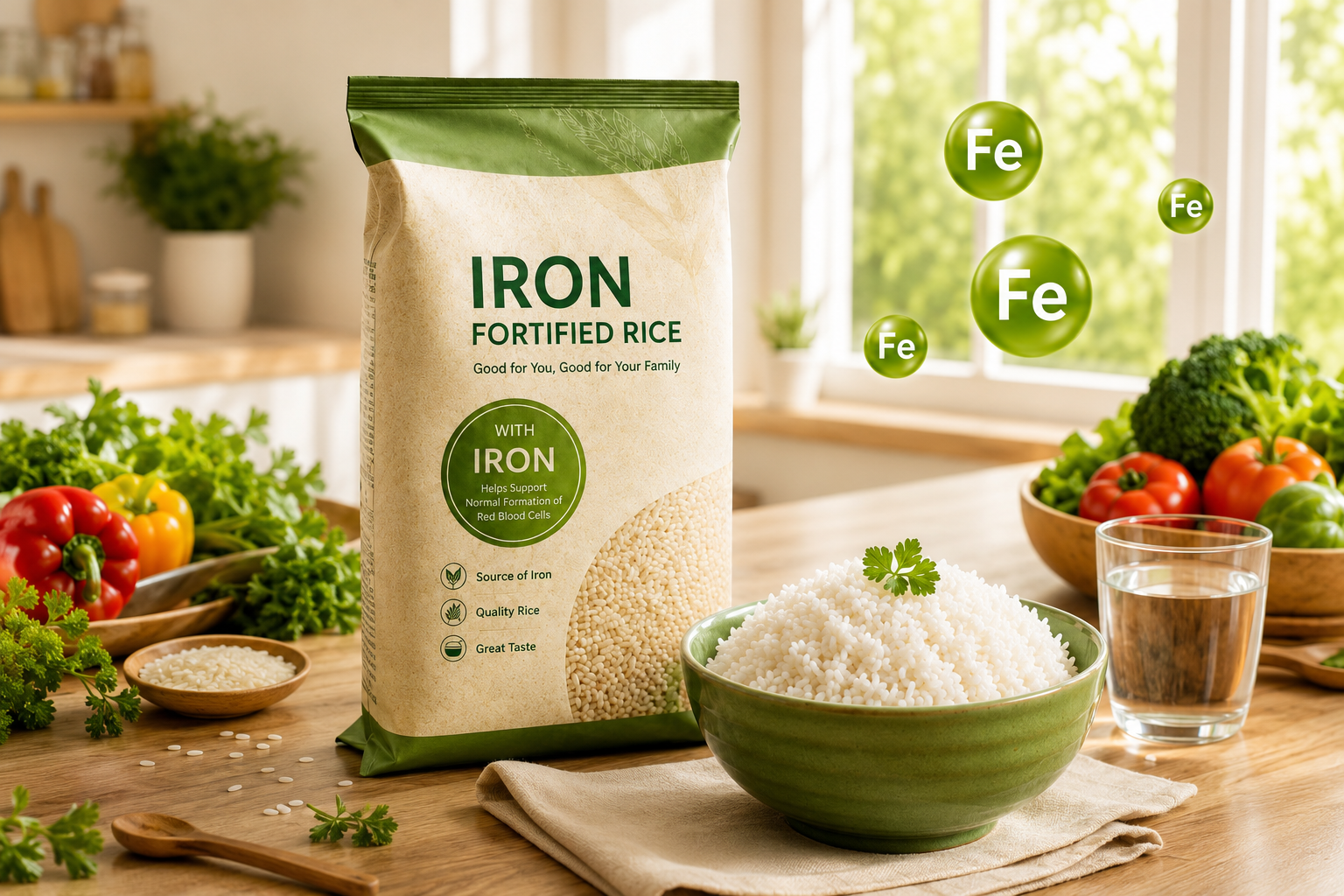
Iron-fortified rice is increasingly recognised as an effective public health strategy to address iron deficiency anemia (IDA), particularly in countries where rice is a staple food. Iron deficiency anemia remains one of the most widespread public health challenges globally.
According to the World Health Organization, approximately 1.6 billion people are anemic worldwide, with the condition classified as a severe public health problem in 69 countries where more than 40% of the population is affected. ¹
Approximately 43% of children, 29% of women of reproductive age, and 38% of pregnant women are anemic globally, with the burden disproportionately concentrated in low- and middle-income countries. Iron deficiency is the most common cause of anemia, accounting for nearly 50% of all cases.
As food manufacturers continue to explore nutrition-focused products, understanding the science, regulatory requirements, and global guidance surrounding iron-fortified rice is becoming increasingly important for product development and compliance.
Why Iron-Fortified Rice Matters
Rice is a staple food for more than half of the world's population. In regions where rice constitutes a major part of the daily diet, iron-fortified rice offers a cost-effective, scalable, and culturally acceptable strategy to improve iron intake and reduce anemia risk.² Fortification is defined as the deliberate increase of essential micronutrient content in food to improve nutritional quality and provide public health benefit with minimal risk.³
A 2023 meta-analysis published in the Journal of Family Medicine and Primary Care evaluated the effectiveness of iron-fortified rice in improving haemoglobin levels among individuals over six months of age. ¹
Drawing on data from 15 controlled trials, the study found that iron-fortified rice significantly improved haemoglobin levels compared to the control group. Even after excluding studies with smaller sample sizes and a higher risk of bias, the positive effect remained consistent. This supports rice fortification with iron as an effective strategy for improving haemoglobin levels, particularly in countries where rice is a dietary staple.¹
WHO Guidance on Iron-Fortified Rice
The World Health Organization (WHO) strongly recommends fortifying rice with iron as a public health strategy to improve iron status in populations where rice is a staple food. This recommendation supports the use of iron-fortified rice to help reduce anemia and improve iron status at the population level.
Rice can be fortified using several technological approaches, including applying micronutrient powder that adheres to rice grains, spraying vitamin and mineral mixtures onto the grain surface, or producing extruded fortified kernels that are blended with polished rice.²
In addition

