


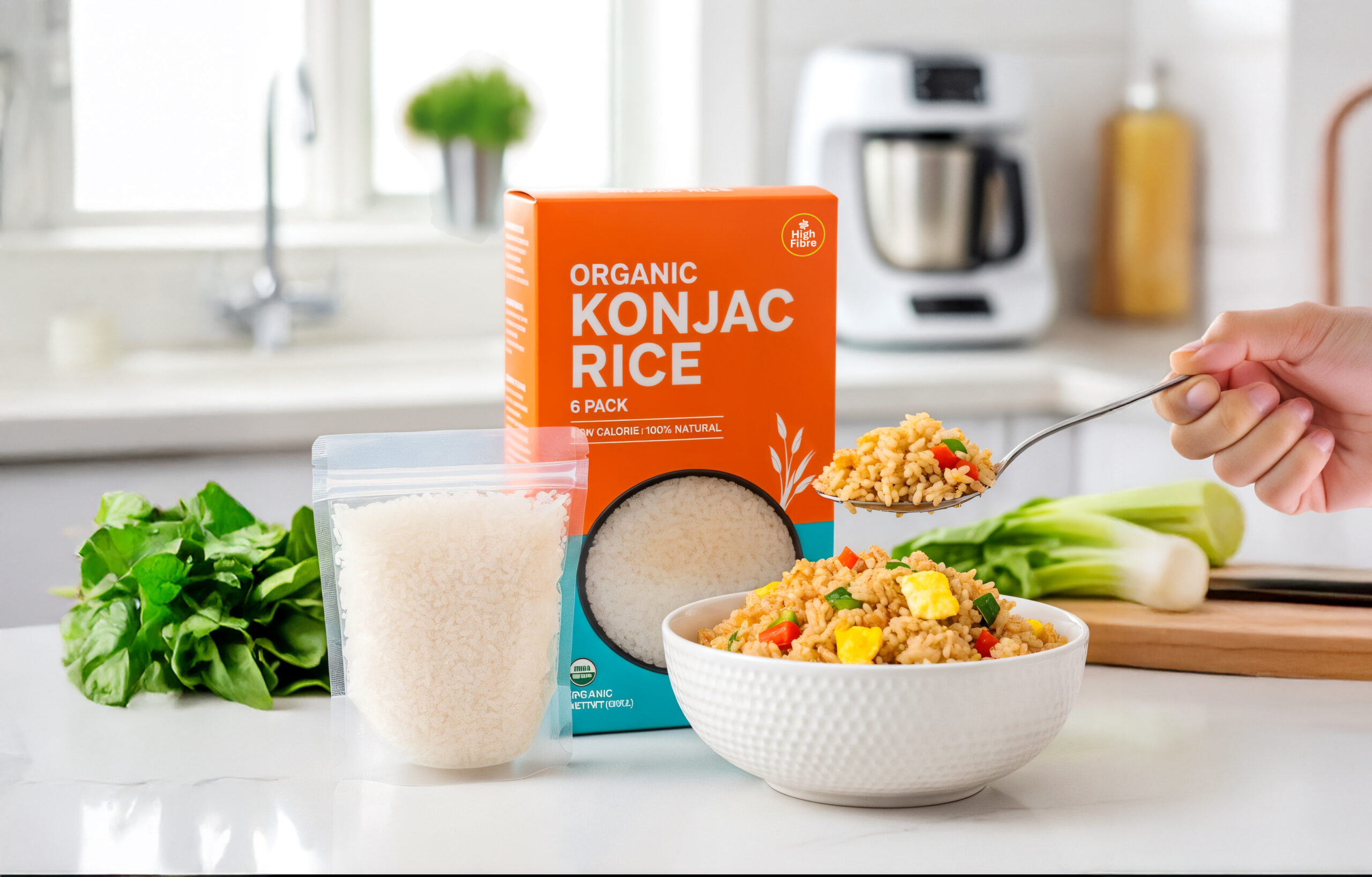
Dietary fibre is widely recognised as a cornerstone of a healthy diet, with global health organisations advocating for increased daily intake. Fibre is a type of carbohydrate that the body cannot fully digest, playing a key role in supporting digestive health, regulating blood sugar, and promoting a feeling of fullness.
Various foods provide effective sources of fibre, including fruits, vegetables, whole grains, legumes, and traditional options like konjac (Amorphophallus konjac), which contains the soluble fibre glucomannan². Konjac glucomannan (KGM), the key component behind konjac rice, is one of the most viscous and potent soluble dietary fibres known to science², ³. As a soluble high-fibre ingredient, KGM supports digestive health, contributes to satiety, and adds minimal calories¹.
Requirements of High-Fibre Products
While ingredients like konjac rice illustrate the benefits of high-fibre foods, the broader requirements and standards that define high-fibre products apply to all types of foods. The table below summarises the criteria used in seven countries, helping manufacturers ensure compliance and helping consumers identify which products qualify as high in fibre.

