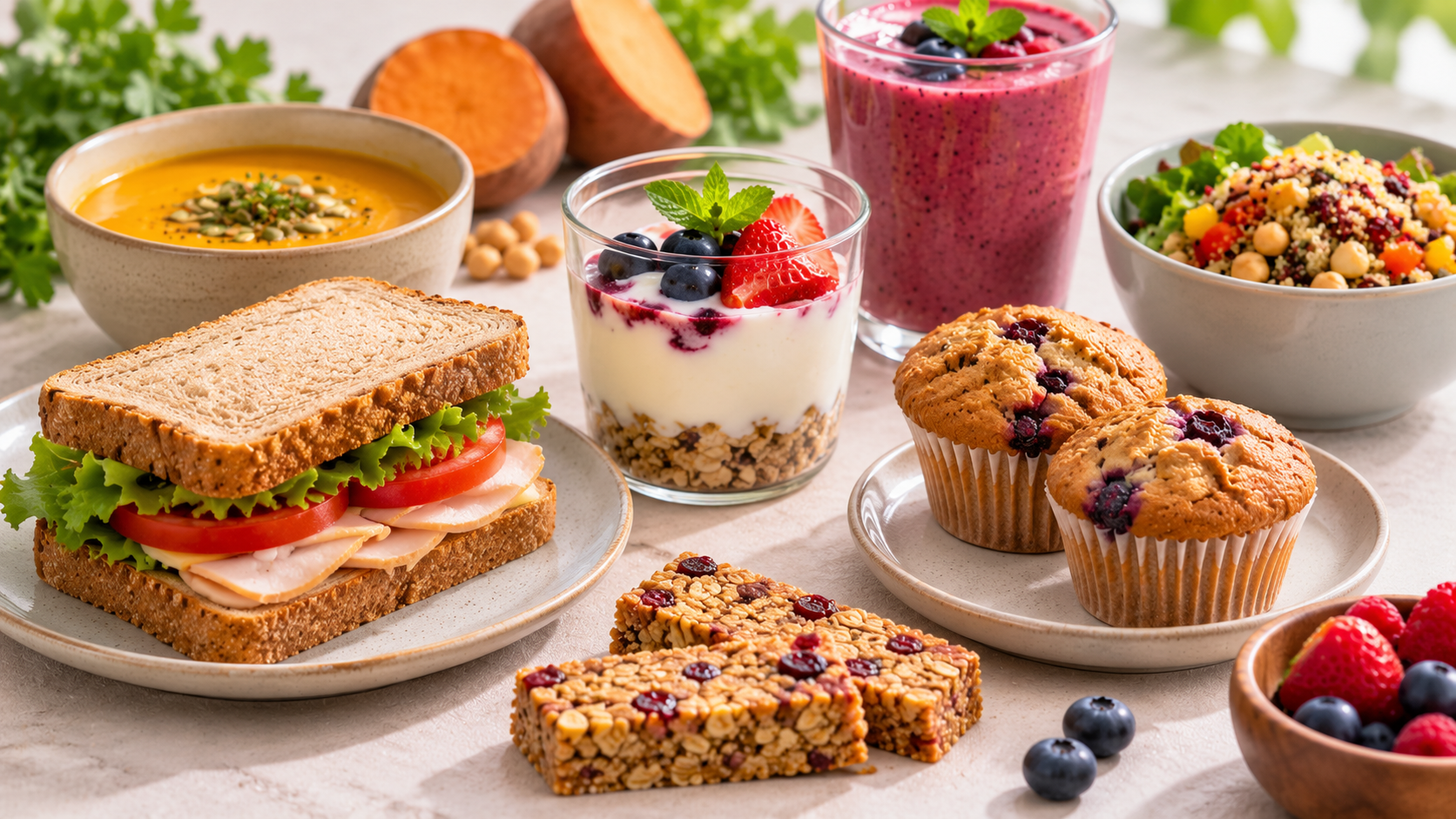
Manufacturers can take gut health innovation beyond traditional dairy by incorporating prebiotic fibres into bakery products and snacks, while exploring probiotic cultures in functional beverages. Each application brings different formulation considerations: fibres can affect texture, mouthfeel and dough handling, while probiotic viability can be influenced by heat, acidity and oxygen.
According to Innova Market Insights, 55% of Asian consumers consider digestive health very important to the body as a whole.¹ This growing interest is creating opportunities for manufacturers to develop gut health-focused products across a wider range of everyday food and beverage categories.
The key is to select ingredients and processing conditions that suit the product format while maintaining the intended sensory, nutritional and technical qualities.
What Are the Opportunities for Food Manufacturers in Gut Health Innovation?
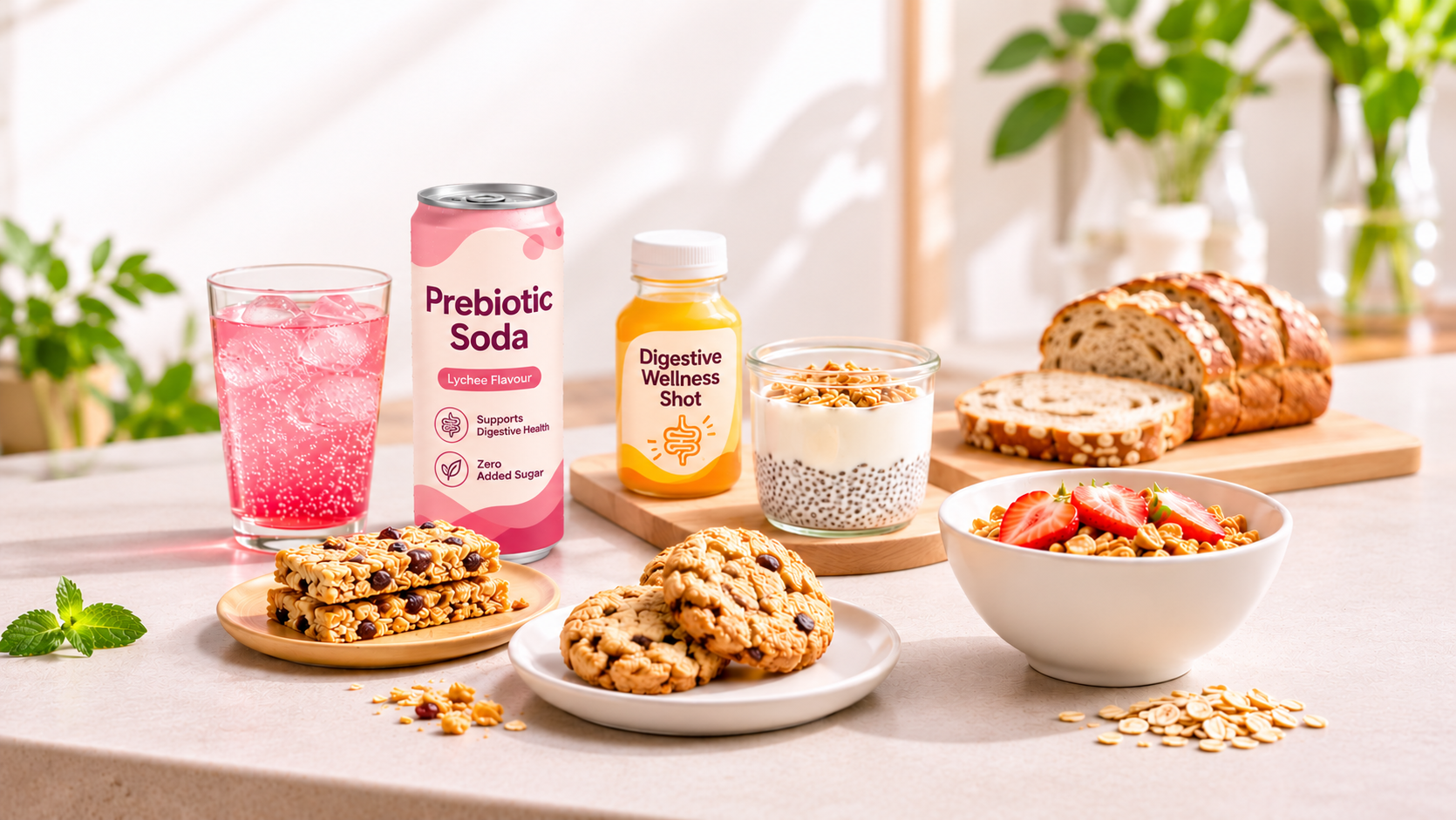
Probiotics are traditionally associated with foods such as yoghurt, kefir and other fermented dairy products. However, prebiotics and probiotics are increasingly appearing in other food and beverage categories, including carbonated drinks and snacks.1
This creates opportunities for manufacturers to explore applications such as fibre-enriched bakery products and functional beverages. By incorporating suitable prebiotic fibres or probiotic cultures, manufacturers can develop products with digestive health positioning while considering nutritional objectives, taste and formulation requirements.
Understanding the Roles of Prebiotics and Probiotics in Gut Health
Prebiotics and probiotics are two ingredient groups commonly associated with digestive health. Although they are often discussed together, they differ in their composition, functions and stability. Understanding these differences can help food manufacturers identify suitable ingredients for their product development needs.
Comparison | Prebiotics | Probiotics |
What are they? | Substrates without live microorganisms that are selectively utilised by beneficial microorganisms in the gut to provide a health benefit. | Live microorganisms that provide health benefits when consumed in adequate amounts. |
How do they work? | Stimulate the growth or activity of beneficial gut microorganisms and support the production of short-chain fatty acids (SCFAs). | Interact with the gut microbiota through mechanisms such as competing with potentially harmful microorganisms and supporting intestinal barrier function. |
Examples | Inulin, fructooligosaccharides (FOS) and galactooligosaccharides (GOS). | Selected strains of Lactobacillus, Bifidobacterium and Saccharomyces. |
Stability | Generally, have higher thermal and shelf stability. | Sensitive to factors such as heat, pH and oxygen, making viability throughout shelf life an important consideration. |
Food sources and applications | Found naturally in certain foods and can also be incorporated into fibre-enriched food formulations. | Found in selected fermented foods and beverages containing specific live microbial strains, such as certain yoghurts and fermented drinks. |
Source: Adapted from Smolinska et al. (2025), Table 1 and Sections 3.1–3.2.2
Gut Health Product Development: Key Formulation Considerations
Developing gut health-focused food and beverage products requires manufacturers to consider ingredient functionality, processing conditions and nutritional objectives to achieve the desired product characteristics.
- Maintaining texture and sensory quality: Adding fibre can affect viscosity, mouthfeel, dough handling and finished product texture. Manufacturers need to select suitable fibre types and inclusion levels according to the intended application.
- Protecting probiotic viability: Probiotic microorganisms can be sensitive to heat, acidity, moisture and oxygen. Processing and storage conditions therefore need to be considered to maintain the required viable count throughout the product’s shelf life.
- Balancing nutritional and technical requirements: Functional ingredients must work within the wider formulation. Their compatibility with other ingredients, processing conditions, flavour profile and applicable regulatory requirements all influence the final product.
Bringing Digestive Health Innovation to Life: Digestive Wellness Shot
At DPO International, we work with ingredient partners such as BENEO, Probi and Hexagon Nutrition to bring functional ingredient solutions to food and beverage manufacturers. This article highlights three ingredients used in the Digestive Wellness Shot. These are selected examples from the concept’s wider formulation, rather than a complete list of all ingredients.
Ingredient | Nutritional Benefits | Technical Benefits |
BENEO Orafti GR3 | • Helps improve dietary fibre intake | • Functions as a fat replacer |
Probi LP299V (Lactiplantibacillus plantarum 299V)4 | • Studied for gastrointestinal health, including reducing flatulence and abdominal pain in people with irritable bowel syndrome | • In freeze-dried format, the strain is described as robust and stable at room temperature for use in capsules, tablets and powder sachets |
Hexagon Nutrition Niacinamide (Vitamin B3) | • Contributes to the maintenance of normal mucous membranes, including those of the gastrointestinal tract | •Niacinamide purity of ≥98.5% |
Ready to Develop Your Next Digestive Health Innovation?
From prebiotic fibres and probiotic cultures to functional beverage applications, there are opportunities to explore new product concepts and enhance existing formulations.
With access to a diverse ingredient portfolio and support from our experienced team, DPO International works alongside manufacturers to turn product ideas into practical applications. Have a concept in mind? Get in touch with us.