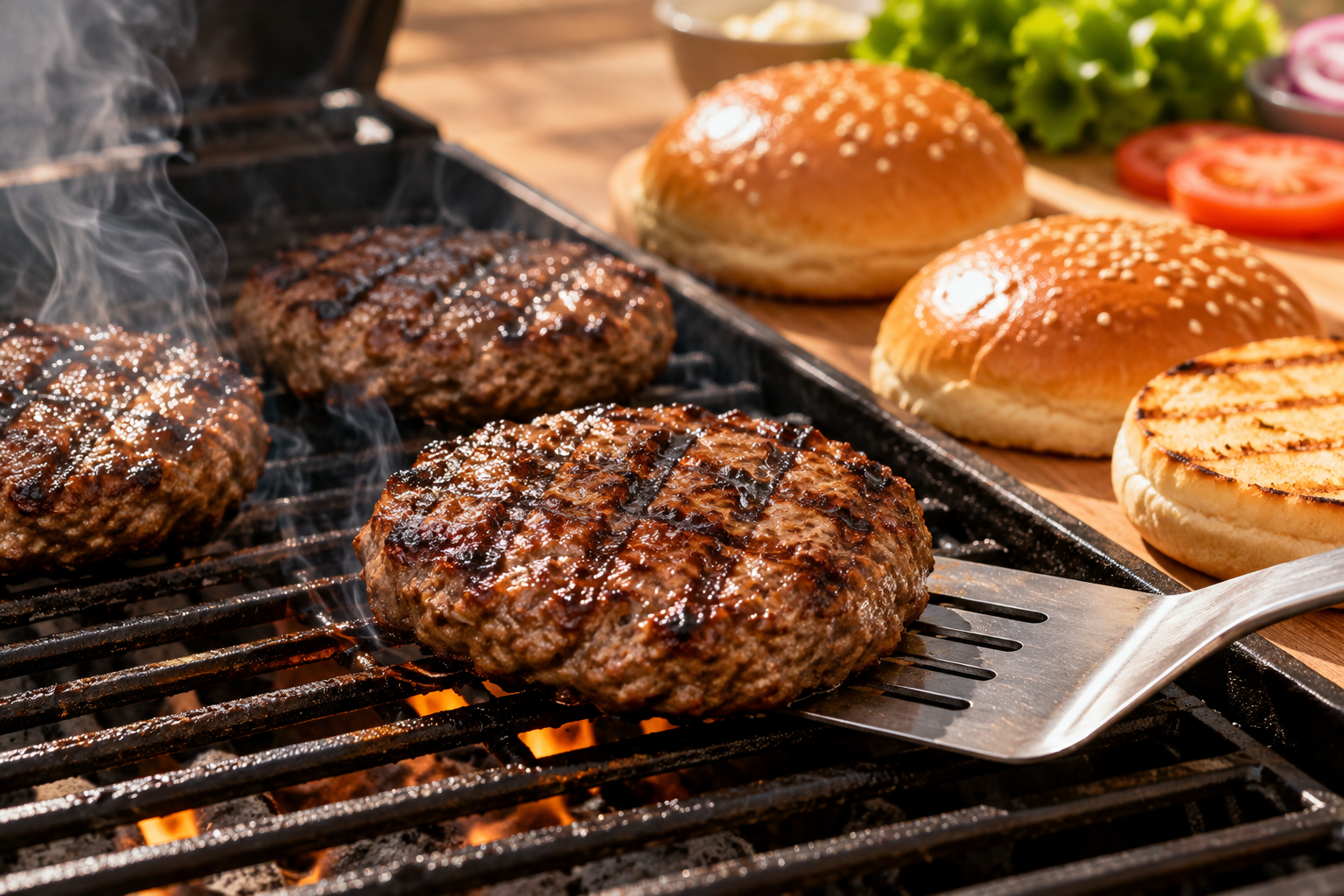
Affordability is becoming a greater consideration in food formulation, but reducing costs does not necessarily mean choosing the cheapest ingredients. Food manufacturers also need to consider how each ingredient contributes to the overall formulation, including taste, texture, functionality and processing performance.
For a beef patty, this creates an interesting product-development challenge: how can manufacturers work towards a more economical formulation while still delivering the juicy texture consumers expect?
One approach is to look beyond the meat component itself and consider how different ingredients can work together to support the desired eating experience.
Let’s take a closer look at the key challenges involved in developing a beef patty and how formulation can help address them.
Challenges in Developing a Beef Patty
Maintaining Juiciness
Keeping a beef patty juicy can be challenging, particularly when moisture is lost during cooking. Research has shown that increasing water retention can help improve cooking yields and potentially increase juiciness for consumers, making water retention an important consideration when developing a juicy and palatable beef patty.
Getting the Right Texture
A good beef patty needs to balance texture, tenderness and juiciness. Recent research shows that manufacturing and forming methods can influence characteristics such as hardness and tenderness, which can ultimately affect the eating experience.
Balancing Formulation Changes
Changing the formulation of a beef patty can affect its cooking and technological properties. Replacing part of the fat system, for example, can influence factors such as cooking yield, moisture retention and texture, making it important to consider how formulation changes affect the finished product.
Meet the Juicy Gourmet Beef Patty
To explore this opportunity, we developed the Juicy Gourmet Beef Patty, designed to bring formulation efficiency and a satisfying eating experience together.
Juicy, savoury and satisfying. Made to make every bite count.
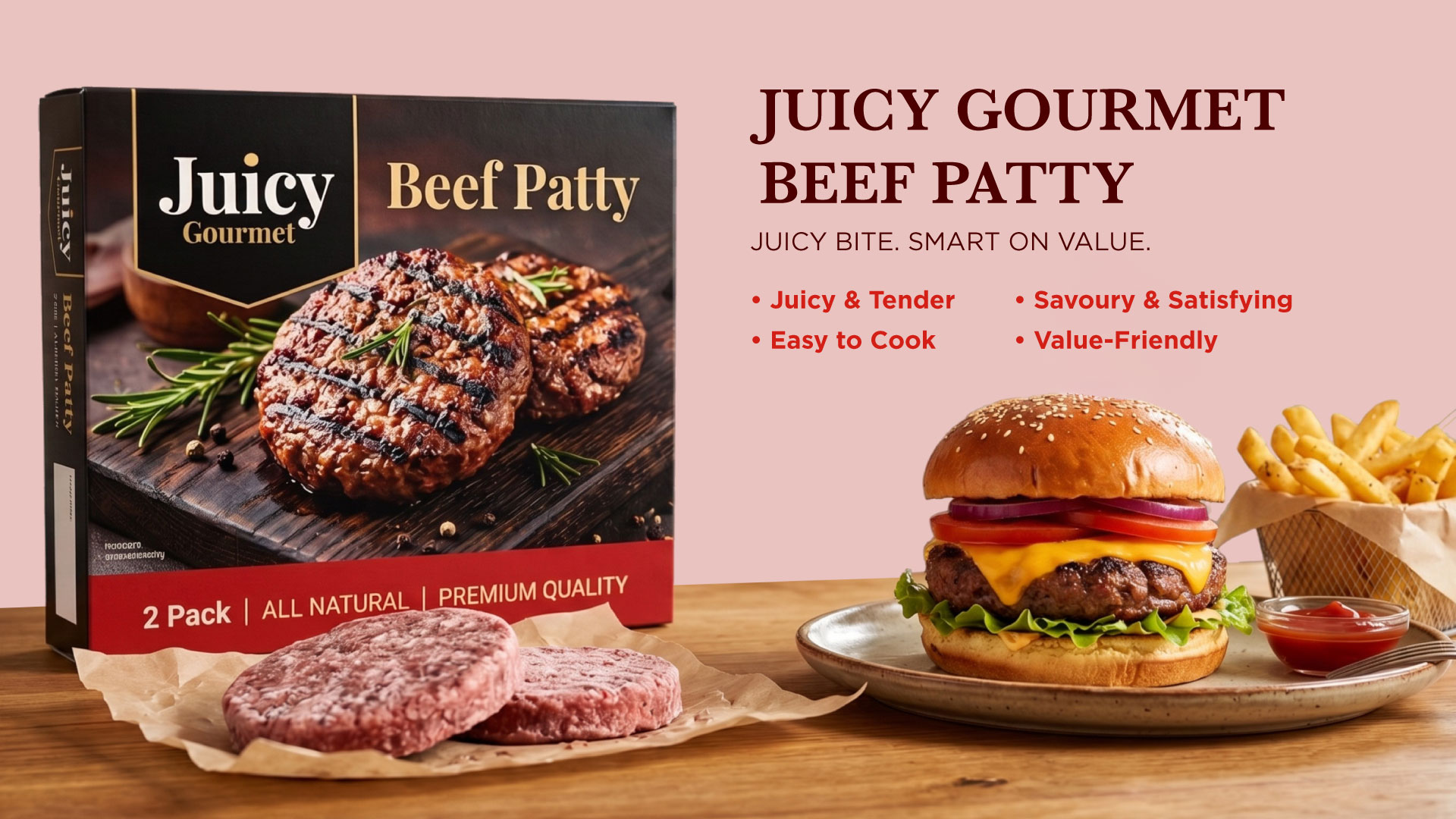
The formulation brings together texture, moisture and ingredient functionality to create a patty with a juicy bite, rich savoury character and practical formulation approach.
Building Beef Patty Juiciness Through the Formulation
A key part of the formulation is the use of an emulsion system.
The emulsion combines water and vegetable oil with Hydrosol HydroTOP High Gel 30 PLUS before being incorporated into the beef patty mixture. This creates a structured way to bring the water and oil phases together within the formulation.
This highlights an important consideration in reformulation: the value of an ingredient goes beyond its individual price. Its technical role and contribution to the overall formulation also need to be considered when developing a finished product.
For the Juicy Gourmet Beef Patty, the combination of the meat component, emulsion and supporting ingredients is designed to deliver the intended texture and juicy eating experience while supporting a more economical formulation approach.
How the Formulation Comes Together
Each ingredient contributes to the finished application:
Ingredient | Technical Role |
Hydrosol HydroTOP High Gel 30 PLUS | Forms part of the emulsion system with water and vegetable oil. |
Vegetable Oil | Provides the oil phase of the emulsion. |
Water | Provides the aqueous phase of the emulsion. |
Starch | Supports the overall formulation and texture of the patty. |
Minced Beef | Provides the primary meat component and characteristic beef flavour. |
The application demonstrates how formulation efficiency is not simply about reducing the cost of individual ingredients. It is about understanding how ingredients work together to achieve the desired finished-product characteristics.
Beyond the Beef Patty
The same formulation thinking can be explored across other formed and comminuted meat products where manufacturers need to balance texture, moisture management and formulation efficiency.
Potential applications could include meatballs, sausages and meatloaf, with the formulation adapted according to the product format, processing conditions and desired sensory profile.
The Juicy Gourmet Beef Patty shows how a familiar meat application can become an opportunity to explore the balance between formulation efficiency and sensory performance.
At DPO International, we work with food manufacturers to explore ingredient solutions that support product development from concept through application.
Looking to optimise your meat product formulation? Speak to our Industry team to explore ingredient solutions or request a sample for your next development project.