
The confectionery industry is evolving rapidly. While chocolate manufacturers continue to invest in product innovation, premiumization, and consumer engagement, many brands face a common challenge: turning consumer demand into scalable, profitable growth. Today, success requires more than producing great chocolate. Brands must navigate digital marketplaces, manage customer expectations, coordinate logistics, and expand into new markets efficiently. This is where food e-commerce solutions have become a strategic advantage. For chocolate manufacturers seeking sustainable growth across Malaysia, Indonesia, and Thailand, an end-to-end commerce approach can transform operational complexity into competitive strength.
Why Chocolate Brands Are Facing New Growth Challenges
Consumer purchasing behavior has changed significantly over the last few years. Many customers now discover products through the following:
- TikTok Shop
- Shopee
- Lazada
- Brand-owned websites
- Social commerce channels
- Influencer campaigns
While these channels create opportunities, they also introduce operational challenges.
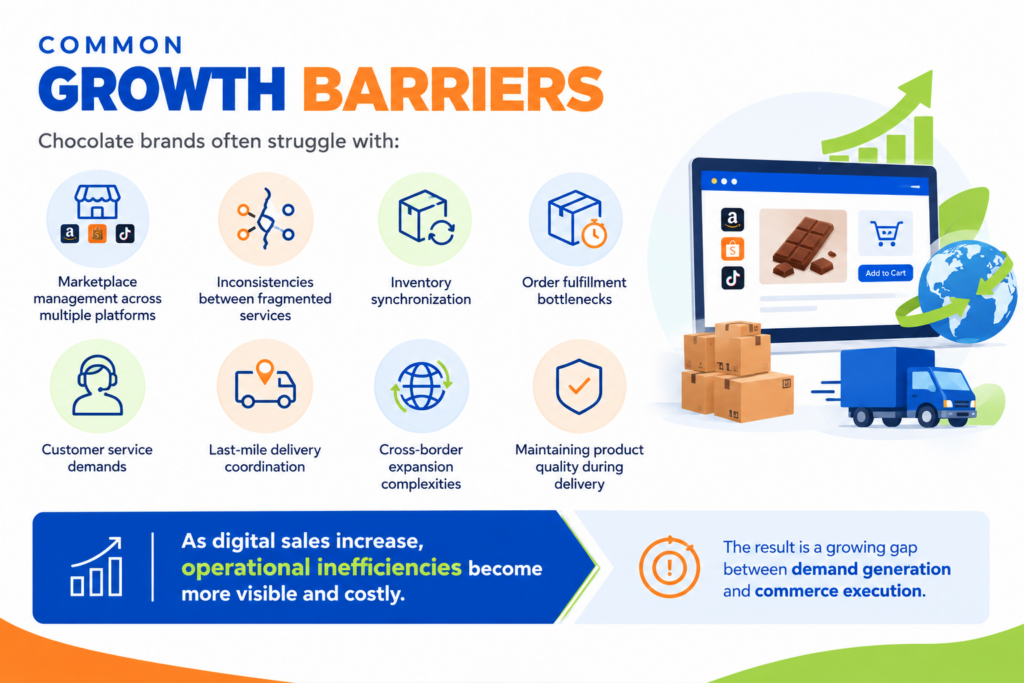
Common Growth Barriers
Chocolate brands often face barriers to growth when managing the end-to-end e-commerce value chain. These barriers are often caused by a fragmented service model, where different providers oversee different stages of the value chain.
The Rise of Omnichannel Commerce in the Confectionery Industry
Modern consumers expect a seamless shopping experience. They may discover a product on social media, compare options on an online marketplace, and complete a purchase through a mobile app. To remain competitive, chocolate manufacturers must adopt an omnichannel commerce strategy.
What Is Omnichannel Commerce?
Omnichannel commerce integrates sales, marketing, and customer service channels to deliver a seamless customer experience across all touchpoints.
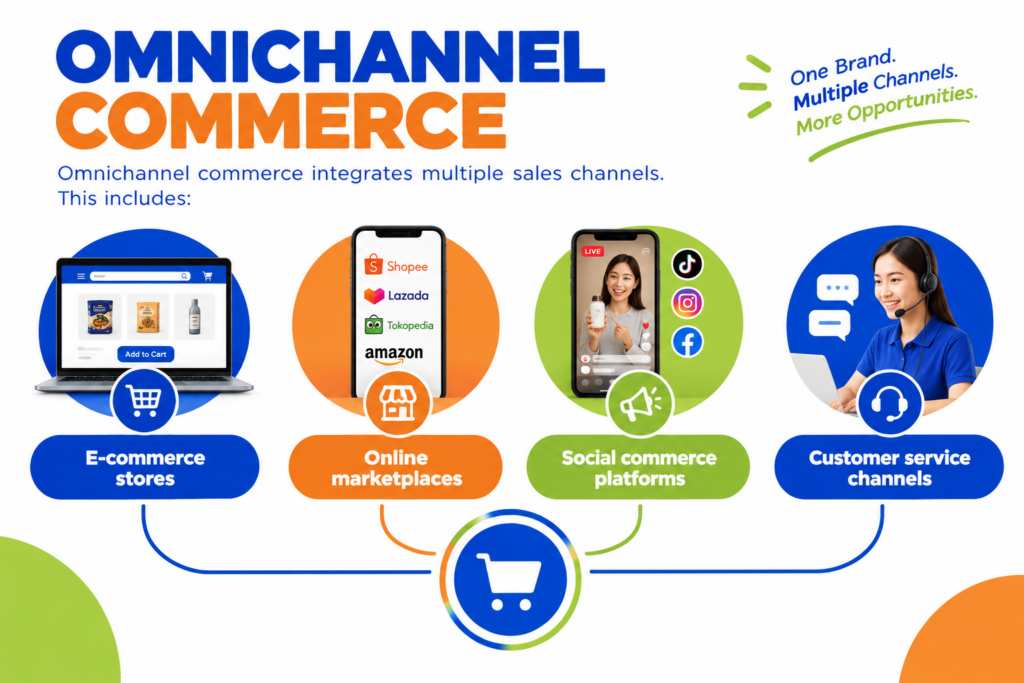
The objective is simple. Deliver a consistent customer journey regardless of where customers engage with the brand. For confectionery manufacturers, this creates greater visibility, stronger customer loyalty, and increased revenue opportunities.
Why Marketplace Management Has Become a Competitive Advantage
Many chocolate brands establish stores on major marketplaces only to discover that success requires continuous optimization. Marketplace management involves much more than creating an online storefront.
Key Responsibilities Include
- Product listing optimization
- Pricing management
- Inventory monitoring
- Promotional campaigns
- Customer reviews
- Performance analytics
- Order processing
Without dedicated management, online visibility and conversion rates can quickly decline. Effective marketplace management ensures brands remain competitive while maximizing return on digital investments.
The Hidden Cost of Fragmented Operations
One of the biggest obstacles to confectionery market expansion is fragmented execution. Many brands work with multiple vendors for:
- Digital marketing
- Marketplace operations
- Warehousing
- Logistics
- Customer service
Although each provider performs a specific task, fragmentation often leads to:

As businesses expand across multiple SEA markets, these challenges become even more pronounced.
How One-Stop Food E-Commerce Services Drive Growth for Chocolate Brands
Integrated food e-commerce services bridge the gap between manufacturing excellence and online market success. For chocolate manufacturers, managing digital storefronts, marketplaces, logistics, and customer engagement through separate vendors can create operational inefficiencies and limit scalability.
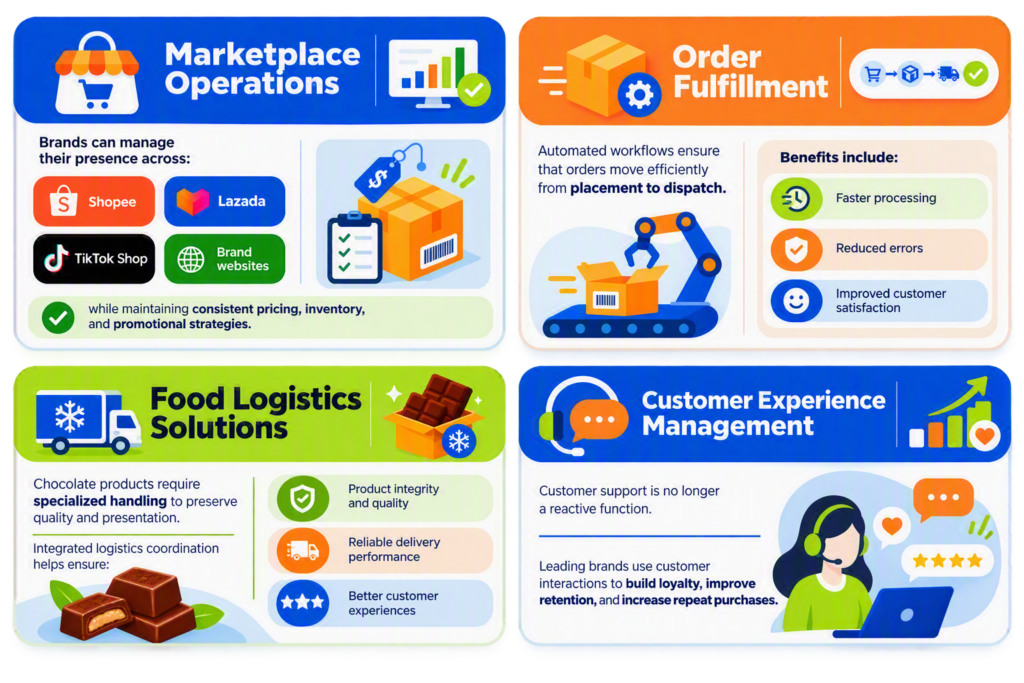
A one-stop e-commerce solutions provider unifies these functions into a connected ecosystem, delivering everything from online store management and marketplace optimization to inventory management, fulfillment, and customer support. This holistic approach enables chocolate brands to accelerate market penetration, improve conversion rates, and create a consistent customer experience across every touchpoint, ultimately driving stronger revenue growth and long-term brand success.
A one-stop e-commerce solutions provider offers end-to-end capabilities that help chocolate manufacturers streamline their digital commerce operations. These capabilities include:
Cross-Border Food Commerce: The Next Growth Frontier
Many chocolate manufacturers have successfully established themselves in local markets. The next logical step is regional expansion. However, entering SEA presents unique challenges.
Common Market Entry Challenges in SEA
- Marketplace onboarding requirements
- Language localization
- Regulatory considerations
- Logistics coordination
- Customer expectations
- Payment preferences
These barriers can delay growth and increase operational risk. This is why many manufacturers now seek integrated partners capable of supporting cross-border food commerce initiatives. A coordinated approach accelerates market penetration while reducing complexity.
How DPO International Supports Chocolate Brand Growth
The challenge faced by many food and beverage brands today is no longer creating demand. The real challenge is fulfilling that demand efficiently and consistently across multiple e-commerce markets. For brands seeking sustainable expansion across Malaysia, Indonesia, and Thailand, partnering with an experienced commerce enablement provider can unlock new opportunities while reducing operational complexity. Many e-commerce service providers focus on individual services.
DPO International takes a different approach. DPO International delivers end-to-end commerce enablement designed specifically to help food and beverage brands scale more effectively.
The result is a single ecosystem that supports growth from consumer discovery to doorstep delivery.