


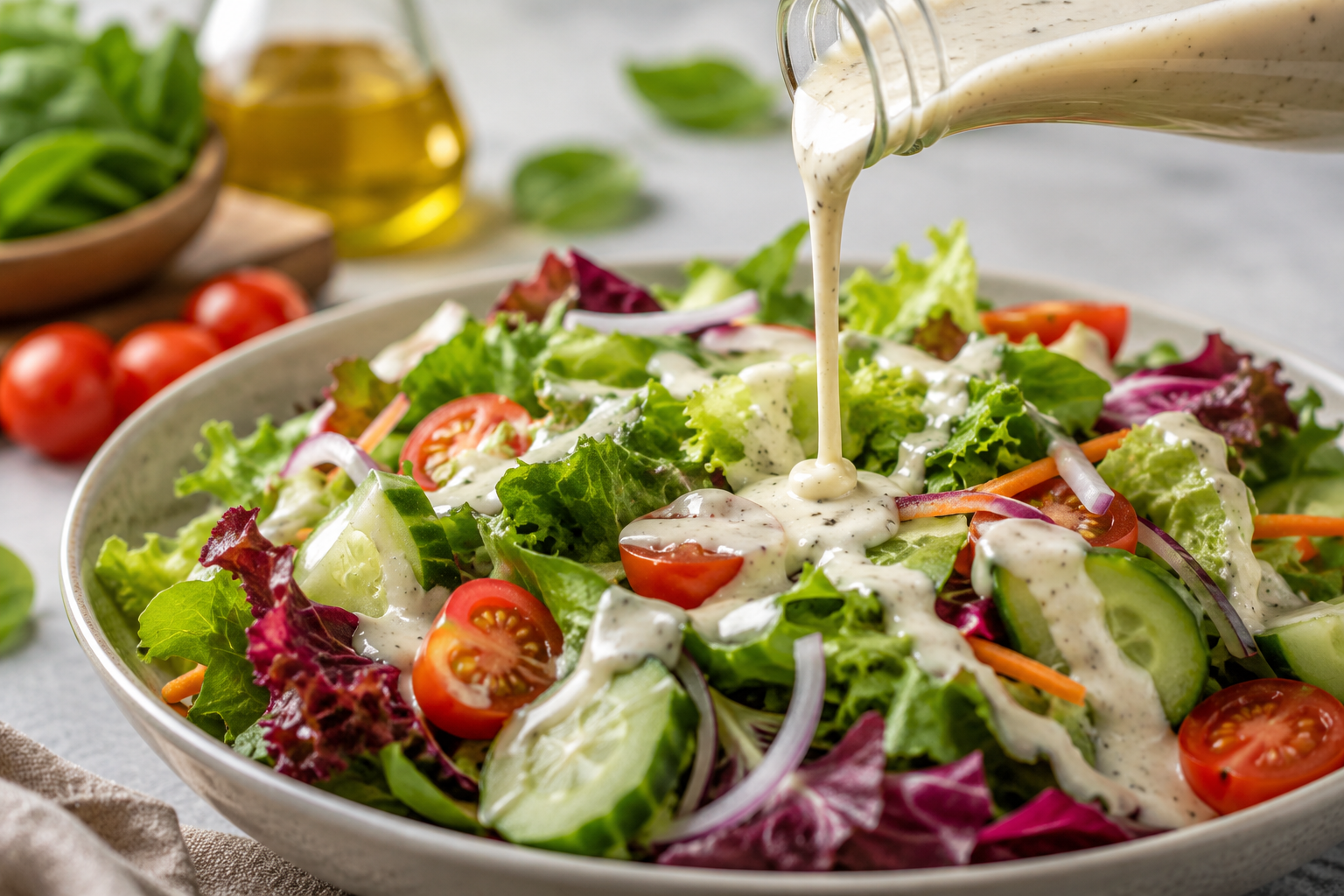
The demand for healthier food choices continues to shape product innovation across the food industry, and salad dressings are no exception. Traditionally, fat-free and oil-free salad dressings were often associated with highly processed formulations containing artificial stabilizers, sweeteners, and flavour enhancers designed to compensate for the loss of fat. Today, consumer expectations have evolved significantly.
Modern consumers are increasingly seeking products that align with broader wellness goals, including heart health, weight management, and plant-based nutrition. At the same time, they are paying closer attention to ingredient lists, favouring products made with recognisable, minimally processed ingredients. As a result, the salad dressings category is evolving towards cleaner-label formulations that deliver both nutritional benefits and a desirable sensory experience.
Formulation Challenges in Salad Dressings
Fat plays a critical role in salad dressings by contributing to creaminess, mouthfeel, flavour delivery, and product stability. Removing oil from a formulation presents a significant technical challenge for food manufacturers and may negatively impact product quality and sensory performance.
To address these challenges, formulators often utilise fat replacers designed to mimic the physicochemical and sensory properties of natural fats. These ingredients help maintain desirable characteristics such as texture, mouthfeel, and flavour interactions while reducing the overall calorie content of the product.2 The use of fat replacers has also been shown to minimise quality deterioration commonly associated with fat reduction in food products.1
In fat-free salad dressing formulations, calorie-dense oils are frequently replaced with water-based systems incorporating ingredients such as vinegar, citrus juice, vegetable purees, and hydrocolloids. Additionally, natural ingredients such as avocado and low-fat Greek yogurt are increasingly being used to restore creaminess and improve mouthfeel without relying on artificial additives.
Clean-Label Opportunities for Salad Dressings
The clean-label movement has transformed the way consumers evaluate food products. Beyond calorie reduction, consumers increasingly assess products based on ingredient transparency, naturalness, and nutritional value.
Popular alternatives used in salad dressings include:
- Mashed avocado, offering creaminess and nutritional appeal
- Low-fat Greek yogurt, contributing a smooth texture and protein content
- Vegetable purees and plant-based ingredients that enhance mouthfeel while supporting clean-label positioning
These ingredients not only help recreate the sensory characteristics typically associated with fat but also align with consumer preferences for wholesome and recognisable ingredients. As a result,

